Saturdays in Athens bring high energy, barking and red-and-black outfits that fill the streets. Matching sets and Georgia apparel are found at any given space from the tailgates on North Campus to Milledge Avenue, purchasing them for the occasion online or from a boutique.
For some, however, the search for a new outfit begins with something that might have been worn before.
University of Georgia football brings in tourism that contributes back into Athens’ local restaurants, hotels and shops. The average cost of game day spending between the hedges in 2025 was $289, with the average ticket cost being $218. Where there is tourism, there is retail consumption, and in a college town like Athens, game day outfit demand plays a role in contributing to the issue of textile waste.
The U.S. Environmental Protection Agency estimates that national production generates 17 million tons of textile waste, while the United Nations estimates that global production generates 92 million tons of textile waste.
The fashion world typically defines vintage as “anything designed and produced at least 20 years before the current fashion trends,” setting vintage clothing apart from the modern production of today’s fashion. Choosing vintage over modern directly impacts global textile waste, as the Ellen MacArthur Foundation states that the equivalent of “one garbage truck of textiles is landfilled or incinerated every second.”
In Athens, people can find environmentally-friendly options.
Dynamite Clothing in downtown Athens is one business seeing customers come in looking for red, black and Georgia-themed vintage clothing, swapping fast fashion for quality.
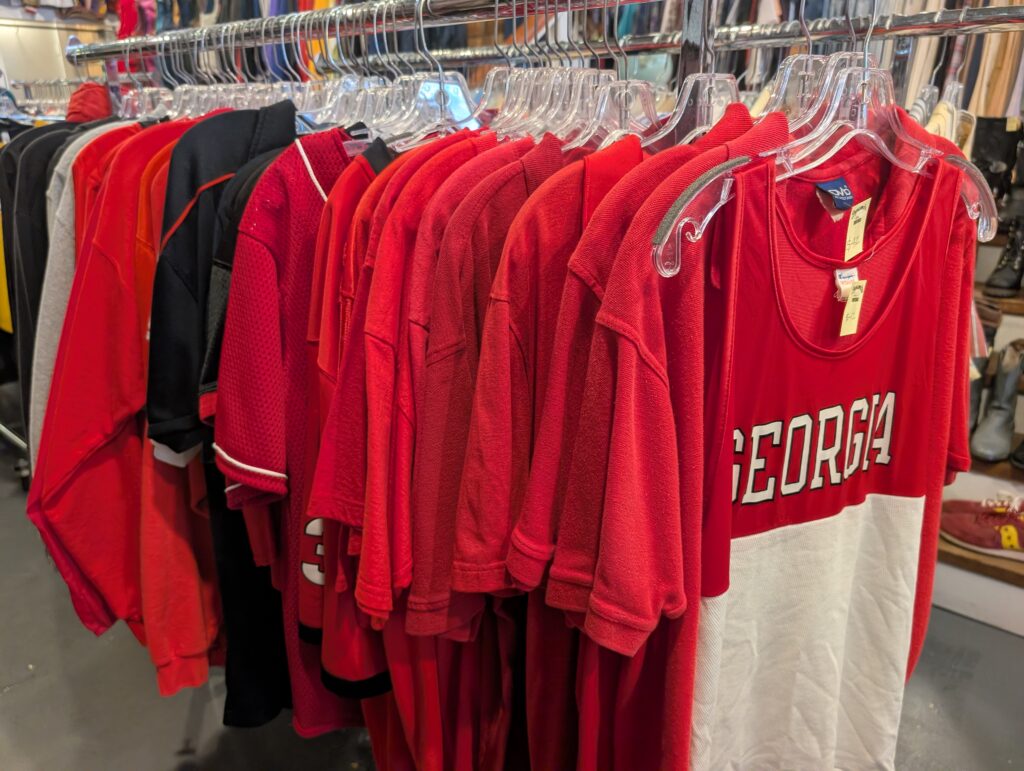
The choice stands however between game-day fashion spending and sustainability. Can students and young adults begin to spend money more sustainably, rather than spending less on game day apparel?
Lori Paluck, owner of Dynamite Clothing, said customers come into the store looking specifically for vintage t-shirts, sweatshirts and anything red and black. When it comes to game themes such as “blackout” or “whiteout,” Paluck said people will come in days prior for vintage apparel that matches the theme of the game.
While boutiques offer similar, matching styles, choosing vintage fashion promotes sustainability by extending the life of a garment and keeping textiles out of landfills. With the longstanding history of Georgia football, fan apparel stands as a staple within local secondhand and vintage shops, allowing for Bulldog support and promoting individuality without buying new clothing.
“They want to stand out as individuals in a sea of red and black,” said Paluck.
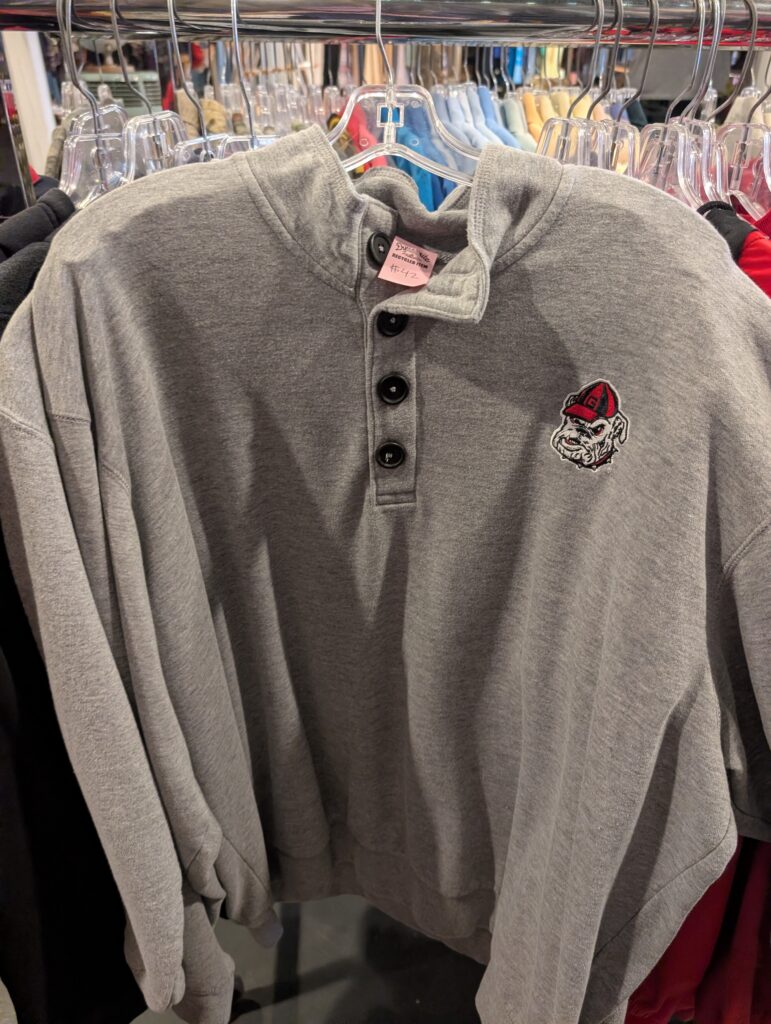
Elena Ferrer, president of Fair Fashion UGA, said students tend to approach game-day fashion differently based on demographics such as their social groups and personal preferences. Students involved in Greek life tend to utilize rental services such as Nuuly and Rent the Runway, but Ferrer said those who aren’t involved tend to gravitate towards secondhand and vintage fashion.
“There’s a lot less conformity in that group and so they want to be unique,” said Ferrer. “They want to be different and find things at the thrift that no one else has.”
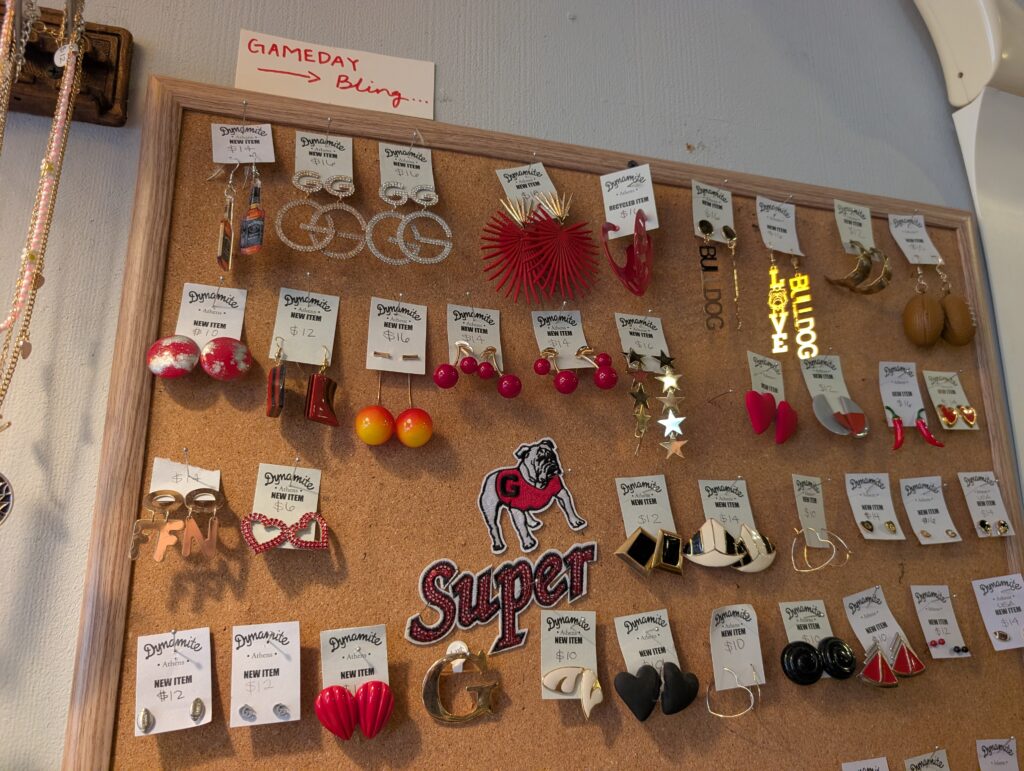
Ferrer explained fast-paced trend cycles promote a culture of constant buying. Fast fashion takes over in convenience, pushing the idea that the newest piece is a “must-have” to fit into game day.
“If you take a step back and kind of look at how often you’re spending on things that aren’t going to last you, it’s really inconvenient for your wallet,” said Ferrer.
With a rise in consumer prices, individuals have started to take a second look at vintage and thrift stores to make the most out of their money while fitting into a fashion cycle.
“They’re trying to figure out how they can find something cool to wear that’s not going to break the bank, but that they can also feel good about wearing,” said Paluck.
Ferrer said thrift stores almost always offer the cheaper option and that there is a lot less polyester compared to the fashion produced today.
“You’re really getting a bang for your buck when you buy thrifted clothing because it’s cheaper, better for the environment, but also more often than not, it’s better quality,” said Ferrer.
Paluck sees an increase in people approaching secondhand and vintage clothing compared to the beginnings of Dynamite in 2001, something she thinks is great.
“Mainstream is sort of finally catching on to the fact that wearing recycled clothing is actually good for the environment and it’s great for fashion,” remarked Paluck.
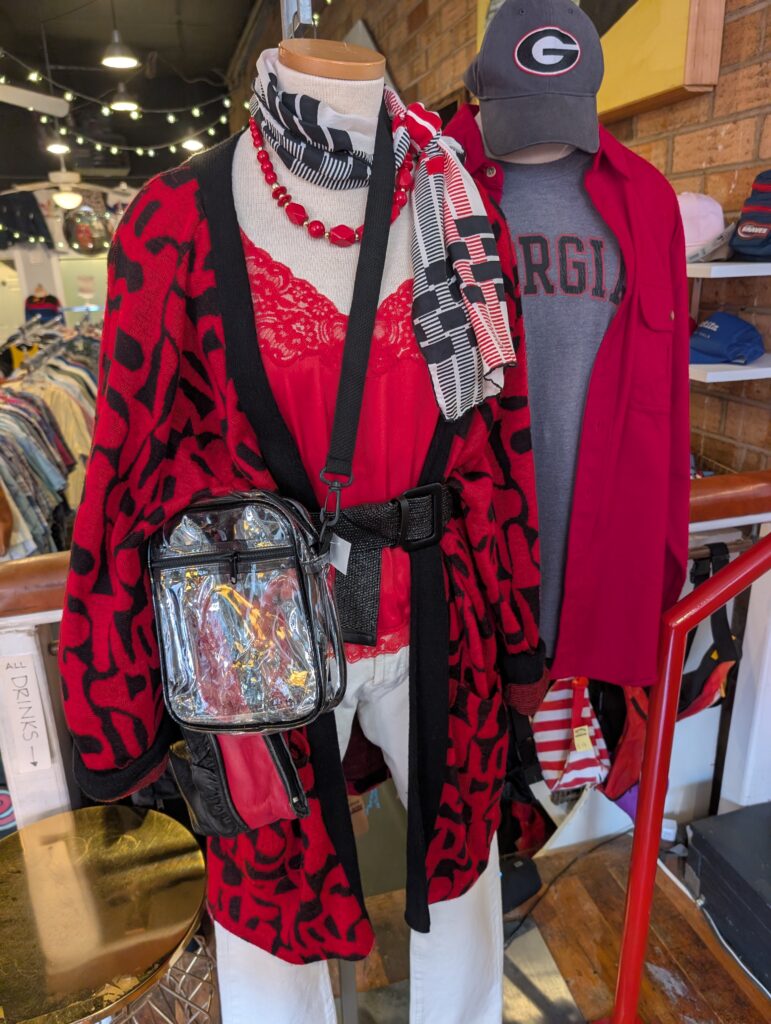
Choosing secondhand clothing does not always involve the most convenient option, especially for students on campus without reliable transportation. Boutiques fill downtown and Milledge Avenue, catering to students willing to purchase pieces worn once or twice. Websites like Amazon and Shein allow clothing to be delivered directly to doorsteps, encouraging purchases at the click of a button.
Even with the online convenience, vintage and secondhand clothing offers an alternative beyond game day. Paluck said that there is so much more to her store than people might think before they walk inside, opening their eyes to the availability of styles beyond red, black and Georgia-themed clothing.
“It just doesn’t have to happen on game day,” said Paluck. “They can actually dress sustainably for their whole college career while they’re in Athens.”