In 2007, three years into her job at ABC, Jennifer Duck reported on her first school shooting. Now as a University of Georgia professor, she’s training the next generation of reporters. Duck spent decades covering political unrest, mass shootings and conflict, facing tear gas, arrests and rubber bullets in the process. Through it all, she moved on to the next story. More than two decades later, these experiences caught up to her when a school shooting happened a couple blocks from her own children’s school.
“I literally broke down. I mean, I’m teary right now. I remember calling my mom and saying, ‘I can’t believe this,’” Duck said. “I don’t even know how many school shootings I’ve covered, and it just caught up with me 20 years later. … I absolutely could not cover that story.”
Every day, journalists bear witness to the worst moments of the human experience: murders, natural disasters and sexual violence, to name a few. These stories make the front page, but the emotional toll they take on those who report them rarely does. For women and minorities such as Black, Latino and Asian journalists, that toll is compounded by harassment, discrimination and greater risk.
Trauma Behind the Byline
Duck’s experience is not singular; journalists’ exposure to human suffering places them at heightened risk for trauma-related disorders.
Part of that burden comes from what experts describe as “secondary trauma,” the emotional impact of witnessing or repeatedly engaging with others’ suffering. A study in the American Journal of Psychiatry found that 28.6% of war journalists experienced Post Traumatic Stress Disorder (PTSD) in their lifetime, while 21.4% reported depression.
Moni Basu, a former CNN and Atlanta Journal-Constitution reporter and current University of Georgia journalism professor, spent decades covering conflict and crisis — experience she now uses to teach Reporting From Ground Zero, a course she developed to prepare student journalists to report on trauma.
“You don’t necessarily have to have experienced a traumatic event to suffer from post-traumatic stress,” Basu said. “You can absorb it from listening to somebody else’s story.”
Duck pointed to another type of traumatic exposure that often goes unrecognized. For many journalists, exposure doesn’t stop when they leave the scene; it follows them into the editing room.
“There’s a post-secondary trauma to events. 9/11 is a good example of that, watching the towers fall… it’s something that you would have to edit over and over and over again,” Duck said. “I don’t think we talk about that exposure a lot.”
Emily Sachs, a clinical psychologist and program director at the Journalist Trauma Support Network, JTSN, said repeated exposure can build over time.
“People talk about a sort of compounding effect of secondary or vicarious trauma, just from absorbing a lot of people’s distress through their stories,” Sachs said.
Gendered and Minority Risks
For many journalists, the expectation to push through trauma carries an added weight, one shaped by gender, race and identity. In a profession that often rewards toughness and composure, speaking up about emotional strain can come with consequences.
The risks are quantifiable. Research from UNESCO and the International Center for Journalists (ICFJ), found that 73% of women journalists have experienced online violence. According to the International Women’s Media Foundation, one in three have considered leaving the profession due to online attacks and threats.
The harassment often does not stay online. The same UNESCO and ICFJ report surveyed 597 women journalists, 68% reported being threatened or harassed, 58% said those threats occurred in person and more than a quarter reported physical attacks. One in 10 of women surveyed received a death threat in the past year. For those working internationally, the risks are even higher: 31% of women journalists abroad reported a physical attack compared to 18% working in the United States.
Duck, who teaches these realities to her journalism students, said the stigma around vulnerability falls hardest on those already navigating identity-based risk.
“I think there’s a real stigma for minorities as well, women, people of color,” Duck said. “‘You’re so emotional’… these tropes that come at us, so you just push through. And I did that, and I have done that.”
Those pressures are also amplified for journalists of color. Research by former journalist and UGA journalism assistant professor Denetra Walker found that Black journalists covering racial justice protests in 2020 faced unique psychological burdens, including being targeted by police and confronting the subjects of their reporting in deeply personal ways.
During the COVID-19 pandemic, Asian American journalists reported racist harassment both online and in the field, layering identity-based trauma on top of the already difficult work of covering a public health crisis.
For some, personal identity not only shapes how trauma is experienced, but also which stories feel possible, or safe, to pursue. Basu said one of the most difficult assignments she ever reported forced her to confront her own past.
“I think the story that stays with me the most, in a way, is a rape story that I reported from my homeland, India,” said Basu. “The reason that it stayed with me is that I am a rape survivor. I was raped in college, but I never talked about it with anybody. I held it all inside and pretended that it never happened to me, and didn’t really deal with that until I reported the story.”

Identity can also shape immediate safety decisions in the field. Basu recalled being asked to interview a white supremacist who owned a shop selling Nazi paraphernalia.
“There was an editor who asked me if I would go talk to this man,” she said.
“I was like, do you see what I look like? I am not doing that story,” Basu said.
The Story Stays with You
Even after the cameras are off and the headlines move on, the stories journalists cover have a way of lingering. For those repeatedly exposed to trauma, their experiences can silently reshape how they understand the world.
“It starts to make [journalists] feel like the world is kind of not a good place, and that we’re not going to have any control, and that we can’t make good things happen,” said Sachs.
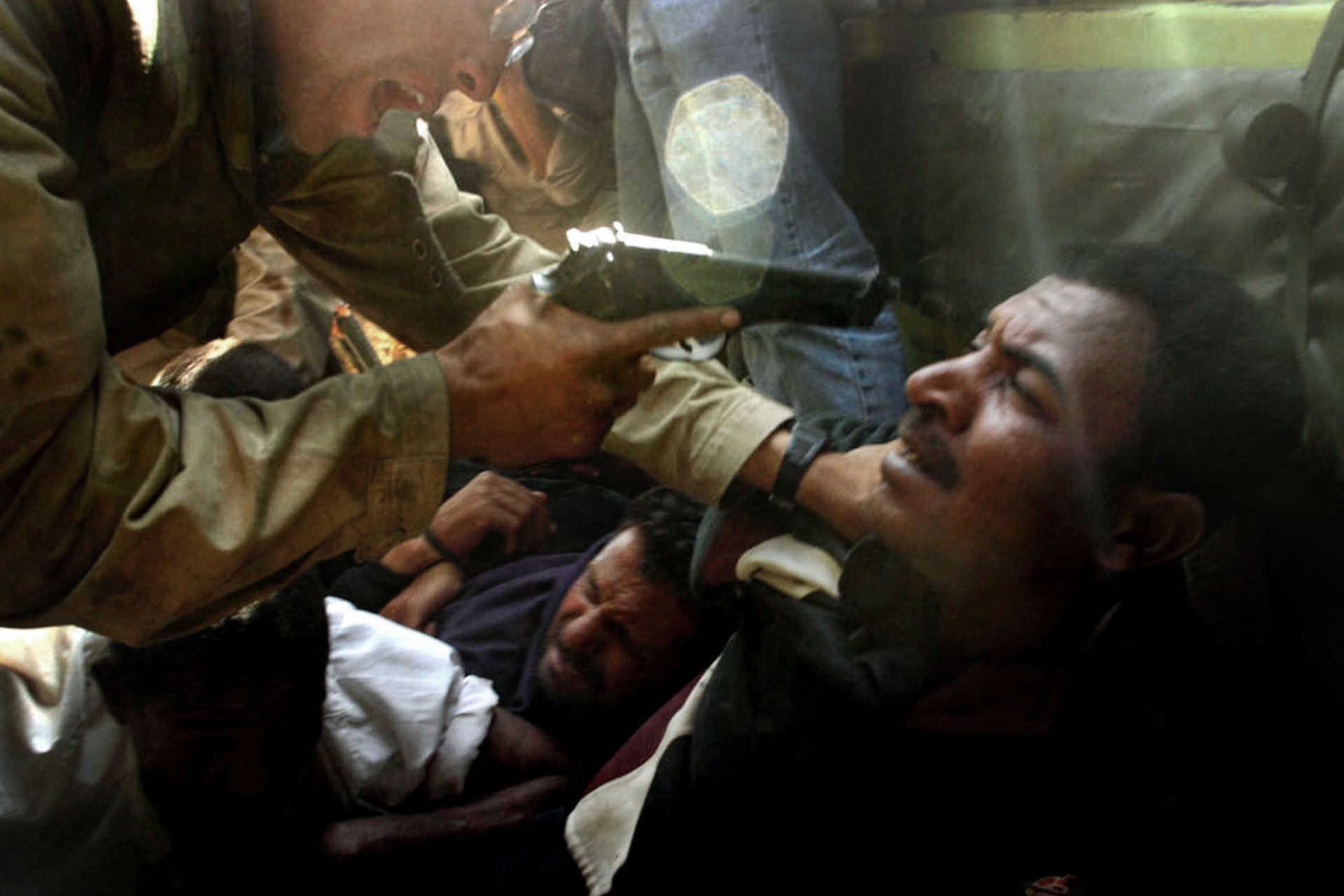
Andrea Bruce, a former war photojournalist and current University of Georgia professor, said the intensity of covering life-and-death situations made it difficult to return to ordinary life.
I couldn’t live with the mundaneness of life, because everything there was about life and death,” Bruce said.
Looking back on her time in Iraq, she said the weight of those experiences took years to fully process.

“I don’t even know if I processed it in those years when I lived in Iraq,” Bruce said. “It’s taken maybe decades to really understand what I was in the middle of, and the consequences of the things that I witnessed.”
In those intense moments, Bruce said, she only focused on the task at hand.
“When I’m taking pictures of really intense moments, it’s more like logistics… You’re just reacting without even thinking, and then you process it more later,” Bruce said.
That delayed processing can be unpredictable. Sometimes the emotional toll surfaces immediately, but often it emerges long after the assignment ends.
“When you’re in that moment, it’s hard to be prepared. You’re kind of reporting, and sometimes it catches up with you in that moment. Sometimes it’s years later,” Duck said.
A Culture of ‘Pushing Through’
When Basu began her journalism career, conversations surrounding trauma and mental health were absent from the newsroom.
“There was a military mentality in newsrooms; you just suck it up and keep going.” Basu said. “You don’t talk about the way things have affected you; that made you somehow weak.”
Duck said the “push through” mentality persists within the profession. The fast pace of the news cycle leaves little room for journalists to process what they experience.
“I don’t think trauma’s talked about a lot, because you’re always just working on the next story, or thinking about the next story,” Duck said.
Even as mental health awareness grows, stigma continues to shape how journalists respond to trauma. Sachs said many journalists worry that seeking help signals an inability to do their job.
“[Journalists] are worried that if people know they’re in therapy, that they’ll be seen as not able to continue to do the job,” Sachs said. “People want to be seen as being able to really keep it together, not need help.”
A 2025 study from the Al Jazeera Media Institute reflects this stigma, finding that nearly 70% of journalists said their newsroom did not support mental health and well-being.
Support System and Gaps
When journalists are sent into war zones, the expectation is often resilience. For Bruce, that meant facing trauma with little to no support.
When I first was in Iraq, it was horrible, like the kind of idea of tough love. I don’t think my editor once asked me at the Washington Post, like, ‘how are you?’ ” Bruce said.
According to the KALM Institute for Workplace Wellbeing, 55% of journalists are not provided the resources needed to support their mental health. Organizations like the Journalist Trauma Support Network (JTSN) and the International Women’s Media Foundation (IWMF) are working to fill those gaps, offering therapy referrals, training and emergency resources. These efforts have emerged in response to the kinds of experiences reporters once navigated alone.
“Covering so many suicide bombings and, like, visiting morgues daily and funerals daily… it’s really hard to deal with all of that without having someone look out for you,” Bruce said.
To prevent the onset of PTSD, Sachs said access to care is critical.
“Social support can make a real difference between developing a post traumatic distress syndrome after being exposed to trauma or not,” she said.
Training the Next Generation
The lack of mental health resources extends beyond the individual journalist; it shapes the industry. Duck argues that unaddressed trauma erodes the journalism itself.
“If you don’t address trauma, you will become hardened. You will lose empathy. You will not be as trusted,” Duck said.
The stigma around mental health cultivates an environment that is hard for reporters to change alone. Basu said that responsibility falls on newsrooms to act, not just acknowledge.
Newsrooms, I think, have that responsibility to raise that awareness [of trauma amongst journalists],” Basu said.
“Not only that, take it a step further, but to provide a space to make journalists feel comfortable that you can talk about this, and we’re here to help you,” she said.
While the industry and organizations such as JTSN and IWMF have made strides, leaders like Sachs say there is still work to be done.
“We’ve come quite a long way in the last 10 years in terms of awareness, and have a long way to go in terms of implementation and educating and supporting management to implement support,” said Sachs.
All three journalism educators: Basu, Bruce and Duck, are now taking their lived experiences and what they’ve learned in the field as witnesses, as women and as reporters and turning it into the curriculum.
Bruce said she teaches her students and journalists just getting started that setting boundaries and protecting their mental health is essential.
“If you’re going to work for a news organization, or if you’re going to be a freelancer, make sure you’re working for somebody who has your back,” said Bruce. “I can’t tell you how important that is to have, like, also a sense of purpose… really understanding why you’re doing something will help you make the decisions that are safe.”
Eva Duignan, Kennedy Hill, Presley Ford and Savannah Scott are journalism majors in the Grady College of Journalism and Mass Communication at the University of Georgia.