More Than movement: Indian Dance Teams Build Culture, Community at UGA

Indian dance groups at the University of Georgia are creating spaces for students to connect with their culture and build community through award-winning competition routines.
On a predominantly white campus (PWI) where around 62% of the student population identified as white in 2024, student-run Indian dance teams such as UGA Shikaari and UGA Amara serve as cultural and social outlets for participants.
Members say the organizations provide opportunities to connect over shared identities while also preserving and adapting Indian dance traditions for modern audiences at competitions around the country.
It definitely provided me with a good platform to find like-minded individuals,” said Nanditha Chevula, a member of UGA Amara.
“You might know someone that you’ll be like, they are from the same culture, they’re from the same religion. But like, when you’re not specifically focusing on that when you’re interacting, it’s kind of hard to relate to them on that level.”
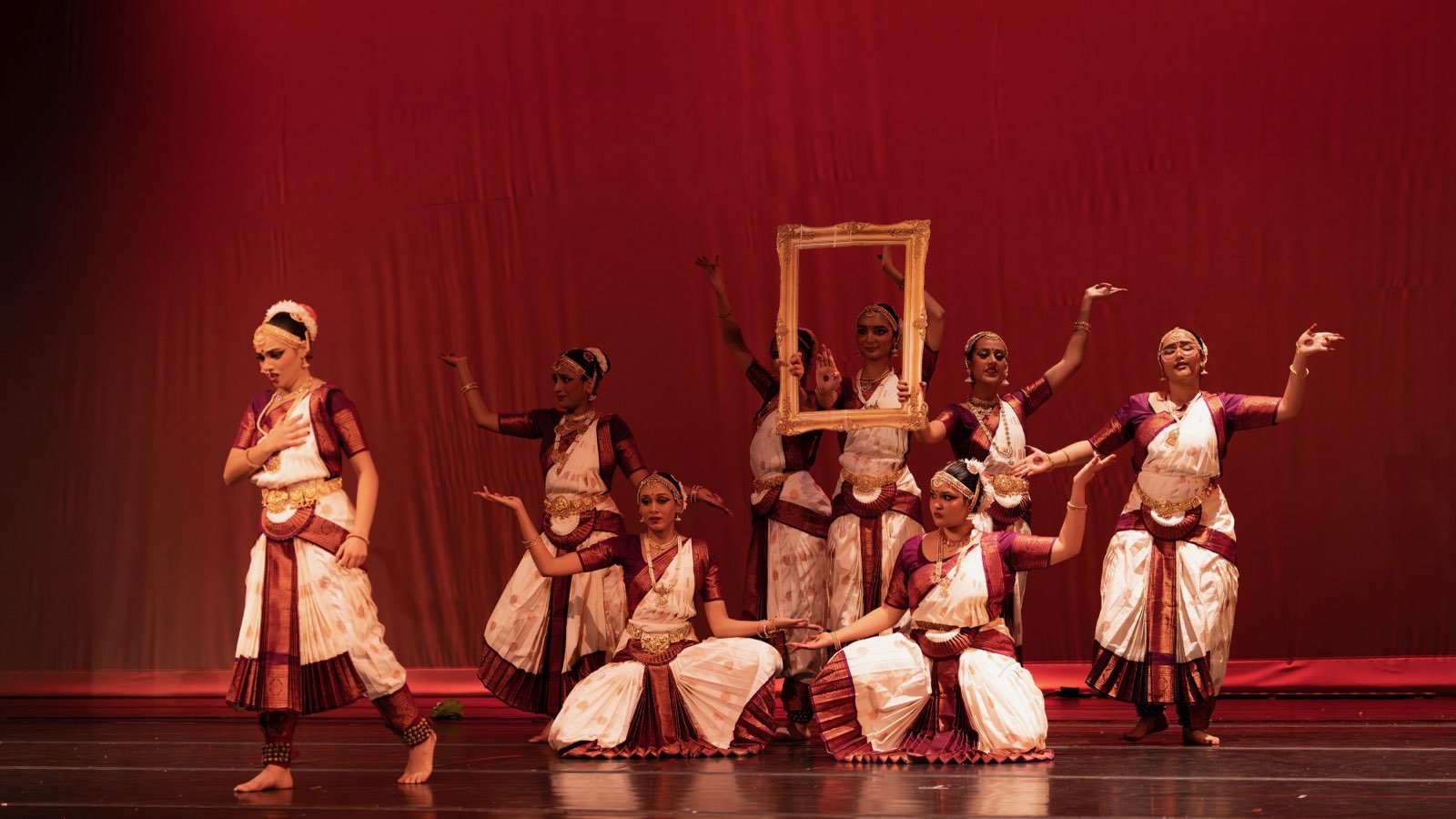
Centering Indian Culture
By centering dance as a cultural practice, Chevula said those connections become easier to build.
“But since our dance itself is a more cultural thing, being in a group that is prioritizing that definitely connected me with people that also prioritize that a lot,” she said.
Groups like UGA Amara primarily focus on classical Indian styles such as Bharatanatyam and Kuchipudi. Bharatanatyam is one of the oldest classical dance forms, originating in the Hindu temples of southern India more than 2,000 years ago. This style is characterized by precise movements and intricate expressions that are used to express Hindu religious stories.
Kuchipudi is a slightly newer form of classical Indian dance, characterized by fluid movements and theatrical storytelling. Groups like Shikaari blend these classical Indian styles with hip-hop and contemporary dance in a modern fusion style.
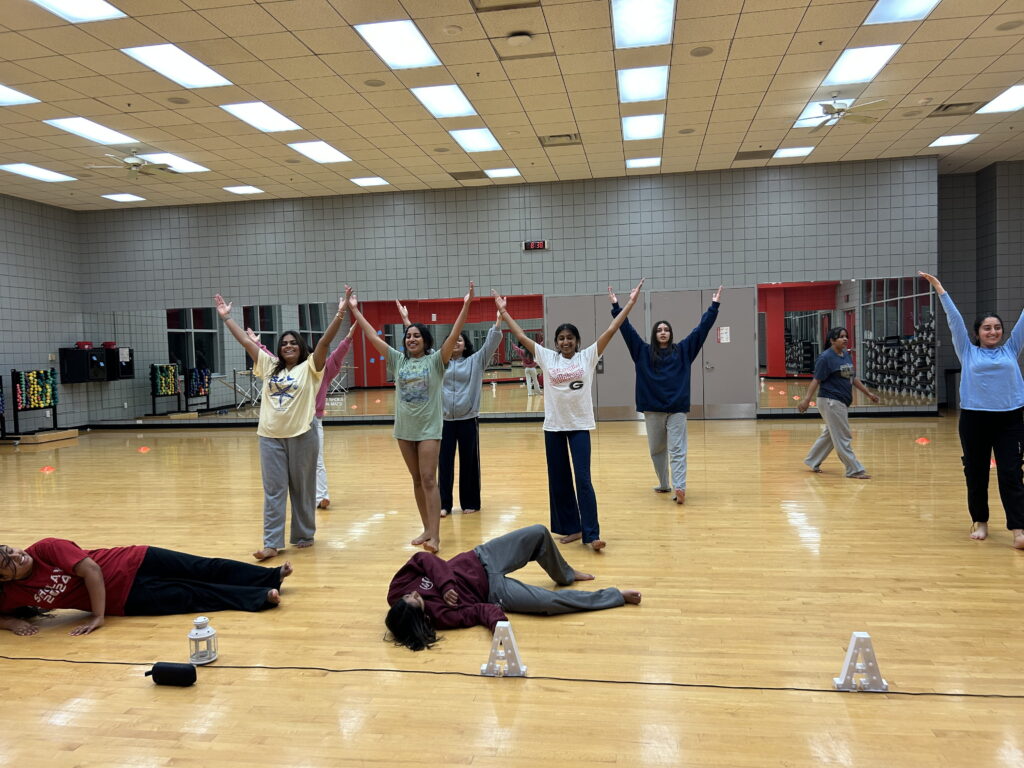
For some students, these organizations help strengthen their identity in new ways.
I didn’t grow up in the most cultured household, but being here, I feel more connected to my roots,” said Krisha Patel, a member of UGA Shikaari.
These dance groups allow students to not only preserve cultural practices but also reshape them in ways that reflect their own experiences.
“I’ve truly made really good friends, especially being part of such a big school, especially a PWI,” Patel said.
Betsy Allen is a third-year journalism and English student with a minor in law, jurisprudence, and the state at the University of Georgia.