Rural Georgians With Disabilities Face Unique Challenges Seeking Long-term Care

Healthcare accessibility in rural Georgia is more than just a premium. For Georgians with disabilities, resources are scarce and the lack of reliable transportation can mean the loss of life-changing care.
Some critical barriers for patients include having to travel more than 100 miles to vital resources, such as long-term care, outpatient hospitals or psychiatric diagnoses, according to the Georgia All-Payer Claims Database, an organization that keeps track of healthcare data using insurance claims.
“Even though we have these places that you could go, it still might be up to a 45 minute or more drive to get there,” said Rebecca Wells, a clinical associate professor in UGA’s Public Health program.
Why It’s Newsworthy: Amidst cuts to already scarce resources, many do not consider the unique challenges faced by an already underserved group in an environment of health disparities.Healthcare Resources out of Reach
Garrick Scott, executive director of Athens-based non-profit group Multiple Choices that provides services to disabled Georgians, said the resources required to maintain physical health are also often out of reach. Areas that lack healthy grocery stores, called food deserts, and a lack of gyms and other exercise areas often worsen the health situation of rural Georgians with disabilities.
It’s not just limited to gyms. Simple quality of life services are inhibited by transportation and accessibility.
“We had a gentleman who called, who said, ‘I heard you all have transportation. I haven’t had a haircut in three years because I’m in a wheelchair,’” Scott said.
Multiple Choices lost much of their funding as a result of government budget cuts earlier this year, according to Scott. The group previously offered transportation services to Georgians with disabilities who lived far away, but now has to temporarily suspend that activity because of this cut. This leaves 10 counties in Northeast Georgia without such a service.
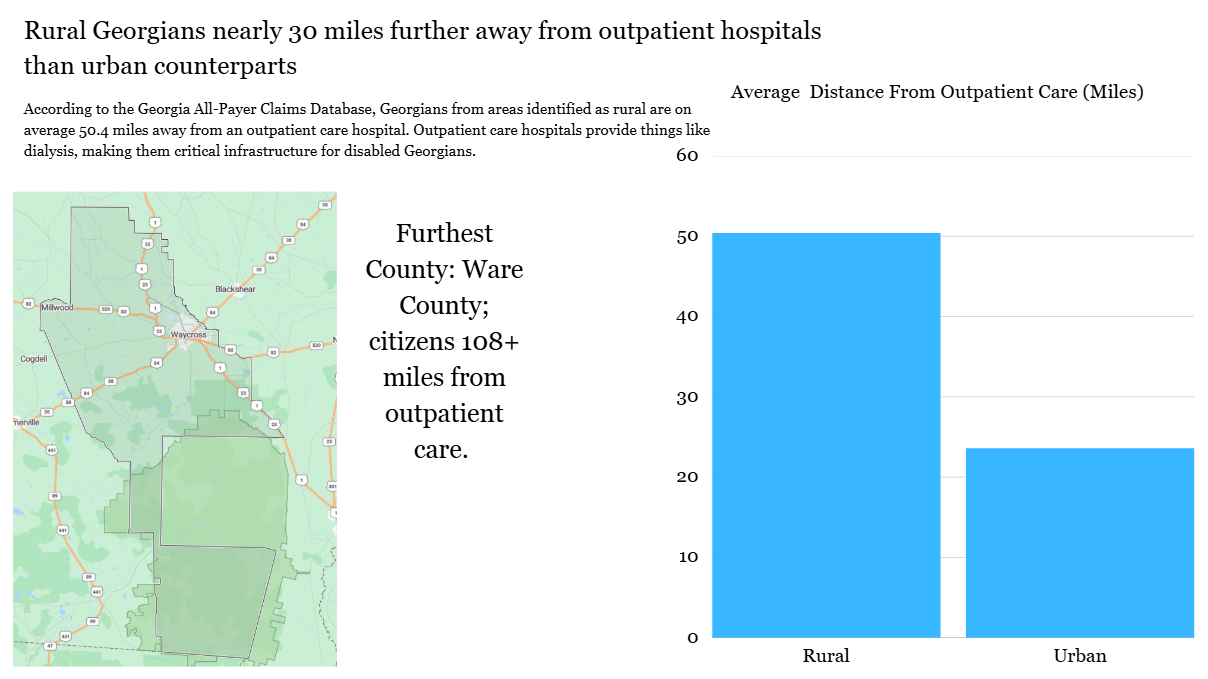
(Graphic/Frank Lowery)
Scott has a disability, although he clarified that is not what led him to the organization. He was in the field of social services for a long time before joining Multiple Choices. His first experience with social services was his two years in the AmeriCorps, a domestic version of the international aid organization, Peace Corps.
“I fell in love with the work,” Scott said.
Quantity, Quality or Neither?
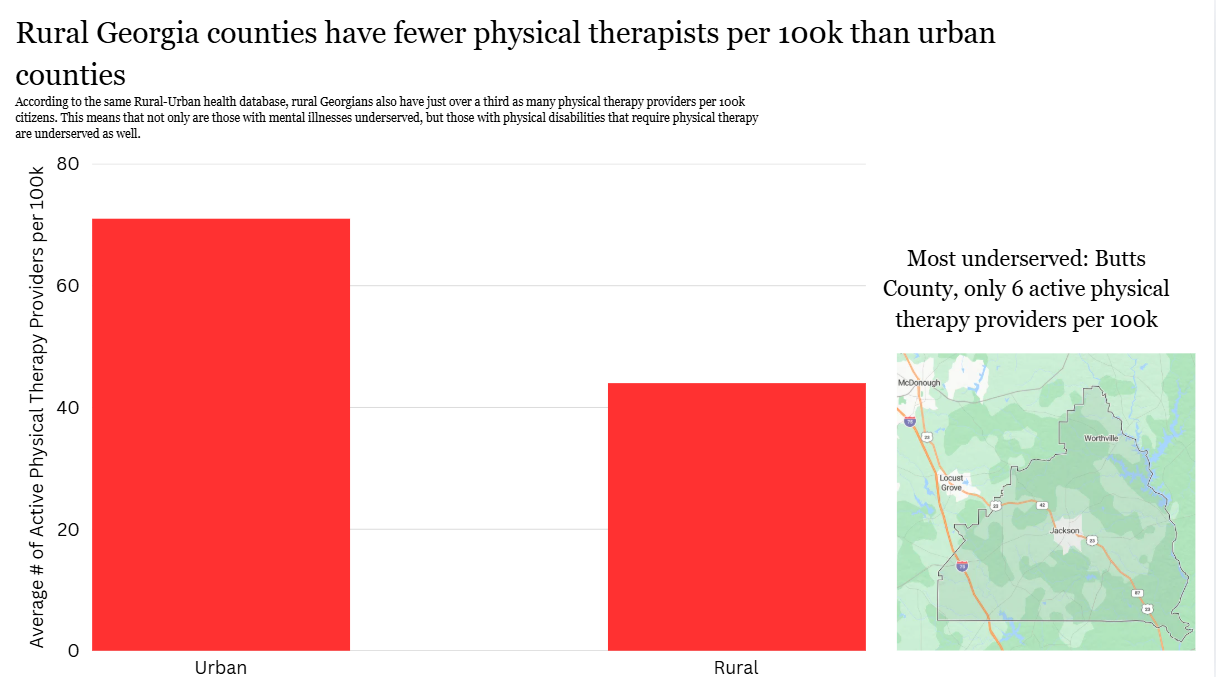
(Graphic/Frank Lowery)
Wells said healthcare providers are often concentrated around the metro Atlanta area or other urban counties, which creates barriers for those in rural areas. This is something she experienced personally. Growing up in Macon, she felt that her family did not have the same kind of healthcare people were receiving near Atlanta when her mother had a heart attack.
“There are so many resources concentrated in the Metro Atlanta Area that it can be a real struggle anywhere else,” Wells said.
The issue is often more with quantity than quality for rural Georgians. Wells said due to American healthcare’s nature as a “patchwork of private and public providers,” there are often cases where a rural clinic might be better funded than an urban clinic simply because it receives more attention and funding from the federal or state government.
Despite this paradox, a lack of providers can still limit access to care. According to the Georgia All-Payer Claims Database, the average rural county has less than half as many psychiatrists for every 100,000 citizens than the average urban county. This makes it harder for rural Georgians to be seen and treated by this type of mental health professional, even if the quality of services in their area is high.
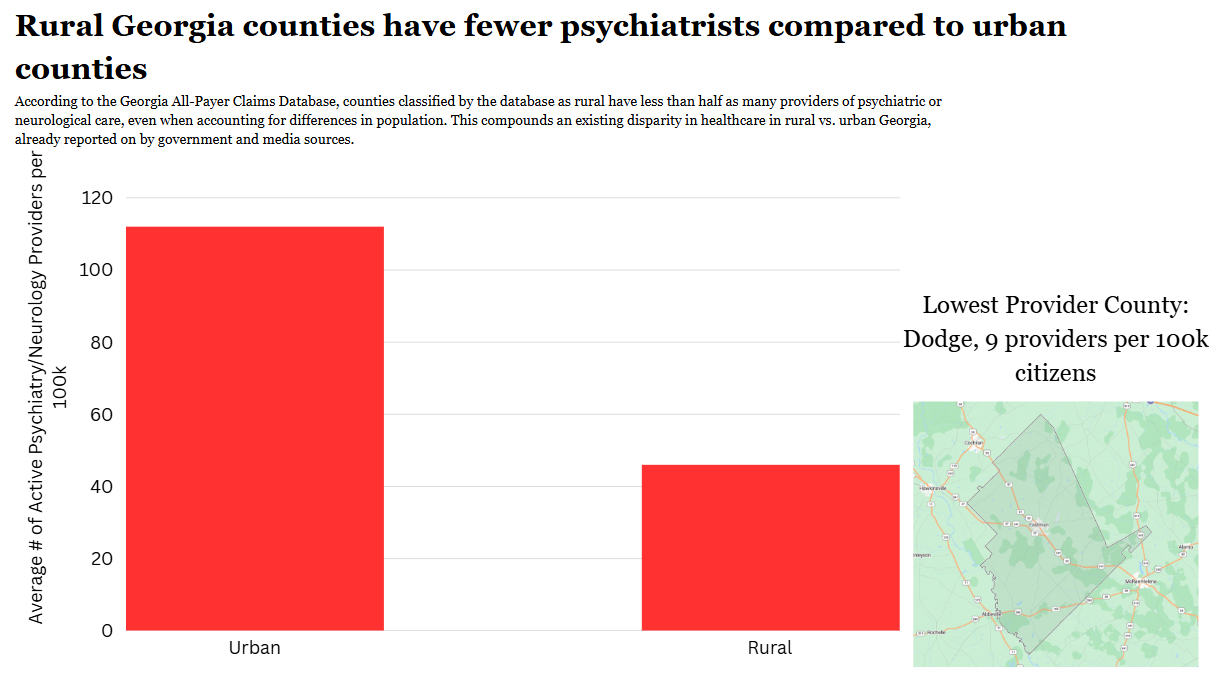
(Graphic/Frank Lowery)
Healthcare Deserts
Not only are there fewer providers for this kind of care in rural Georgia, there are also more people who need them.
These rural areas may be the parts of the country that most need disability aid. The South has a higher rate of disability than any other region of the country, and rural areas have proportionally more people with disabilities than urban areas, according to the Census Bureau.
Furthermore, marginalized communities often face unique difficulty with healthcare access, including transportation. According to the Department of Community Health, Georgians of color own vehicles at a much lower rate than white Georgians. This could make access to healthcare in rural areas more difficult for these communities without reliable transportation.
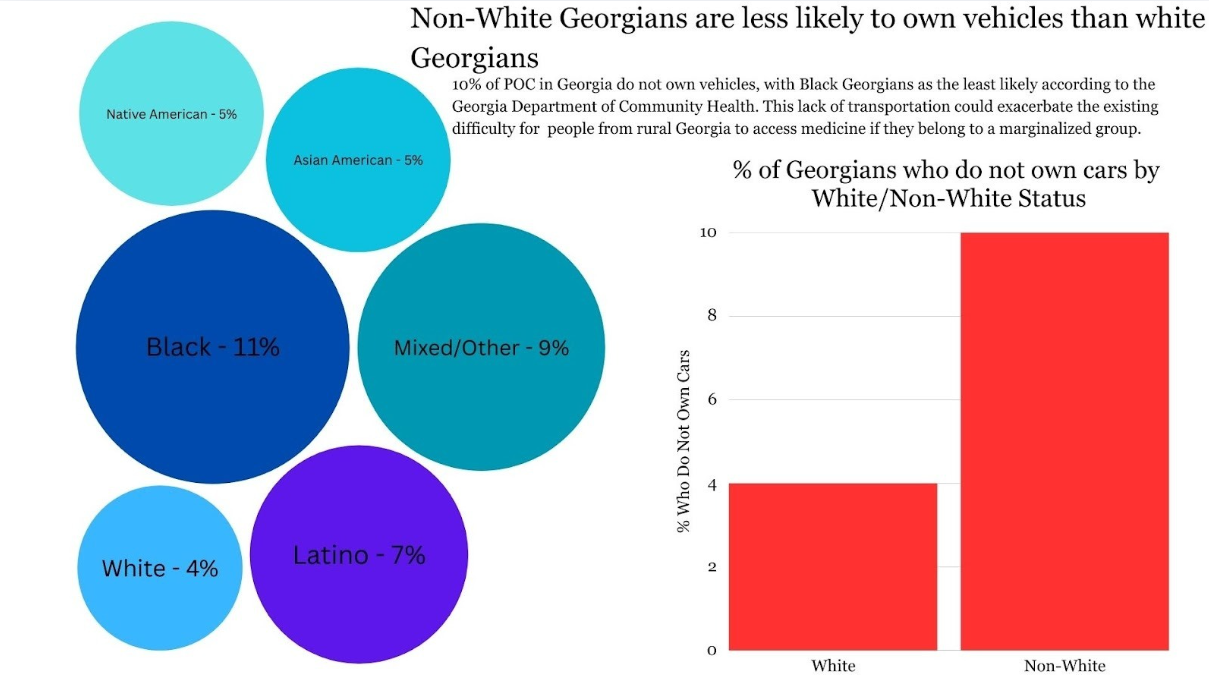
(Graphic/Frank Lowery)
Obstacles beyond transportation also exist for rural Georgians seeking disability care. For example, Wells identified a lack of interpreters for the deaf community and people who do not speak English, or people who are blind may receive paper forms with no screen-readers.
“People, they think about wheelchairs, right? They think about ramps,” Wells said. “If I’m in a chair, how do I get from my wheelchair up to that exam table?” Wells believes people don’t always think about less obvious barriers.
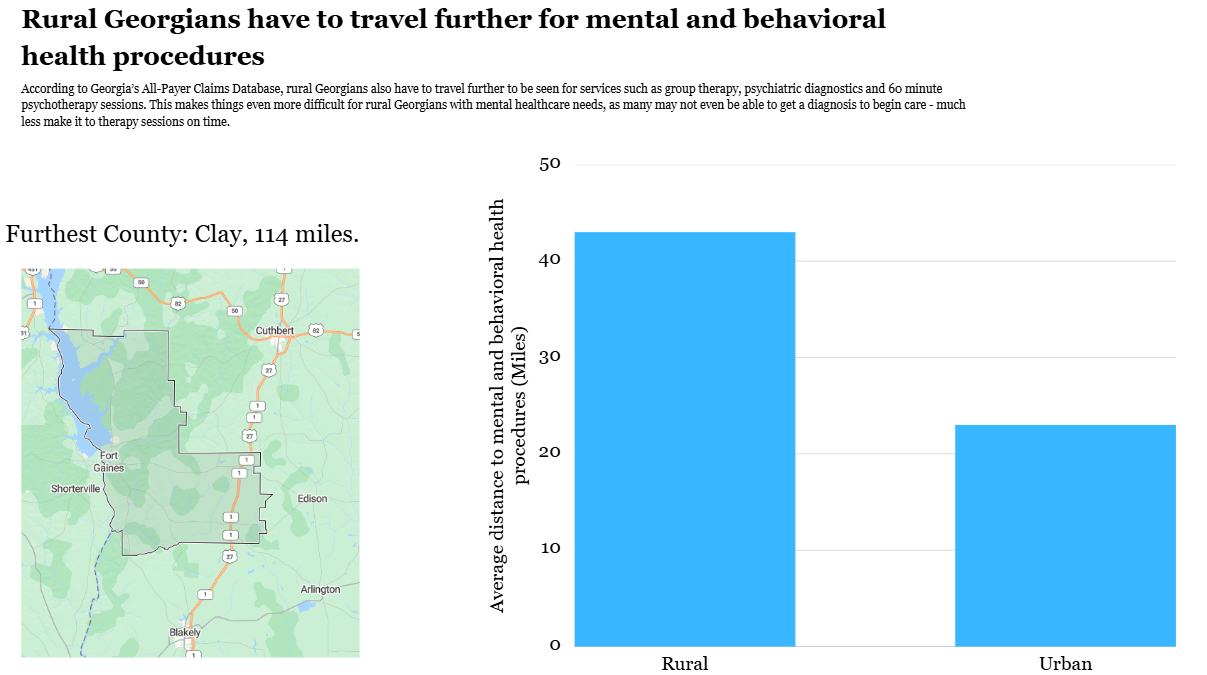
(Graphic/Frank Lowery)
Future of Rural Health
This problem has been a complex one to solve for Americans. Just recently, Georgia received a grant from the federal government for $219 million as part of the Big Beautiful Bill Act, but it is unclear where that funding will go. Public health experts like Wells have criticized this move, as the act also cuts Medicaid benefits, “one of the larger payers” in rural areas.
Wells emphasized that solutions don’t always come from the federal government. She said change to the system, grassroots movements and supporting your community on a local level will provide more meaningful solutions.
“There will never be enough support from any government entity,” Wells said. “I think we have to be really creative.”
Frank Lowery is a fourth-year majoring in journalism.