More than Vacation: Hidden Struggles of Attending University of Hawaii

Attending college in Hawaii sounds like a vacation for many on the mainland: crystal-clear water, beaches minutes from campus, and tropical weather.
To the local students, however, this picture-perfect postcard comes with complications.
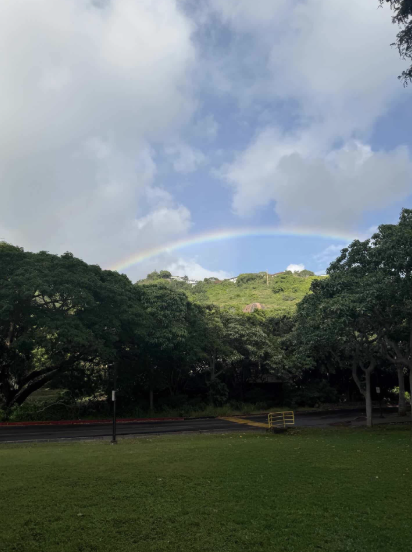
In an article published by the University of Hawaii, academic advisor Megumi Makino-Kanehiro explained that although the university is portrayed as paradise, many students discover that living in Hawaii comes with many emotional, financial and social challenges that they did not expect.
Two thousand four hundred miles is the closest Hawaii is to reaching the mainland. Hawaii is beautiful, but it can also be isolating.
Nathan Magana, a junior at the University of Hawaii at Manoa, explained that many of his fellow classmates ended up transferring or dropping out.
“A lot of people just come and go,” Magana said.
Data from the University of Hawaii Institutional Office reflects movement throughout the University of Hawaii system. Magana, being from Salinas, California, struggled with the same isolation that several other students deal with as well. This caused him to temporarily drop out of school.
“I didn’t really expect to come back,” Magana said.
Magana believed Hawaii would force him to grow, so he returned and is continuing to work toward getting his degree.
“As a person, I needed to be here,” Magana said.
Jane Pakulski, a junior elementary education major at the University of Hawaii from Santa Barbara, California, said her freshman year was emotionally difficult.
“I was expecting to be homesick,” Pakulski said. “But it was hard.”
The transition of moving thousands of miles away from home across the Pacific Ocean causes many students to struggle with the same emotions that Pakulski was experiencing.
“I definitely had some more depression, anxiety stuff going on,” Pakulski said.
A 2025 University of Hawaii survey shows that more than 2,700 students experienced difficulties with housing, food and financial stability, adding to the stress and difficulty adjusting to the island college lifestyle.
Over time, Pakulski said she was able to build a strong community, and now entering her junior year, she feels more connected and supported than when she first arrived at school.
“[Now], Hawaii feels like home more than my home,” Pakulski said.
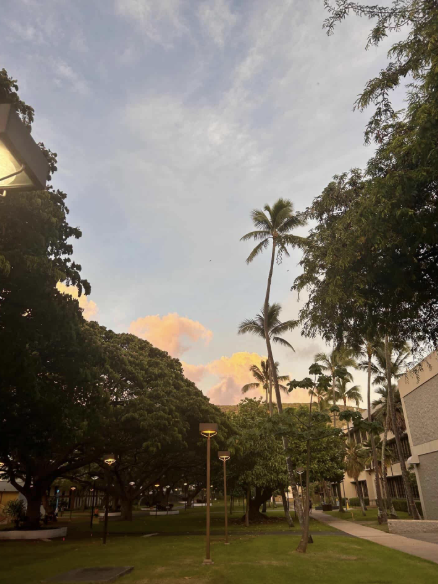
The reason for many students struggling to find their community within school is often the limited social environment that the university offers. Compared to many mainland universities, the University of Hawaii has a different social culture.
“There’s a lack of community in terms of campus life,” Magana said.
Being a big commuter school, students spend less time hanging out socially on campus.
“All the time that you really spend on campus is just kind of for classes,” Magana said.
That dynamic can make it harder for students, especially students in their first year here, to find and build their community.
“I don’t know if I did [find my people] for the first two years,” Magana said.
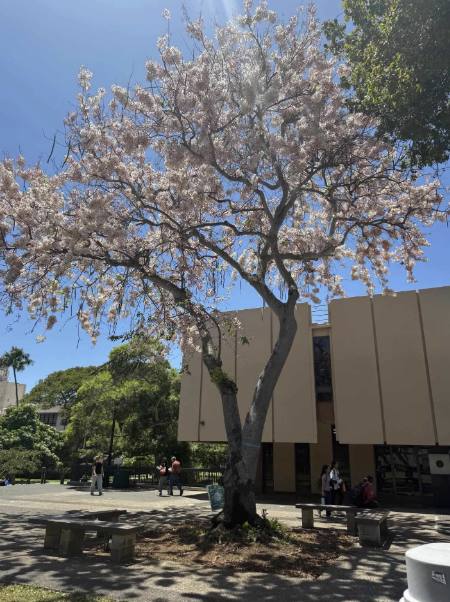
Jasmine McKnight, a rising junior from Arcata, California, had a similar view of the social aspect.
“Our community is very outside the university,” McKnight said. “Everything seems very separated from the school.”
Although the students described several challenges that came with attending the University of Hawaii, all three also had positive things to say.
“Having it be sunny and not super far away from the beach definitely reduces the depression,” Pakulski said.
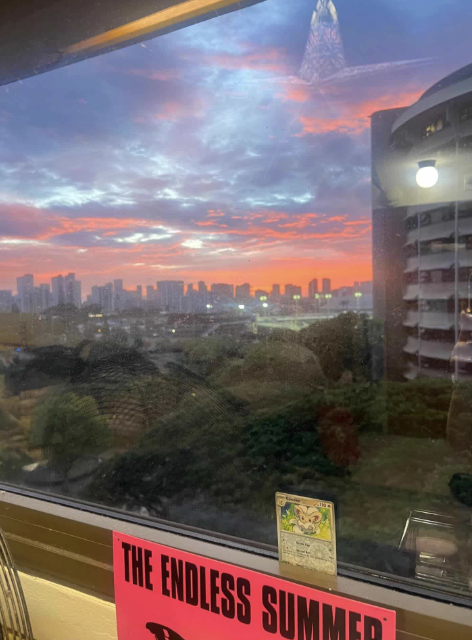
Pakulski explained that even with the struggles she had her first year at school here, Hawaii feels like home, and she’s truly made some of her best friends.
The University of Hawaii was the last school that McKnight applied to, but because it offered the specific program she wanted as an animal science major, she ended up choosing this school.
“I’ve gotten a lot more opportunities within my major than I probably would have if I was on the mainland,” McKnight said.
Cassady Dunn is a student in the Travel Journalism in Hawai’i program at the Grady College of Journalism and Mass Communication.