The boy was restless, Gislaine Ihorere remembers. He interrupted the teacher and teased other kids.
When he was done cutting up in class, he slept. The child was gaunt. Even at the age of 11, Ihorere knew that her classmate was hungry. She guessed that his home life was rough.
Families in Ihorere’s hometown of Gisenyi, Rwanda, also saw the problem. They helped the boy with food. Soon, his grades picked up. Others tended to his tutoring needs. He began participating in class and let his teacher be.
Watching her community help someone in need drove Ihorere’s decision to major in environmental science. In her college studies, she learned how a poor environment paves a bad path for a child’s mental, physical and emotional development.
“We have to take care of children, especially those below five years old,” she tells me. Young children raised in a clean environment are more likely to grow healthy minds and bodies. Ihorere wants to reach Rwandan kids and their parents.
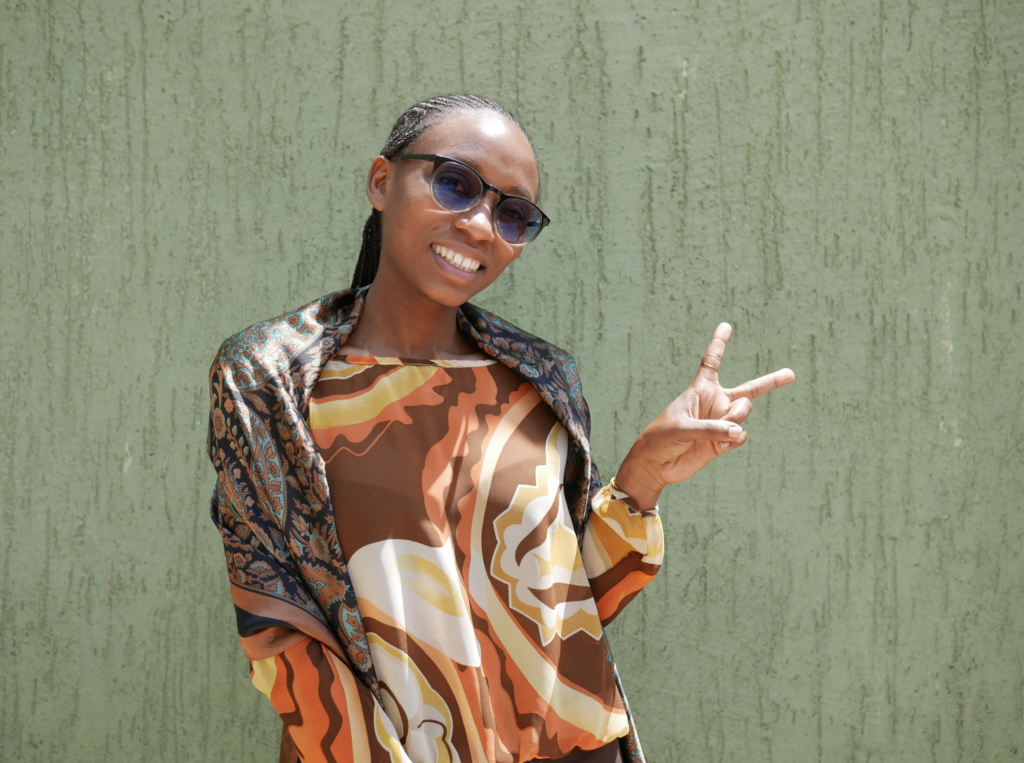
Ihorere, 24, graduated from the University of Kigali this year. In May 2026 she and her college classmates met with me and other University of Georgia students on a study abroad semester in Rwanda. During our talks, she wore her hair pulled tight in thin, shoulder-length braids that fell on an athlete’s frame. Her eyes hold an expression that says I will make this world better.
To do so, Ihorere wants to work in environmental science and communications, maybe in journalism. She wants to tell Rwandans that water quality, air pollution and waste management all influence how children grow up.
Like any college graduate, she will need a job soon. Ihorere slaps her hands together when making a point, including her frustration with starting a career. Hiring bosses want experience, but without a steady gig, how can she build a resume? It is an eye-rolling truth for graduating seniors. Ihorere clapped her long hands together and laughed at the absurdity.
“You must create your own job,” she says, with a twinge of resignation.
We keep talking. She leans toward me, focused. Her mission is to help the children. I ask an oddball question: What superhero ability do you want? She gives a practical response. Not invisibility, nor the power to fly. A universal superpower.
Ihorere wants to remove human suffering.
We have to take care of our children,” she says.
Ihorere talks to me in English, her third language. She searches for words and brings her hands together in a light clasp.
“We all know that we have to take care of children … if they lack care, you know that they don’t participate well in schools, and after, in their life, they won’t go well.”
Rwanda, as the world knows, experienced genocide in 1994 when the Hutu-led government attempted to exterminate the Tutsis. Nearly 1 million people were killed, and 3 million more fled the country.
Though Ihorere and I never discuss genocide specifically, and she was born well after the killings ended, the effects are indelible. Her worldview has a unique, connected humanity. It makes sense that she’s part of a generation of Rwandans who want to make the world better.
And while I hear her story, Ihorere asks about my career in journalism. The exchange is part of her personal philosophy.
If you meet a new person,” she says, “make sure that you gain something new (that) is good (that) can serve your life or change your life.”
Ihorere figures that she could be a journalist, with her knowledge of environmental science. Hiring editors like reporters who understand subjects relevant to news. In a world with shifting weather patterns, knowledge of environmental science is useful in a newsroom. “I want to inform people,” she says.
When she talks about what success in her life might look like, she uncovers a truth in humanity: We need each other.
“Everything you do in this life, it’s a coordination. I will need you, you will need me. We are not doing things alone. To make the future we want, to be better than today … it’s nothing you can get while you are selfish,” she said. “I have to share with others.”
As Ihorere builds her world, it will be a connected one.
Gerald Witt is a graduate student in UGA’s Narrative Nonfiction MFA program in the Grady College of Journalism and Mass Communication.