These four stories about specific Hawai’i experiences, by Anna Franklin, Grace Clark, Lucy Kelly and Autumn Luke, were created as part of the Travel Journalism in Hawaii program through the Grady College of Journalism and Mass Communication.
One Ocean Diving Emphasizes Shark Conservation Efforts
By Anna Franklin
For decades, public perception of sharks has been shaped more by fear than understanding. Popular media and pop culture have long portrayed them as mindless predators, reducing complex animals to symbols of danger.
But off the North Shore of Oahu, shark conservationists and safety divers for One Ocean are working to challenge that narrative by giving people something most have never experienced: the chance to see sharks not as monsters but as essential parts of a healthy ocean ecosystem.
Seven days a week, One Ocean Diving takes small groups several miles offshore to observe sharks in their natural habitat. Unlike the dramatic, thrill-focused image often associated with shark tourism, the experience is centered on education and conservation.
Before entering the water, guests are taught how sharks behave, how divers safely interact with them, and why respecting the animals, rather than provoking or fearing them, is vital. For many participants, the experience becomes less about adrenaline and more about perspective. What begins as nervous anticipation often turns into fascination once they see how calm and uninterested the sharks typically are around humans.
Tyler Flott, a shark safety specialist with One Ocean Diving, said many guests arrive expecting an intense or frightening encounter, but they leave with a greater appreciation for the animals.
“We try to change fear to fascination,” Flott said. “People have looked at sharks as monsters for decades, but once they actually see them in the water, that perception changes.”
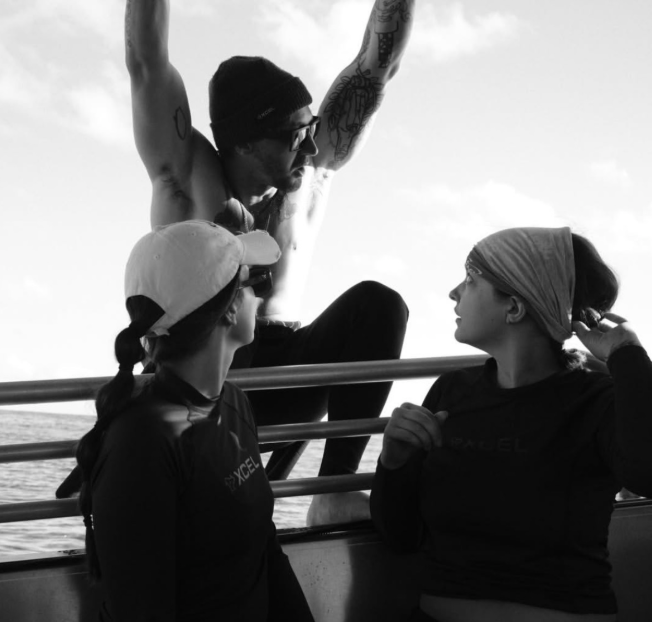
Kaitlyn Ehlers, another safety diver with the company, thinks education alone can only go so far until people experience sharks for themselves.
“You can do all the research in the world, but unless you actually see them in the wild, it’s hard to change your perception,” Ehlers said. “Once people get in the water, that fear usually turns into respect.”
Entwined with the commercial tours is a much larger One Ocean conservation effort. Divers collect data on shark populations daily, documenting migration patterns, environmental conditions, injuries from fishing gear, and changes in behavior over time.
According to Flott and Ehlers, the goal is not simply to give tourists an exciting experience but to contribute to long-term shark research and public advocacy.
“Our nine-to-five is not for the thrill,” Ehlers said. “It’s for education.”
The organization also supported efforts surrounding the Hawaii Shark Fishing Ban, a state law enacted in 2021 that made it illegal to knowingly capture, entangle, or kill sharks in Hawaiian waters. Since its passage, divers say they have already begun seeing increases in certain shark populations.
“We’re starting to see the positive effects,” Flott said. “It’s proof that conservation policies can work when people are willing to protect these animals instead of fearing them.”
One Ocean’s conservation efforts also extend beyond tourism and into larger conversations about protecting Hawaii’s marine ecosystems for the future. Along with daily research and education programs, divers work to promote sustainable interactions with sharks and greater public awareness about the role apex predators play in ocean health.
Andrew Esparza, a shark behavior specialist and safety diver with One Ocean, said many people do not realize how connected sharks are to the balance of marine life.
“These sharks are predators,” Esparza said, explaining that healthy shark populations help maintain stable fish populations and ecosystems.
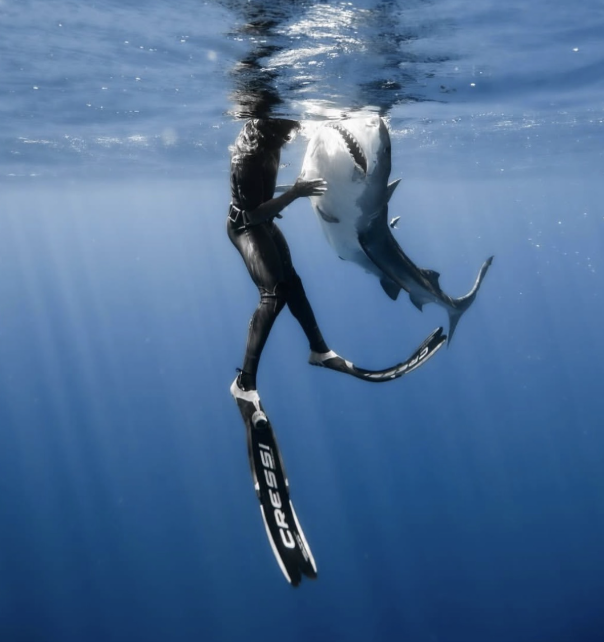
The divers describe the sharks as essential to maintaining healthy marine ecosystems, helping regulate fish populations and preserve balance throughout the food chain. Ehlers said many guests arrive expecting an adrenaline focused experience, while enjoyable and exciting, leave with a completely different perspective.
“You almost leave with a calmer mindset around something that was once your biggest fear,” Ehlers said.
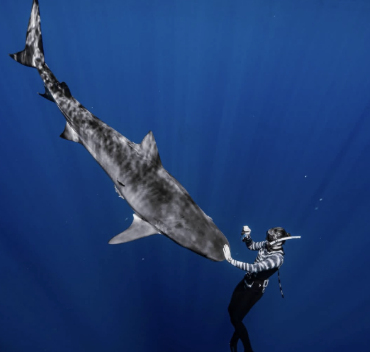
“Education is power,” Ehlers reiterated. “Understanding something often changes how we value and protect it.”
One Step at a Time: Why Hikers Return to Koko Crater Railway Trail
By Grace Clark
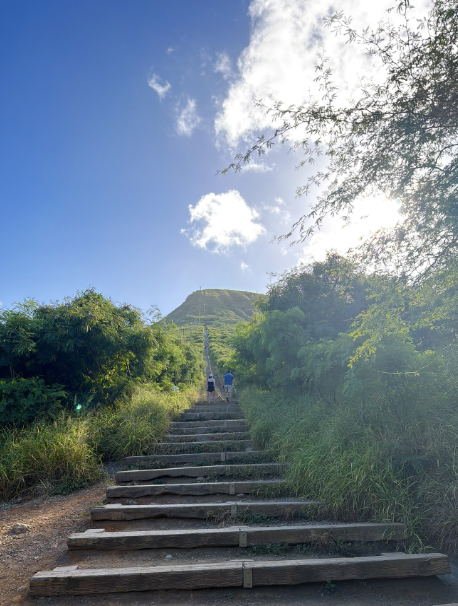
At 7 a.m. on a windy May morning, the Koko Crater Railway Trail was already crowded with movement. The smell of sweat, dirt and faint ocean air drifted through the base of the trail as shoes scraped against weathered wooden railroad ties. Tourists stretched and adjusted backpack straps while local hikers moved steadily toward the staircase disappearing up the side of the crater.
The weathered railroad ties were never meant for tourists. According to the Kokonut Koalition, the railway was built by the U.S. Army beginning in 1942 to transport military equipment and supplies during World War II. Today, thousands of hikers climb more than 1,000 stairs and 1,100 feet above Oahu.
For some, the trail is a one-time attraction. For others, it becomes a ritual.
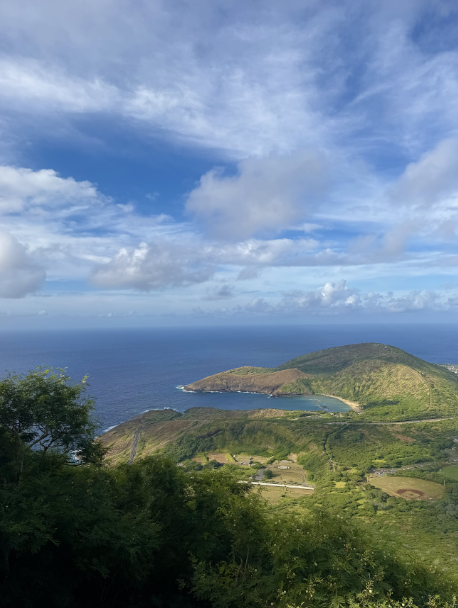
As hikers reached the summit and looked out across the coastline and deep blue ocean below, the trail’s lasting pull became clear.
Julia Okinaka from Honolulu has been hiking the trail for nearly 20 years and is currently climbing it weekly while recovering from an injury. She carefully times herself during each hike, adjusting her pace depending on how she feels that day.
“There’s times where I do it regularly, like right now,” Okinaka said. “And then there’s times where I do it once every couple months.”
Further up the mountain, hikers leaned over their knees, catching their breath as the wind pushed against their backs and struggling to remain steady. As the altitude increased, so did the feeling of overwhelming tranquility.
For Okinaka, the reward waiting at the top is not only physical.
“You look at the view, and you just look at Hawaii, and it just reminds you why you live here and why you’re so lucky, and you have the ability to see this every day,” Okinaka said. “People come here once in a lifetime to take a trip, but this is our backyard.”
As tourism across Hawaii continues to grow, Koko Crater has become one of the island’s most recognizable hikes. Yet, Okinaka said the sense of familiarity among regular climbers still remains.
“Because I come regularly, I see the same people,” Okinaka said. “Even though we’ve never introduced ourselves, we recognize each other, and we kind of give each other a nod, so that’s nice.”
Near the middle of the climb, hikers pause beside the trail’s narrow bridge section, some taking a bypass to refrain from the most dangerous part of the hike. Below them, the neighborhoods of Honolulu stretch toward the coastline as waves crash against the shore in the distance.
Mike Harnett, an avid hiker from Boise, Idaho, has climbed the trail multiple times during visits to Hawaii over the past three years. Harnett trains for Ironmans, but says Koko Crater stands apart because of both the challenge and the scenery.
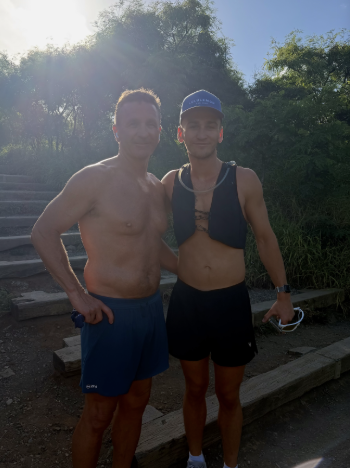
“We’ve done a lot of hiking and running and stuff like that, but this was awesome because you could see all the views,” Harnett said.
The trail offers more than exhaustion at the summit. The climb, combined with the view stretching across the island, leaves Harnett with a sense of perspective that extends beyond the trail itself.
“Anything is possible,” Harnett said.
For many hikers, the mountain has become a part of their daily regimen. Oscar Ramirez, a 36-year-old active duty Army soldier from California, has been hiking Koko Crater since 2009. While Ramirez says he “can’t even count” the number of times he has climbed the trail, hiking it weekly, sometimes two or three times a day, means he has likely completed it more than 800 times total.
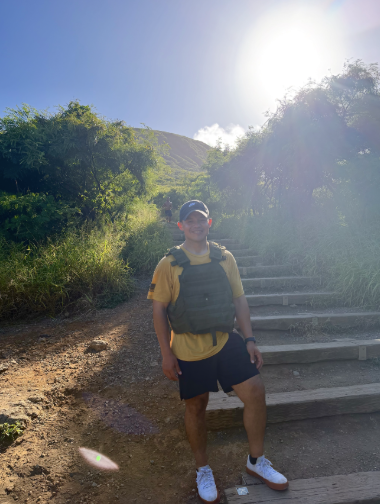
“It’s challenging, but once you get to the top, you know you have conquered something, and just seeing the views on both sides of the crater, really breathtaking,” Ramirez said.
As the morning continued, more hikers poured onto the staircase. Experienced climbers moved quickly past exhausted tourists resting along the trail. At the summit, some hikers celebrated loudly as they snapped selfies, while others sat silently facing the ocean, letting the wind rush across their backs at the top of the crater.
The experience is about more than physical endurance. The repeated climb has become a source of motivation, discipline and community for Ramirez.
“It’s like a different community,” Ramirez said. “You see young, you see old, you see people with canes. It’s awesome. It’s a great environment to be motivated.”
But the climb, Ramirez explained, never becomes easy.
“The second portion, once you hit that incline, those steps, you’re almost there, but you’re not quite there,” Ramirez said. “You’re starting to hit that fatigue, but once you look up you see that the end is near, you’re still fatigued. That’s the most challenging part, pushing past that barrier.”
Despite increasing crowds and tourism, Ramirez believes the trail is something meant to be shared.
“It’s one of the most difficult but accessible hikes on the island, and it’s an awesome view for everybody to experience at least once,” Ramirez said. “I think it’s awesome. I know it gets pretty packed during the tourist season, but I think it’s just an area that needs to be shared.”
After hundreds of climbs, Ramirez said the mountain continues teaching him a valuable lesson every time he hikes it.
“Every step matters, and you take every step at a time, you know,” Ramirez said. “No matter how difficult it is, one step at a time, you’re gonna make it to the top.”
From New York Firefighter to Hawaiian Coffee Roaster
By Lucy Kelly
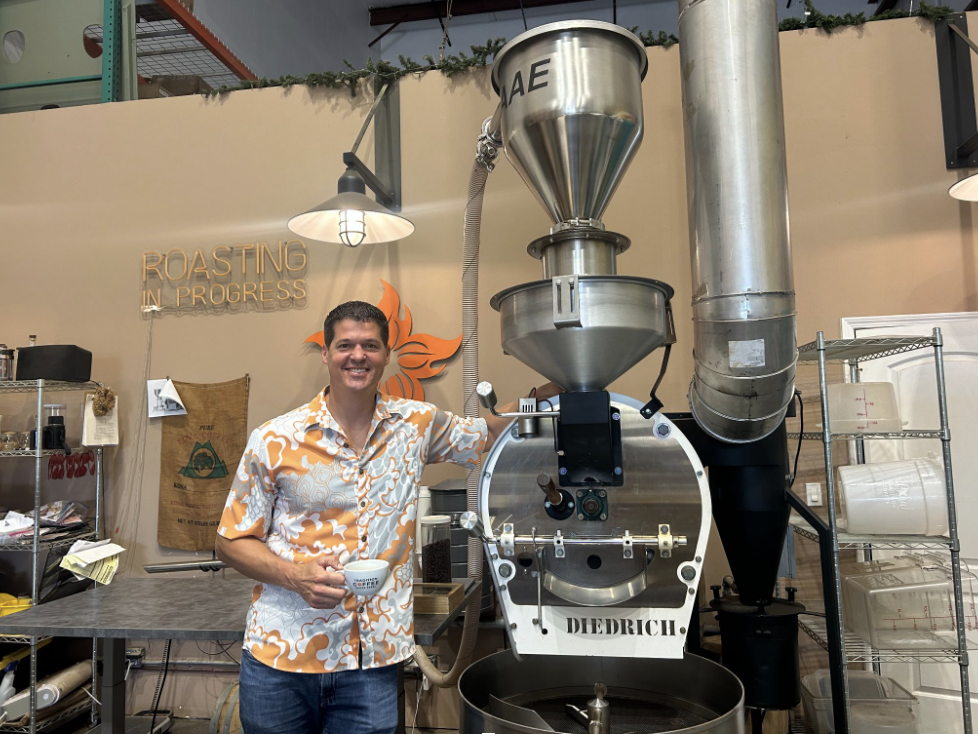
After years of serving with the Fire Department of the City of New York, former lieutenant Brian Burik found a new way to put community first as founder and co-owner of Tradition Coffee Roasters in Hawaii.
Burik and his wife exchanged the busyness of a New York firefighter and a Wall Street finance professional for the life of local business owners when they relocated to Oahu in 2019.
They moved with their two daughters to Kailua, a scenic, local beach town northeast of Honolulu, known for its white sand beaches, turquoise waters and outdoor lifestyle. There, Burik began roasting coffee in a shed behind their house. Today, the smell of freshly brewed coffee and the sound of conversation comes from Tradition Coffee Roasters’ store, located in an industrial warehouse space in that same town for the past four years.
Burik described coffee as a “hobby, turned passion, turned obsession.” In the firehouse, sharing a cup of coffee was significant for bonding with his fellow firemen. This was the inspiration behind the company name, Tradition Coffee Roasters, and the connection-based business model.
“The idea is [that] you have a tradition, and we just want to be part of it through coffee,” Burik said.
Burik’s own tradition is represented throughout the store where memorabilia from his firefighting career lines the walls. The company’s orange logo combines five flames and coffee beans in the shape of a Hawaiian flower and is featured on all purchasable items.
Growing up in Queens, New York, taught him the importance of understanding and embracing people from different cultures and backgrounds. In the coffee shop, this looks like living with aloha by understanding and respecting that people are different and beautiful in their own way.
“I always want to create a place where people feel welcome, whether they’re visitors, locals or otherwise,” Burik said. “You turn into half counselor, half coffee provider, and I love that aspect of what we do with community.”
Customers also appreciate the community-oriented atmosphere, where they are greeted by warm conversations and smiling faces. Burik and his staff know many of their customers personally and can be seen sitting with them at one of the store’s tables.
Malia Maansanas has visited Tradition Coffee Roasters at least 100 times and is one of the cafe’s regulars.
“The consistency and friendliness of the staff make you feel like you’re family,” Maansanas said.
Burik said Tradition Coffee Roasters has the best staff in Hawaii from both a skill and a passion standpoint. He prioritizes hiring employees with a can-do attitude, creating a staff that is able to adapt to the company’s steady growth.
Barista and inventory manager Sarah Wylie has been a full-time employee at Tradition Coffee Roasters for over three years and describes the store’s atmosphere as homey and welcoming. She said the business is different from that of other coffee shops because it is so community-oriented and knowledge-based.
The focus on knowledge began with Burik who has spent time educating himself on coffee as much as possible through books, other people and online resources. His research exposed inconsistencies in the information that is shared about coffee. He began testing everything he learned, and his relationship with coffee became more scientific.
“My mentality has always been 100%,” Burik said. “If I’m not aiming to be the best, I really don’t have an interest in doing it.”
Now Burik and his staff educate their customers and friends on the science and art of coffee through roastery tours and tastings, home barista classes and interactive workshops focused on tasting coffee like a professional and creating the perfect pour over. Wylie is one of several employees who leads these educational experiences at the facility, using her coffee knowledge to create relationships with customers.
Tradition Coffee Roasters sources specialty coffee from several regions of Hawaii and around the world. Many of its beans come from Guatemala, Colombia, Brazil and Costa Rica, and at least six of the company’s blends have won national awards.
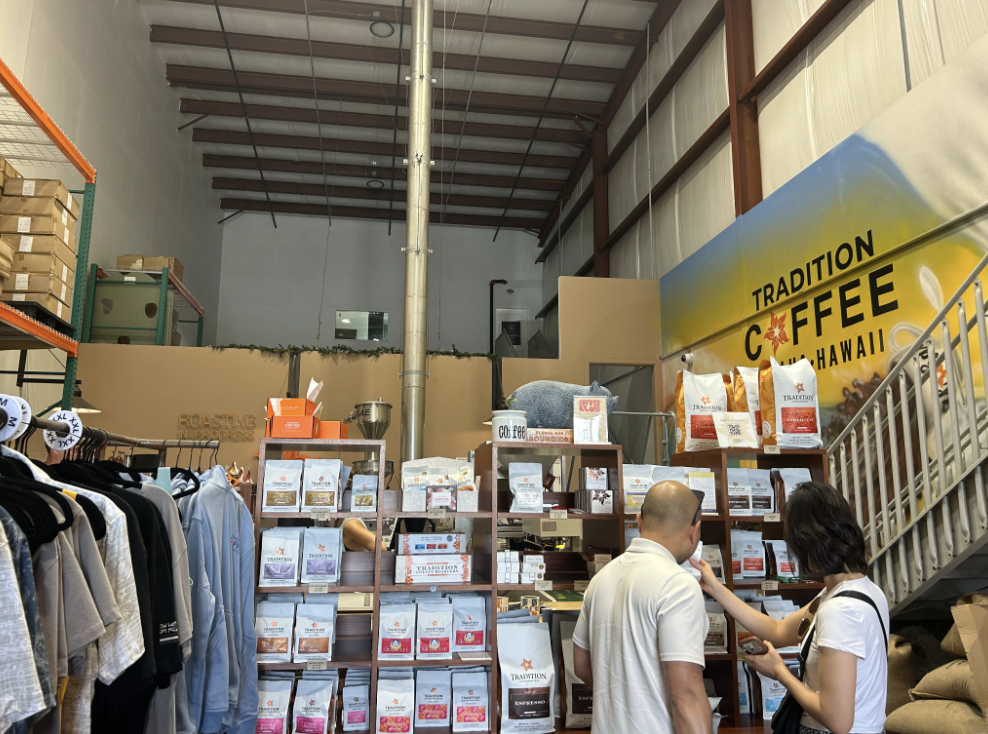
The process of selecting beans is very intentional. Tradition Coffee Roasters prioritizes coffee that is good to the people and good to the earth. Many of the beans are Rainforest Alliance Certified and Fair Trade Certified, reflecting a commitment to environmental sustainability on the island and the ethical treatment of workers.
Tradition Coffee Roasters now supplies coffee to hundreds of cafes, hotels and restaurants across Hawaii and the mainland, making taste and consistency top priorities as well.
Burik said he hopes to continue to grow the brand through online sales and by sharing Tradition Coffee Roasters’ story with a wider audience. While the company already supplies coffee to cafes in states like Pennsylvania, Texas and New York, he said he hopes to expand to more cafes on the mainland in the future.
Although his role in the community looks different now than it did during his time with the FDNY, Burik continues to serve others through intentional conversation and connection in the cafe.
“Put yourself last, put your community first and everything else falls into place,” Burik said.
What’s Bringing People into Kuhio Ave Food Hall
By Autumn Luke
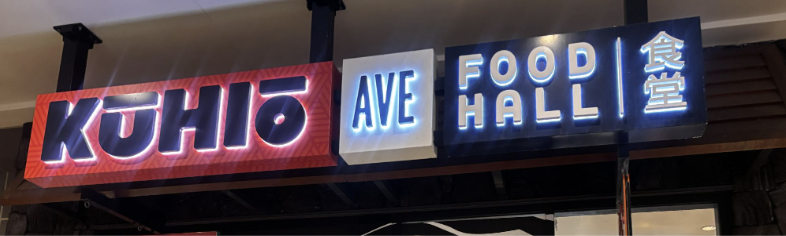
Walking into a mall’s food court doesn’t usually mean walking into a mini-restaurant. The bright overhead lights, crumb-covered chairs and tables, spills everywhere, the fast food chain options all over the space and overall it’s pretty overstimulating. A food court is seldom the place of peace and refuge, but the same can’t be said at the Kuhio Avenue Food Hall.
Walking in, the old pop music fills the space, and your eyes jump around to take in the dining options. Small warm lights illuminate the different choices and the tables are clean and ready for you to sit. As families walk in, plans are made to find food and meet back at the table. It’s a convenient and ambient shift after shopping in the International Marketplace.
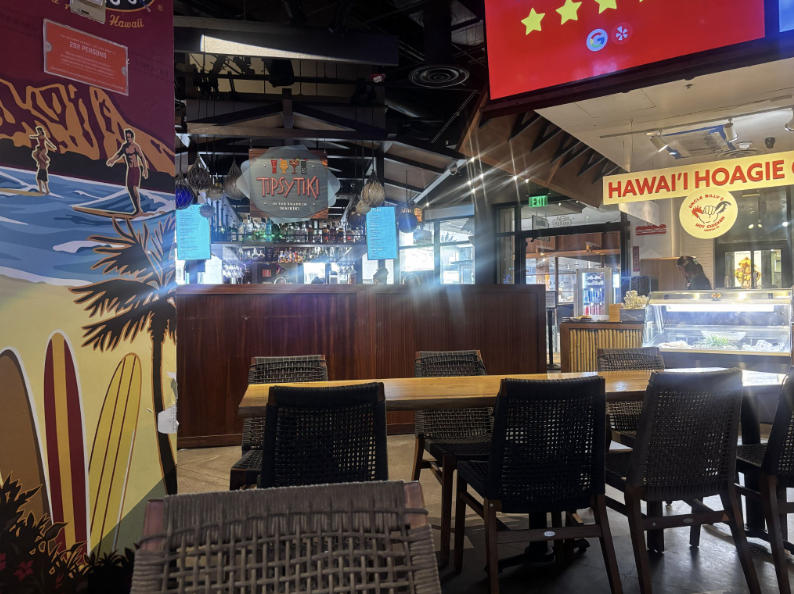
“We didn’t know what we wanted, so it’s like, oh there’s something for everybody,” said Shawna Johnson, a second-time visitor to Hawaii from Chicago, Illinois, who’d just walked through the mall with her family.
The hall includes full meal options, considered different “concepts,” according to the Kuhio website. Some fan favorites were Banzai Burger, La Piña Taqueria and Aloha Pizzeria, whose lines only got longer as the evening went on. Other options included Hashi & Spoon, Greek Grotto, Hawai’i Hoagie Co., CheeHoo BBQ and three different bars.
“It was easy to walk around,” Johnson said. “A kind of sage restaurant.”
She said the set up allowed for that kind of flow and during the early evening it wasn’t too busy. She was visiting with her husband and son, and they all enjoyed food from different places, while still being able to sit and eat together.
That’s the common theme all throughout the hall. Smaller and bigger families are able to gather and appease everyone’s cravings, whether it’s for a simple, common meal or something international.
After finding food, the families are all back at the table, having conversation over their different meals. The low light, TV screens and background music makes it a prime location for winding down and chatting. It’s inviting, with servers and cashiers smiling and sharing “Aloha” as you walk by.
Rita Williams, another second-time Hawaii visitor, talked about how she stayed right down the street during her first visit and came to the food hall, and years later she’s doing the same thing.
“We got the same thing we got the first time,” Williams said. “Tacos.”
The tacos were popular throughout the day, serving people quickly and efficiently and staying busy consistently. While not a particularly island food, it was clear that tourists were looking for comfort food with a little bit of luxury to it.
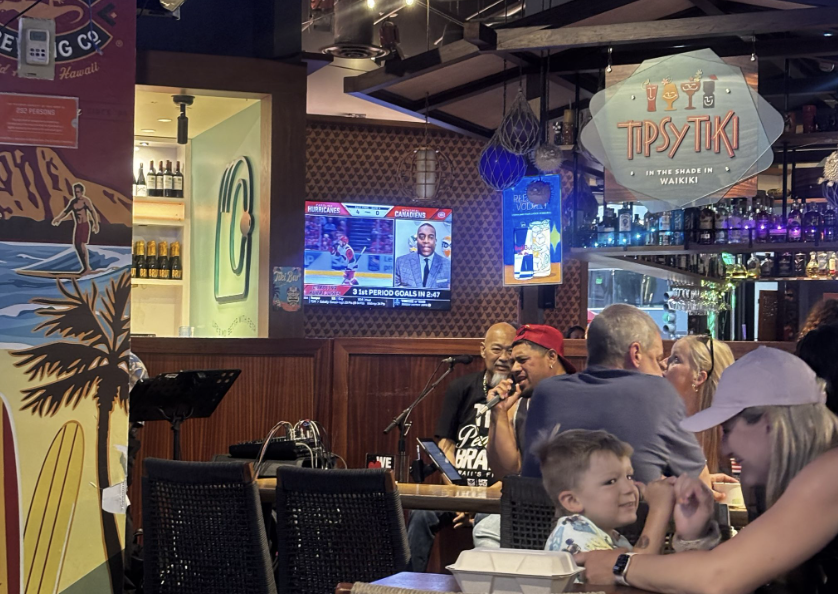
As the night progresses, the hall takes on a new atmosphere. There’s live music bringing in business and energy. Each song is followed by the people’s applause, and their attention is captured. The singer is interactive, asking people where they’re from. He also encourages guests to sing, which only brightens the night’s energy.
People can feel free to enjoy without worry, eager to settle in for dinner. It’s a quick, easy, and from all accounts affordable option for the tourists of Hawaii.
It’s no worse than airport prices,” said Johnson, referring to the food hall.
She and her husband expected the “Hawaii prices,” as tourists in such a prominent area they weren’t surprised.
“You know, if you were in a food market like this in New York, it’d probably be the same price,” said Brian Johnson, Shawna Johnson’s husband. “Any touristy area, it’s probably similar.”
Williams and her husband also remarked that they weren’t surprised by the pricing. It’s different depending on portions and the restaurants, but it often ranges between $20 and $30 per meal.
The food hall is an easy, welcoming and affordable place to come from lunch time to after dark, with main hours from 11 a.m. to 9 p.m., and as the sun goes down the livelier it gets.
This clear favorite of the Waikiki is booming for a reason, and it’s more than a mall food court. It’s become a part of the Hawaiian experience.
“I would eat here again, I’d recommend it to a friend,” Shawna Johnson said.