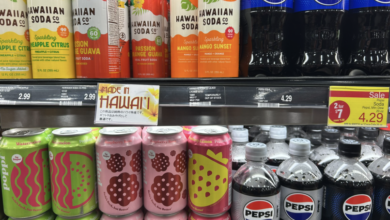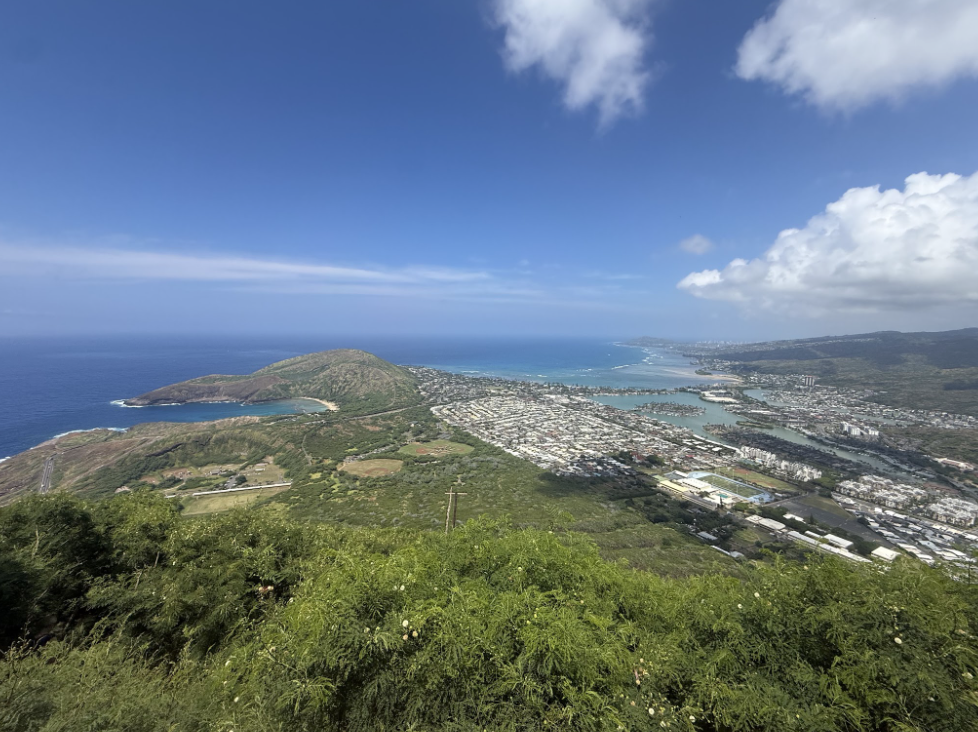
Hawai’i is known for its beautiful scenery, lush green mountains that stretch into the sky and beautiful oceans with crystal-clear water. The land appears rich and fertile, as if every tree would be dripping with delicious fruit, and the ground would be full of perfectly ripe vegetables.
In Hawai’i, this is not the case.
About 85% to 90% of Hawai’i’s food is imported — 1.1 million tons of food are brought each year to Honolulu and distributed throughout the rest of the islands.
In the South of the mainland United States, where I grew up, Hawai’i was advertised as a tropical paradise featuring wonderful weather, friendly locals and fantastic food. Everything feels fresh. Every convenience store I passed had a rainbow of fruit lining the shelves. Watermelon, pineapples and papayas — everything added to the feeling of being in a tropical paradise. Whenever I ate at a restaurant or food stand with seafood, I imagined it came from the ocean that was within walking distance of my hotel.
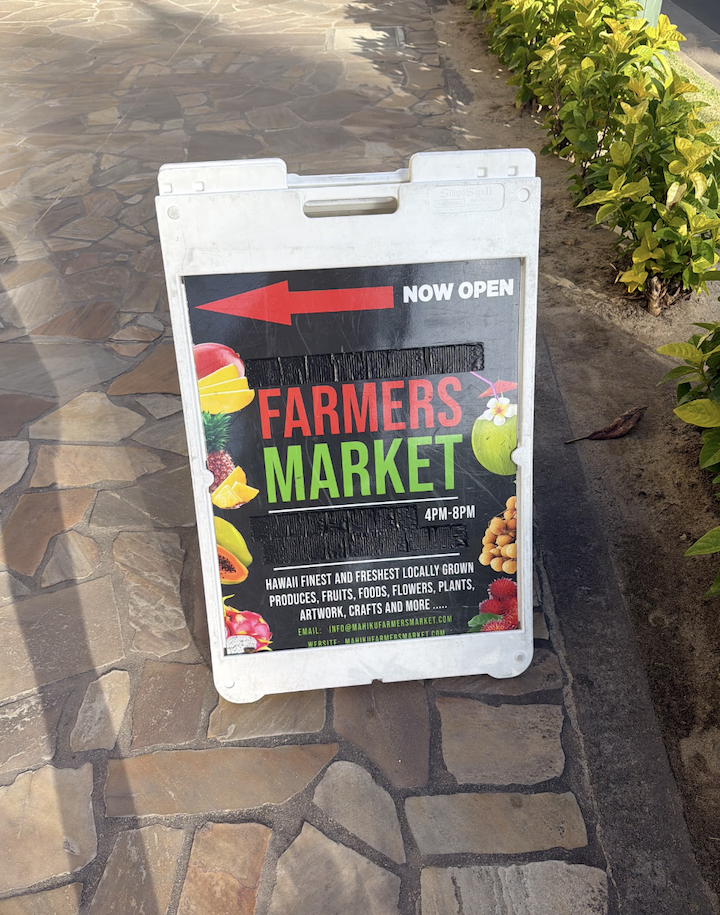
One day after the beach, I wandered through a market I saw advertised online. The smell of freshly cooked pork and chicken wafted in between stands full of art, homemade candy and racks of synthetic Hawaiian shirts.
I stumbled across a fruit stand that displayed plastic boxes of mango sticky rice, shrimp spring rolls and cut-up fruit lined up for sale. I went up to a young man working the stand with his family.
“Do you grow this here?”
He looked up at me and, under his breath, said, “No.”
Instantly, I snapped out of my tropical haze; I dove into learning how much of Hawai’i’s food is really from Hawai’i.
The seafood did not feel as freshly caught when I learned that Hawai’i imports 60% of it. The vibrant colors of the fruit seemed to instantly dim when I read that only 15% of Hawai’i’s food is locally grown. The state as a whole is incredibly food-insecure — there is an estimated 11-day supply of food in Hawai’i at any given time.
As a tourist, it is hard to see past the glamour of Hawai’i, but some moments briefly open the door to the reality of living on the Hawaiian Islands. Grocery prices are typically 30% to 50% higher in Hawai’i than on the mainland. According to the National Institute of Health, “the cost of monthly meals prepared at home for a family of four in Hawai‘i is $1,016 compared to $796 in the rest of the United States.”
Despite Hawai’i’s dependence on imported food, there are still places to find local produce across the islands.
On Oahu, a family-run fruit stand has been operating at the Hyatt Regency in Waikiki for seven years. The fruit sold at the stand comes from the family’s friends around Oahu and on the Big Island.
Kayla Khounsourath occasionally helps her family run their stand in Waikiki.
We feel proud, really,” Khounsourath said. “We try our best to provide fresh and good fruits and food to the people here that buy from us, locals too, actually.”
Stands like Khounsourath’s, while sometimes hard to find, are available on Oahu and other Hawaiian Islands. Local organizations, such as Oahu Fresh, also create efforts to allow locals to purchase affordable fresh produce.
Hawai’i still faces food security challenges, but policy efforts are underway to make the state more self-sufficient. One is the Increased Food Security and Food Self-Sufficiency Strategy by the Office of Planning and the Department of Business, Economic Development and Tourism. Another is the Transforming Hawai’i’s Food Systems Together (THFST) initiative.
Miles Albie, an associate professor of sustainable community food systems at the University of Hawai‘i West O‘ahu, launched THFST five years ago.
“It’s a grassroots and participatory state-level food system planning process,” Albie said. “The intention of that is to shape a dialogue around how can Hawaii, through planning and policy, achieve a range of ecological and social outcomes?”
Ari Goodmark is a student in the Travel Journalism in Hawaii program through the Grady College of Journalism and Mass Communication.