How Local Debates Over Data Centers Leak into Water Scarcity Concerns
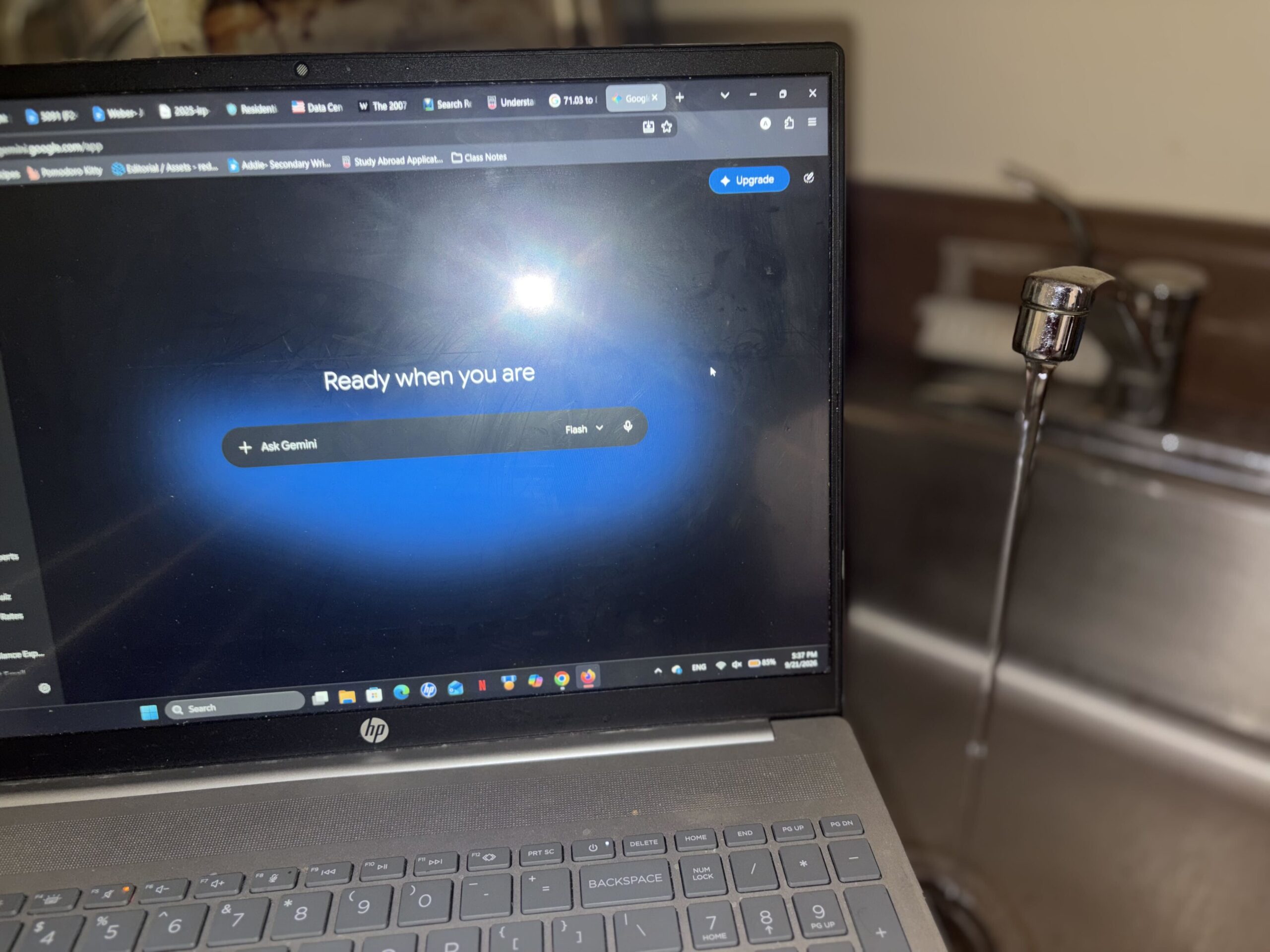
For most people in Georgia, water is a convenience accessible with just a simple twist of the faucet. Few would consider it a scarce commodity unless it was no longer a convenience.
Yet water resources fluctuate throughout the year, and deplete fastest during warmer months due to the increased usage of energy in residential areas, commercial usage and natural environmental demands, according to a PLOS Water study on local water management. It may be difficult to pinpoint the extent to which drought conditions and energy consumption are direct results of the rise in data center construction due to the companies’ lack of transparency.
From February to June, Athens Clarke-County faced extreme drought conditions, which by definition may have resulted in major crop and pasture losses. Despite these conditions, water supplies continue to be depleted, according to the Athens-Clarke County Drought Status page.
Although people benefit from the services provided by utilities and artificial intelligence, local communities share finite water resources with energy generating infrastructure.
According to a report by Ceres, power plants and data centers built in drought-prone areas directly compete with local communities, agriculture and ecosystems with local water resources. The Environmental Protection Division of Georgia requires a water permit if a facility uses more than 100,000 gallons of water per day from local surface water sources, which many large data centers and power plants exceed dramatically.
Despite these variables, not all data centers use as much water.
According to QTS, a large-scale data center located in Fayetteville, Georgia, it uses a closed-loop cooling system, which continuously recirculates existing water and will not draw from local sources.
However, closed-loop cooling systems are complex and more costly, and still require energy to power up.
Because of this increase in building electricity grids and power plants to fuel data centers, utility companies must spend extra funds on construction. In Georgia, the average cost of utilities have increased by roughly 18% since 2021, according to data from Georgia’s Public Service Commission’s Residential Rate Survey.
Maya Shrivastav, a sophomore international affairs, ecology and art major at the University of Georgia, has lived in Athens for most of their life.

“Our power bills are constantly going up,” Shrivastav said. “You know, my power bills are split between four people, and it’s still super expensive per person.”
Under Georgia’s Public Service Commission’s Large Load rules, Georgia Power Company will eventually reduce standard electricity rates in the future for residential communities, despite the increased load of energy usage by powering data centers. Data center companies would be required to pay for the extensive resources to power the centers instead of communities.
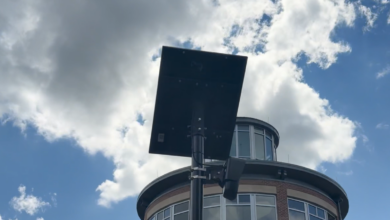
Georgia Power’s Integrated Resource Plan from 2025 estimates there will be an increase in about 8,500 MegaWatts of electrical load growth — enough energy to power over six million homes for a month — and as a result, additional energy infrastructure will need to be built, including solar panels, along with continued investment on existing nuclear, power plant, natural gas and coal resources.
Isabella Ariza, a staff attorney for Sierra Club, advocates for reducing the residential and environmental impacts of the increased construction of data centers and utilities for power companies.
“We don’t know how long a data center is going to stick around. So to make sure that people that are paying Georgia Power bills in 45 years are protected… the commission should really require Georgia Power to be more transparent about the contracts that they’re entering,” Ariza said.
Public concern over these developments are statewide. A summer survey of 650 Georgia residents dove into residents’ stance on the interrelationship between their utilities, their communities and proposed data centers.
Roughly 83% of respondents support a statewide moratorium on data center development until transparency laws are enacted to outline costs, energy assignments and electricity consumption.
In Athens-Clarke County, when developers proposed a data center to be built by the former Athena Studios site, community backlash prompted a temporary data center moratorium. The updated ordinance required closed-loop water recycling systems and clean energy generation to limit environmental impact.
Shrivastav helped previous mayoral candidate Tim Denson advocate for the moratorium.
“[While canvassing] door to door… I felt like a lot of the people who I talked to were very open to [the moratorium], and it’s interesting to see the same people who are frequently using AI to be opposing a data center being built in their own city,” Shrivastav said.
It’s like, are you opposing data centers being built in your city because you recognize how detrimental they can be?”
The current ordinance on data centers in Athens potentially took resident’s concerns into consideration, with regulations such as zoning restrictions, noise limits and electricity demands. But for other communities in Georgia who already have data centers and power plants built nearby, their fight is far from over as they watch the environmental and financial impacts play out in their communities.
Going forward, decisions by the Public Service Commission and utility companies will decide how the increased power demands will impact local residents as data center customers construct facilities statewide.