Waikiki Beach is home to two kinds of footprints.
The first belong to tourists and locals. Sandals and flip-flops scatter along the sand as people sunbathe and dip in the ocean.
The second are pawprints carved deep into the sand. One set belongs to an energetic golden retriever that prances down the beach, eagerly glancing toward his owner and never leaving his side. His pawprints form in the sand and trail down the endless beach of Waikiki. His owner launches a toy into the ocean, a task he knows well. Trampling through the waves, his focus on retrieving the ball is impeccable. Within seconds, he is back and instantly ready for another go.
It’s an easy image to love, watching a dog frolic along the sand. But this isn’t the case for all the animals of Hawai’i. Across the island are rescue shelters that cater to all different types of animals. All have one goal: to leave no animal alone.
Tucked behind the glorious scenery of Oahu is a community rooted in bettering the lives of all animals. One of these organizations is the Hawaiian Humane Society. This is a shelter that doesn’t stop at dogs and cats. Their available animal page currently lists guinea pigs, chinchillas and even a tortoise named Mr. Rodgers.
The Hawaiian Humane Society has two campuses on Oahu. The Mōʻiliʻili Campus is located just minutes away from the bustling Waikiki Beach. The office space is tight, with bags of dog food piled high in every corner and treats lining the shelves; every inch of room is prioritized for the animals.
One excursion special to both locals and tourists is the ʻĪlio Explorers program, a field trip for dogs to get brought out on the island for a day. Anyone on the island is welcome to participate, and it requires an online reservation and small fee that includes an adventure pack for every group. Whether it be a day on the beaches, hiking or even relaxing at a cafe, every dog benefits.
Brandy Shimabukuro, the director of communications and marketing at the ʻĪlio Explorers, shared insight to how impactful these trips can be.
“It’s a great way for you to give back, but also experience the beauty of Hawaii,” Shimabukuro said. “What better companion could you ask for than a shelter dog who needs it most.”
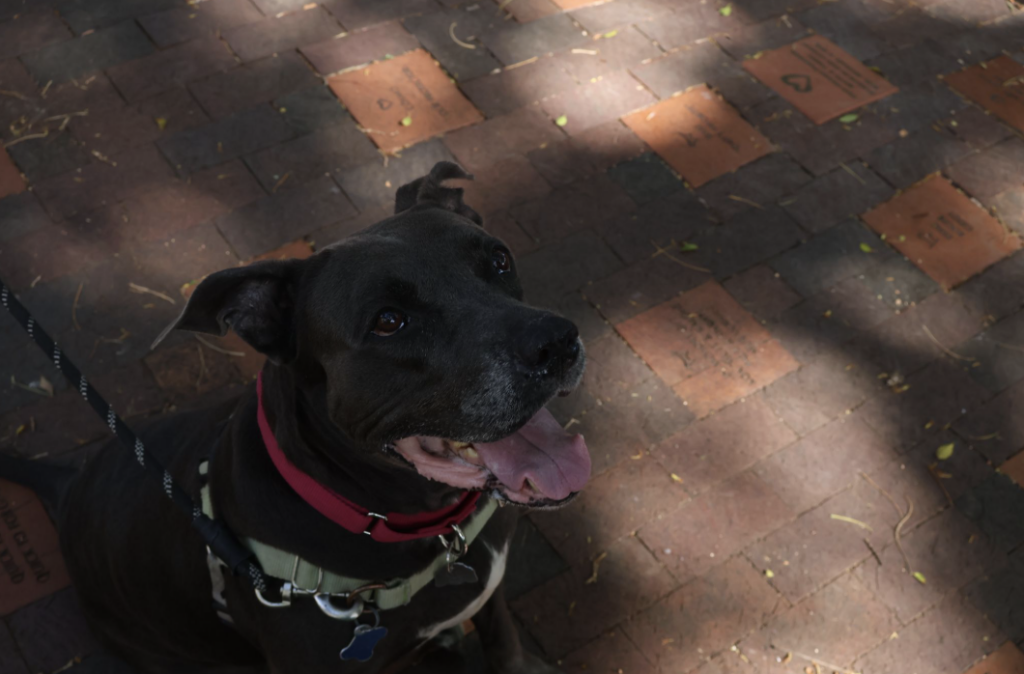
Oftentimes the dogs return from their days out exhausted, running back into their kennels to get much-needed rest time. A step away from the kennel is a breath of fresh air for the dogs, and helps the humane society team learn more about each dog’s interests and personality.
This shelter isn’t the first to dabble in a field trip program like this. The Kaua’i Humane Society was one of the first field trip programs set up in the state, and it has been running for over a decade.
Miracles happen on these outings, and sometimes people fall in love. One dog, Milo, was brought out with a family at the early onset of the launch of the ʻĪlio Explorers program. After spending the day with him, the family wanted to bring him back to their home in Oklahoma.
“He has matching Christmas pajamas with that family,” Shimabukuro said. “He’s living his best life.”
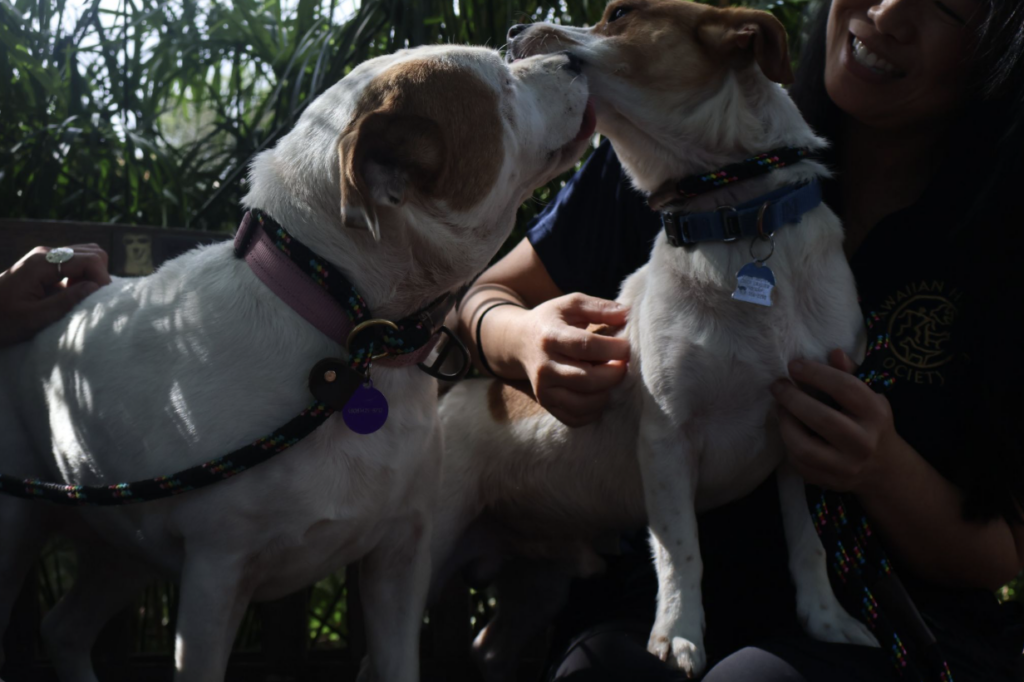
Not every rescue operation looks like the typical shelter. The Fur-Angel Foundation finds homes for Oahu’s homeless and unwanted dogs without putting them into a shelter. It all started with a group of friends trying to aid a family with dozens of dogs under their care in a small home.
“We thought, ‘Oh there must be more people that need help with this type of situation. How can we get more of the community involved?’ And that’s when the idea for a nonprofit came into play,” said Tiffany Kim, president of the Fur-Angel Foundation.
Founded in 2014, the foundation strives to make a difference in their community. Fur-Angel doesn’t have a physical location, meaning that every dog they take in immediately goes to a foster home. The organization currently has 50 dogs waiting to find their forever homes.
Kim never expected to be a part of the program she is today. Before Fur-Angel, she worked service jobs while getting her master’s degree. She is currently a student working through her doctoral program while running the nonprofit, creating a program that readies the dogs for homes post-adoption.
“Our process is pretty extensive,” Kim said. “You have to put up an application, we call references, we do a home check and we do follow-ups. We want people to have a vested interest in the animal.”
Their standard of care at both the Hawaiian Humane Society and Fur-Angels is an incredible reflection of the core of Hawaii, as every person and being is ‘ohana. Putting in the initial work to find the best fit for every dog is what makes the placement last.
Oahu welcomes over five million visitors annually, but what is rarely seen is the incredible output of work locals put into their community. These two organizations are examples of many foundations that strive to leave no animal behind.
Ella Dri was a student in the Travel Journalism in Hawai’i program in the Grady College of Journalism and Mass Communication.