Switched Up Schedule: UGA Professors Adjust to Spring Modifications

The 2026 spring semester at the University of Georgia introduced a schedule change, which entails different obstacles and opportunities for professors.
“It’s going to make the weeks themselves a little bit longer, a little bit more challenging,” said Colin French, a political science professor at UGA.
The increased amount of two-day-a-week classes and longer individual class times on some days means professors have the opportunity to adapt their content and teaching styles to the new schedules. Some courses added five minutes, resulting in 80-minute class periods scheduled across two days or 55-minute periods scheduled on three days.
Classes also start 15 minutes later than in previous semesters.
The longer classes in the new schedule require “more active learning,” French said.
Holding onto a student’s attention with just 80 minutes of me talking, no matter how well I talk, isn’t necessarily always going to work,” he said.
The University Council voted to revise the daily class schedule on March 19, 2025, and 193 members attended the meeting. The council voted nearly unanimously, with one vote not cast and one vote against from Edward Halper, a professor in the department of philosophy.
Halper said this week that his decision was pedagogical. He noticed students have shorter attention spans, so longer class times would lead to students retaining less information and professors having to cut down on information.
“I think the motivation was that it’s going to be easier on us and on the students,” Halper said. “I don’t think that way. I think we have a good group of students at the University of Georgia. We should be thinking of ways to challenge them and not thinking of ways that we could remove the challenges from their lives.”
Kim Landrum, a senior lecturer for advertising and public relations who voted in favor, said despite the nearly unanimous vote, there were many conversations about the effectiveness of the changes.
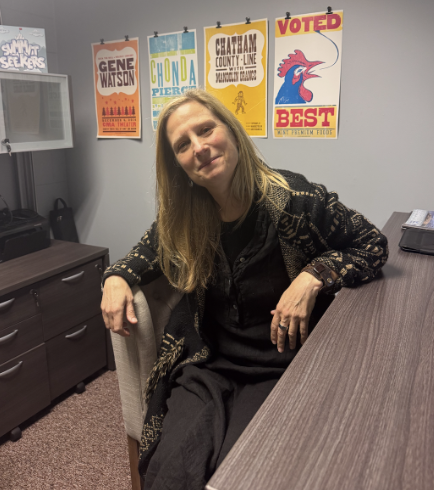
“There was a high degree of pushback in certain areas, just not knowing how the details are going to shake out,” Landrum said this week.
Landrum said she believes the schedule change has had a positive impact on her classes. She is excited her foundation course is now lengthier, giving her the opportunity to dive deeper into topics during a class period.
French emphasized the benefits of matching UGA’s calendar with other universities, allowing him to better collaborate with faculty across the country. The change assisted in setting a full week aside for Thanksgiving break, and better lining up the start and end dates of semesters with similar universities. This reduces the amount of weeks in the semester, as classes began a week later than in previous years, beginning on Jan. 12.
Kyser Lough, journalism professor and University Council member who voted for the schedule, said the extended time outside the classroom allowed him to come to campus more prepared.
What was nice was it allowed me to enjoy time off a little bit more, spend time with friends and family and actually take a breath before jumping right into the next semester,” he said.
The proposed benefits of the schedule modification were numerous, such as improved classroom efficiency, fostering productivity and minimizing schedule conflicts. Another justification was that variations of the new class structure are used by other colleges and universities, many of which the University considers “comparator institutions,” according to the proposal.
The changes will have no effect on the summer schedule.
Nazrin Aliyeva, a second-year master’s student studying landscape architecture, said the new schedule also creates a bigger struggle for her with the longer class periods.
“I don’t even know which day it is,” she said. “That’s how tired I am; I don’t want to talk, I don’t want to communicate with my professors, and my brain work just … stops.”
The story was reported and written by journalism majors Andrew Robinson, Barrett Nardi, David McFarland, Chad Andrews, Kaitlyn Harvey, Katelyn Workman, Gabby Ma, Maia Geraci, Olivia Roth and Sadie Hutchens.