Anastase Irakoze was just 3 when his father died.
A trip home on his bright red Yamaha motorcycle, the metal lined with silver and blue tattoos, ended before he could return. He took his last breath before he arrived at the hospital.
“I was too young,” Irakoze said with bright eyes, followed by a reflective silence.
The death of his father, Theophile Mukesha, instilled in him the concept of karma, a belief stemming from Hinduism that one’s actions have consequences. Irakoze believes the more good one puts into the world, the more good one should receive.
Mukesha’s last night was spent driving a friend home, a journey of selflessness that resulted in the loss of his life. Irakoze said his father supported many people in their village, the Northern Rwandan province of Musanze.
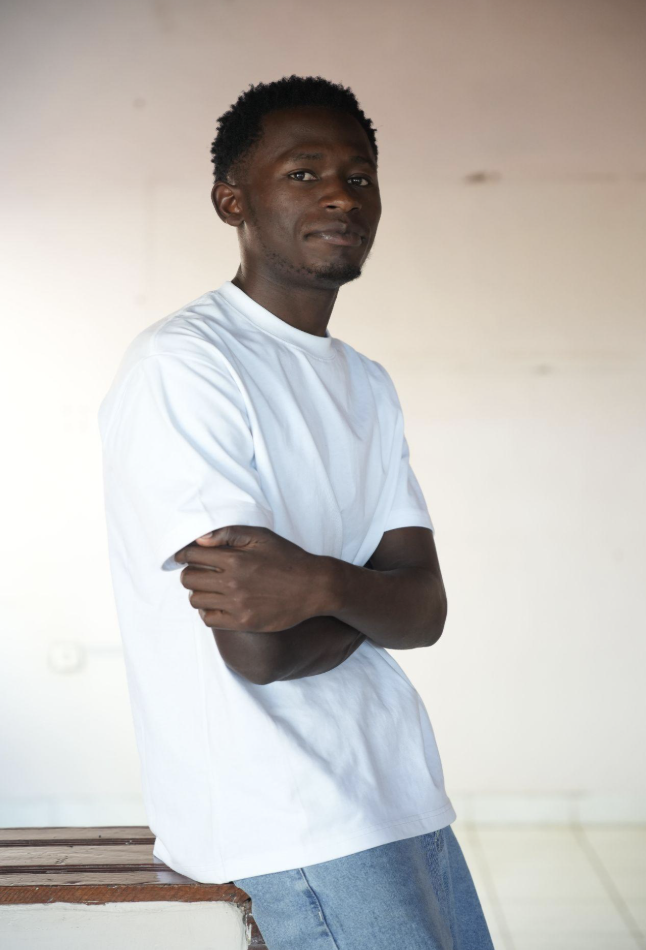
Wearing on his right wrist a black-beaded bracelet, a gift he received from his friend in his first year at the University of Rwanda, the 23-year-old studying environmental sciences explained a similar gift he sees in himself.
“I have mercy for people who are in danger,” Irakoze said while articulating his definition of empathy.
If someone needs help, I help them.”
His consideration for his peers is evident in his post-graduation plan of joining a fellowship at the Rwanda Non-Communicable Disease (NCD) Alliance. He is passionate about helping people detect diseases early through screenings and tests.
Irakoze is the second youngest of seven siblings. He admires his mother’s compassion.
“Twenty-one years have passed, and she still persists to take care of us. She is very strong,” Irakoze said, reflecting on the time passed since his father’s death.
Irakoze’s childhood home is located on a vibrant farm, full of the cows his mother uses to provide for her children, a practice shared by approximately 28% of private Rwandan households, according to the 2022 Agriculture Thematic Report.
As time has passed, he and his siblings are now old enough to help support their mother, a cycle similar to the network of Musanze.
“The support my dad gave to people, now I’m receiving that,” Irakoze said, sure of the impact he still feels from the presence of his father.
Musanze still feels his presence, too.
When they tell me I look like my father, they seek his memories,” Irakoze said.
Mukesha was a recognizable figure throughout Musanze. As a politician, the members of the village were familiar with his intentions, ones they still search for in Irakoze, and Irakoze searches for in himself.
The young boy who barely knew who his father was has grown into a confident man whose soul reminds his peers of the man who made him. The concept of karma plays a large role in his character, something visible to anyone who meets him.
A deep-rooted love for people and giving back to his community is the direct result of the life that Irakoze grew up in. Stories from Musanze keep Irakoze grounded and certain about the future he wants to make for himself.
“They say I have his intelligence,” he said. “It is the greatest compliment.”
Katherine Lee was a student in the Travel Journalism in Rwanda program in the summer of 2026.