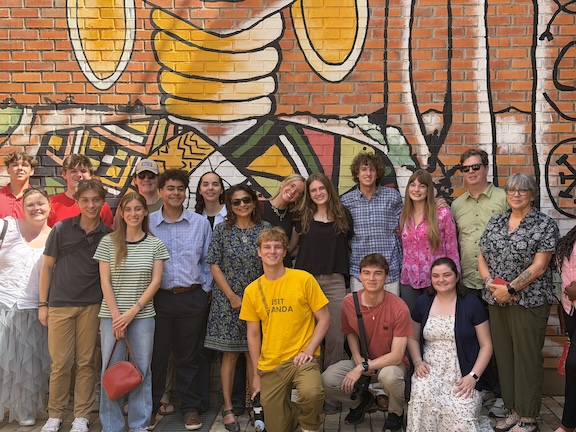
The journalism that appears in the Rwanda section of Travel Journalism on Grady Newsource was produced by University of Georgia students who traveled to Rwanda in mid-May for two courses — history and journalism — that explored reconstruction and reconciliation after the 1994 genocide against the Tutsis.
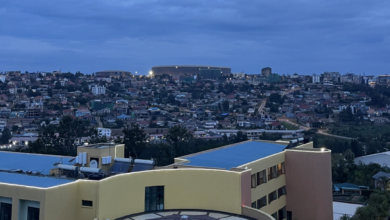
During our stay in Rwanda, we visited a women’s cooperative in the heart of Kigali and another in the village of Karama. We were welcomed by survivors and perpetrators of the genocide who live together at Unity Village. We fought back tears at genocide memorials including the Kigali Genocide Memorial, where each of us placed flowers at the mass graves of victims. We ate meals of plantains, sweet potatoes, rice and meat at buffet-style lunches. We met with students from the University of Rwanda and the African Leadership University. We attended a show of music and dance at the Hotel Mille Colline. Every evening, the students went out in groups, trying out Kigali coffee shops, restaurants and nightclubs. Some even managed to make their way into Amahoro National Stadium to watch Rwanda play a Basketball Africa League game.
Some of the stories the students produced are profiles of young men and women studying in Rwanda. Others are personal accounts of the students’ experiences in the Central African nation.
It was not easy for the students to report these stories. Many of the places we visited on this trip memorialized the nearly 1 million people who were slaughtered over the course of a few weeks. The students had to approach people they met with utmost sensitivity and care. And there were cultural barriers as well; some of the people they met during only spoke Kinyarwanda and not English.
A 17-day study abroad course cannot possibly reveal every dimension of a country. But it can expose the inadequacy of assumptions. The UGA students arrived expecting one Rwanda and left having encountered another; their impressions were vastly different than what they had initially envisioned Rwanda to be.
We spoke with so many Rwandans who said they wanted their country to not be solely defined by genocide. I believe the UGA students understand that now. They returned home with experiences that complicated the narratives they had harbored in their heads. They will never again think of Rwanda through the lens of a single tragic event. Nor will they think of themselves as they did before embarking on this trip. They returned to the United States with a little more awareness of their place in the world, I believe. Perhaps with a little more humility.
Moni Basu is an award-winning journalist and professor. She directs the MFA program in Narrative Nonfiction and is the Charlayne Hunter-Gault Distinguished Writer in Residence at the University of Georgia.