

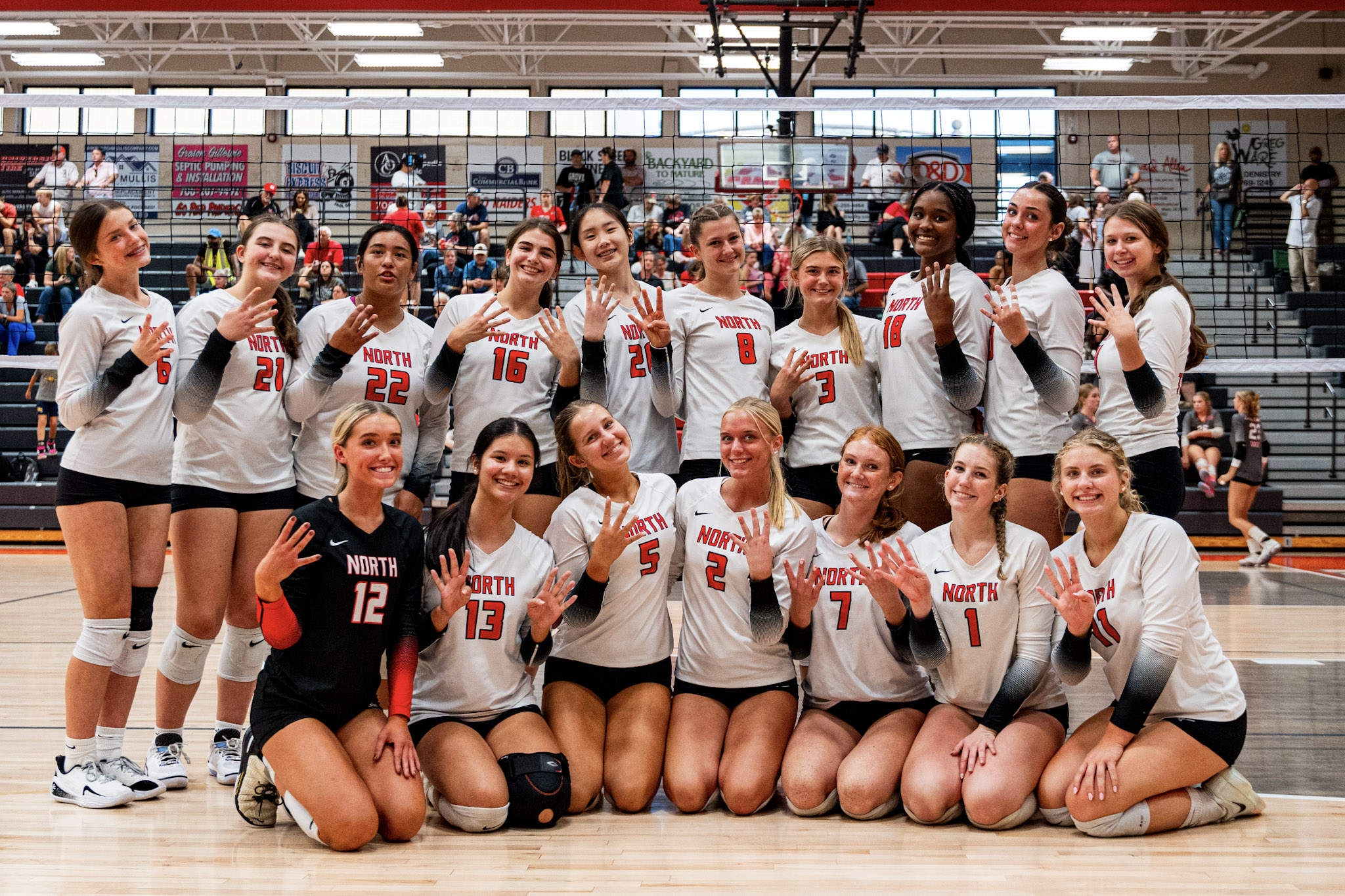
North Oconee’s volleyball team swept Ware County in a first-round playoff match this fall. The Gators only scored seven points combined in the first two sets against the Titans. North Oconee was the top team in Region 8-4A, while Ware County was the third seed in its region. On the court, this was a serious mismatch.
But North Oconee ran into its own problems with seeding later in the tournament. The Titans faced an underseeded Midtown in the Sweet Sixteen and lost 3-0. Their postseason journey highlights exactly what the Georgia High School Association hopes to prevent.
Following decades of seeding teams by their region finish, the GHSA voted in October to use a power-ranking formula to seed the playoffs beginning in the 2026-27 academic year.
“It wasn’t the best 32 teams in the tournament,” said Don Corr, GHSA’s associate director. “This is going to get as close as we possibly can to the best 32 teams in every bracket.”
The new system applies to football, fast-pitch softball, volleyball, basketball, baseball, slow-pitch softball, soccer and tennis.
Moving forward, a team’s playoff fate lies in the postseason ranking formula: 35% is attributed to a team’s winning percentage, 35% to its opponents’ winning percentage, and 30% to its opponents’ opponents’ winning percentage.
Midtown entered the postseason as the fifth-ranked team based on PSR, but because they finished as region runner-up, they were forced into an early matchup with sixth-ranked North Oconee. Under next year’s rules, the Titans and the Knights would not have met until the state championship.
The GHSA tested the postseason ranking formula with Class 3A, Class 2A, Class A Division I and private school divisions in 2024. Under the trial run format, each region’s top four teams made the playoffs, with the top two receiving priority seeding.
“After two years now, we’ve realized it’s probably the best system to put the highest percentage of teams that deserve to be in the playoffs, in the playoffs, and seeding them accordingly,” said Athens Academy athletic director Kevin Petroski, a member of the GHSA executive committee.
Beginning next season, the playoff field will no longer automatically include the top four teams from each region. Only region champions will earn automatic bids, with the remaining spots filled by teams with the highest PSRs.
The decreased importance of region standings has also sparked discussions about how to crown region champions. Some programs are considering moving away from traditional region tournaments altogether.
“One thing that we’ve already talked about in our region meeting at the end of this year was possibly playing each other twice during the regular season, instead of just once and then almost cancelling out some of the region tournament matches that might not change if you’re in the top four or not,” said North Oconee volleyball coach Taylor Brooks. “Because now that’s not going to matter.”
But the new formula doesn’t just reshape the playoff bracket. It reshapes the entire regular season. Coaches and athletic directors will have to decide what they value most when building schedules.
An opponent’s strength may become a priority, since a loss to a strong team could boost a PSR more than a win over a weak one. Now more than ever, scheduling will require strategy, with each matchup affecting a team’s PSR and postseason standing. Coaches must find a balance between exposing their teams to state championship-level competition and boosting their PSR.
“There’s always ways to shift the perspective, to make sure that we’re looking at growth and development, not necessarily that win-loss record,” said Jefferson volleyball coach Brittani Lawrence. “I know a lot of coaches, kind of just evaluate their importance based on a win-loss record, but it’s about trusting the process.”
While only the top team in each region is guaranteed a playoff berth, the PSR is designed to give competitive regions a better chance to place more teams in the top 32. By factoring in an opponent’s strength, teams will no longer be punished for playing other elite teams.
“Playing in a tough region is not a problem. It’s a good thing for you,” Corr said. “Because all of your opponents, if they’re all good, are going to have a good [opponents’ winning percentage] and [opponents’ opponents’ winning percentage].”
The Titans learned how unforgiving the old system could be when their promising season led to an early exit. With PSR, teams like North Oconee will compete in a fairer bracket. This system lets them chase a state championship without being disadvantaged by an unlucky draw.
M’Kaylah Jackson is a student in the undergraduate certificate program at the Carmical Sports Media Institute at UGA.




Show Comments (0)