Sourcing Food Locally: How Local Restaurants Get From Farm to Table


Peter Dale, owner of Five & Ten and Maepole in Athens, has built his menus around one idea: sourcing food close to home.
Sustainable sourcing is a manner of obtaining ingredients in ways that support the environment and local communities. According to an article from the Global Seed Initiative, this approach reduces transportation emissions and contributes to the protection of ecosystems. This farm-to-table movement also promotes transparency in the food chain, giving consumers a clearer picture of where their food comes from, according to SGS Digicomply.
For Dale, this plays out in seasonal menus. Changing menus frequently helps his restaurants work with farmers who may have limited amounts of a crop. Dale said he can adjust the menu to use what’s available, even if it only lasts a night or two.
“[We change] the menu seasonally, and we feel like that has a lot of benefits, because you can buy locally by serving what’s in season in our area,” Dale said. “In the summer, we serve raw tomatoes, but we won’t serve raw tomatoes in January… you can’t grow them here that time of year.”
Sustainability Beyond the Menu
This effort goes beyond produce. At Five & Ten, food scraps, leftover plates and butchery trimmings are collected for compost through Athens-Clarke County’s Solid Waste Department. Oyster shells are also sent to Shell to Shore, a nonprofit that restores coastal marshes.
“We made sure that everything that we give our guests [at Maepole] can be composted or recycled,” Dale said. “The plate that you get, the actual bowl, the silverware and then, of course, all the food, all that can go to compost.”
He relies on long-term partnerships with farms such as Woodland Gardens Organic Farm in Winterville, which delivers produce twice a week.
“We’re really lucky in the Athens area, there’s a lot of farms,” Dale said. “They deliver twice a week, the day before their delivery, they send us an email… then we just reply back with an email and say, we need x, y, z and then it shows up the next day.”
A Fresher Dining Experience
Mia Ferris, a fourth-year interior design major at UGA, said that although she did not know Five & Ten sourced ingredients from local farms, she could tell the produce was fresher than at other restaurants she has tried. She explained that her dining experience at Five & Ten was unique.
“My favorite part was the variety of kinds of food that went with the dishes,” Ferris said. “It wasn’t like a basic salad or something like that, but my dish had… just a lot of different things that you wouldn’t get everywhere else.”

Ferris said that healthy habits and eating clean had been instilled in her from a young age. She said that she likes knowing where her food is sourced and what is in it, making locally sourced food worth the extra cost for her.
“I think it’s great for my health and my body,” Ferris said. “I also think it’s really great how they’re supporting the town and the areas around us.”
But sustainability comes with challenges. While SGS Digicomply notes that sustainable sourcing can carry higher upfront costs, Dale said the issue often comes down to keeping customer prices reasonable.
“We want to make sure that our prices aren’t sort of off the charts,” Dale said. “We want to make sure that they’re not out of control for our customers, so that’s always a challenge.”
A 2023 study published by Cambridge University Press found that consumers may no longer be willing to pay much more for locally sourced foods. The study estimated price premiums of $1.70 to $2.08 per pound. After correcting for bias and small sample sizes, that range dropped to just 29 to 40 cents, suggesting the farm to table price increase may be smaller, or even nonexistent.
Challenges from the Farm Side
Local farmers face similar hurdles. Alec Smith, owner of Crop Culture Farms, said weather, disease and shifting restaurant demand can change what he’s able to provide. He recalled times when droughts shortened tomato season or disease wiped out a fruit crop, leaving little left to sell.
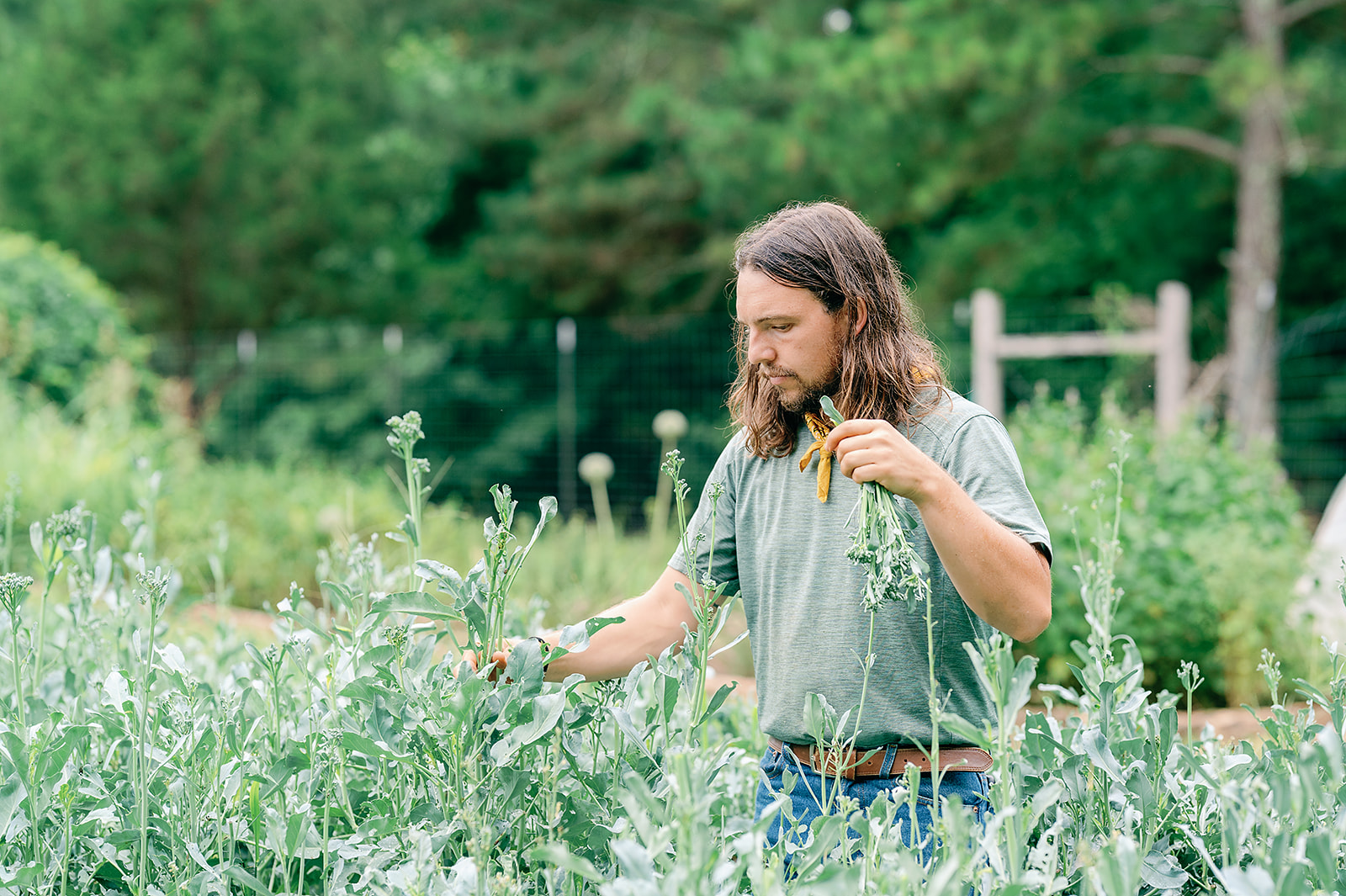
“We’re fighting against nature,” Smith said. “We’re also working with nature, but in some ways we’re fighting against nature to try and pull as much out of the field as we can.”
Smith explained that his farm specializes in smaller, high-value crops like baby greens, root vegetables and herbs, which are often featured in restaurant specials.
“We send out what we call a fresh sheet, we do that either via email or text, depending on the chef,” Smith said. “I try to make it as efficient as possible, so we’ll usually deliver on Saturdays after the market.”
Smith said the biggest advantage of working with local farms is freshness. Unlike produce shipped cross-country, he can deliver vegetables harvested just days before. Digicomply also reports that local produce is often more nutritious and flavorful compared to food that has traveled long distances.
“Your chefs are going to get their stuff from [one of] two places,” Smith said. “The biggest benefit of working with local farms is freshness…you don’t really know how long it’s been since that head of romaine lettuce has been harvested.”
Still, smaller farms cannot always provide the volume or consistency restaurants need. Drought, crop disease or limited acreage can cut seasons short or force restaurants to pivot dishes.
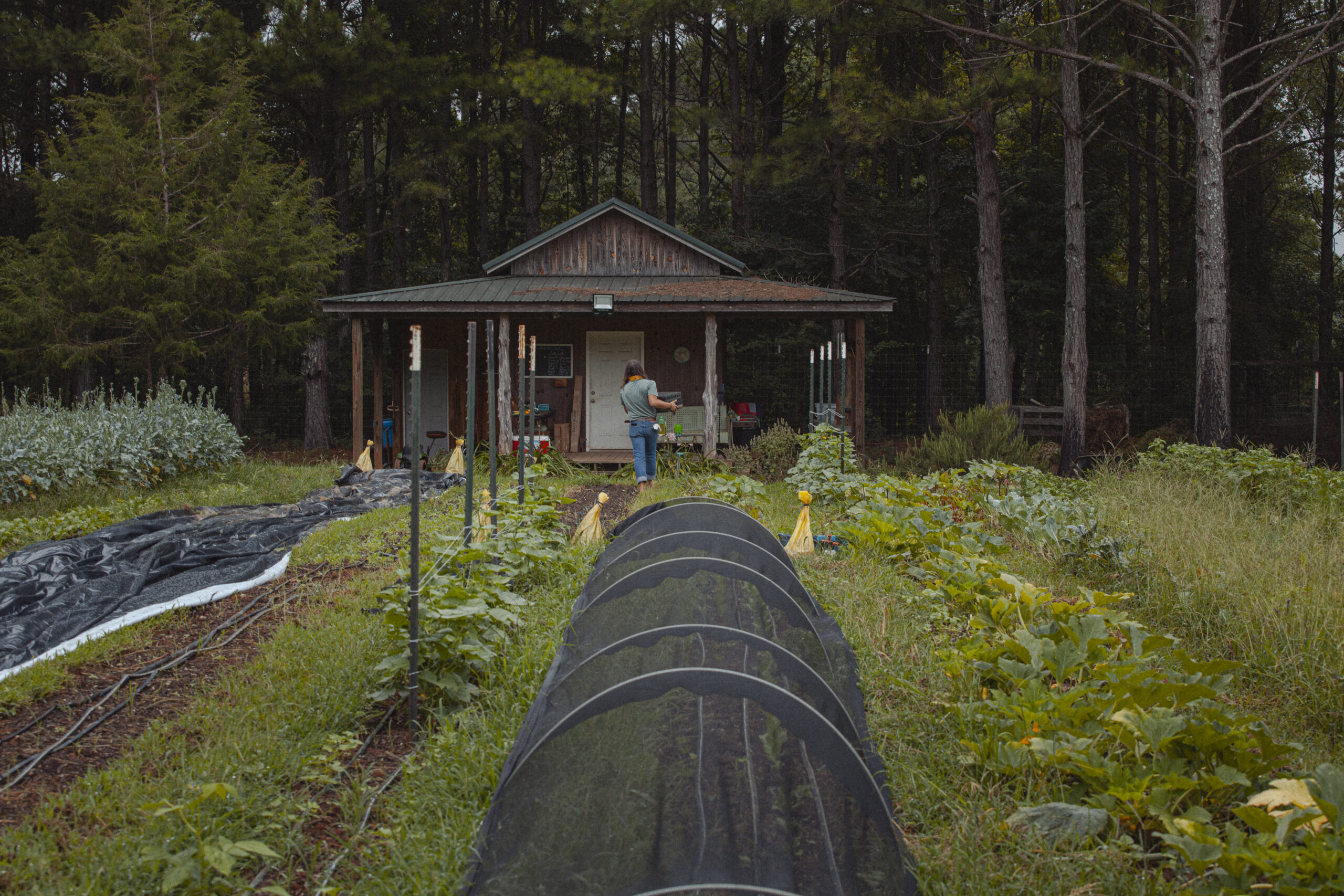
“I’m limited on the amount of space that I can cultivate as one person,” Smith said. “The restaurants for us more fill in the gaps that the market is unable to fill, and so that’s a limitation on our end, just being able to satisfy the quantities of what a restaurant needs.”
The Local Impact
Despite these challenges, both Smith and Dale emphasize the broader benefits of keeping money and food local.
“We’re planting by hand, we’re harvesting by hand, so we’re eliminating the need for fossil fuels in a lot of ways,” Smith said. “And the closer proximity just means that vegetables are being transported a much shorter distance.”
“I think another piece of all of this is the economic impact,” Dale said. “We spend a lot of money on buying food, so I really like that when we buy from local farmers, that money is staying in our community and benefiting our community, rather than getting shipped all over.”
Jennifer Thompson, a Senior Research Scientist in the Department of Crop and Soil Sciences at UGA, agrees that the largest benefit of shopping farm to table is the economic impact. She said selling to restaurants can ease the burden on small farmers who otherwise rely heavily on farmers markets.
“It gives them some predictability and a floor to allow them to succeed,” Thompson said. “That stability can help farmers expand, try new things or even improve pay for their employees.”
Thompson said that she has been glad to see the farm to table approach expanding into restaurants of “all scales and sizes.” That shift, she added, makes local and seasonal food accessible to a wider range of customers and budgets.
“We all deserve to be able to eat safe, healthy, seasonal, seasonal food, and so it’s nice to see it reaching a wider range of restaurants,” Thompson said.
Sidney Josephs is a fourth-year student studying journalism in the Grady College of Journalism and Mass Communication at the University of Georgia.




2 Comments