

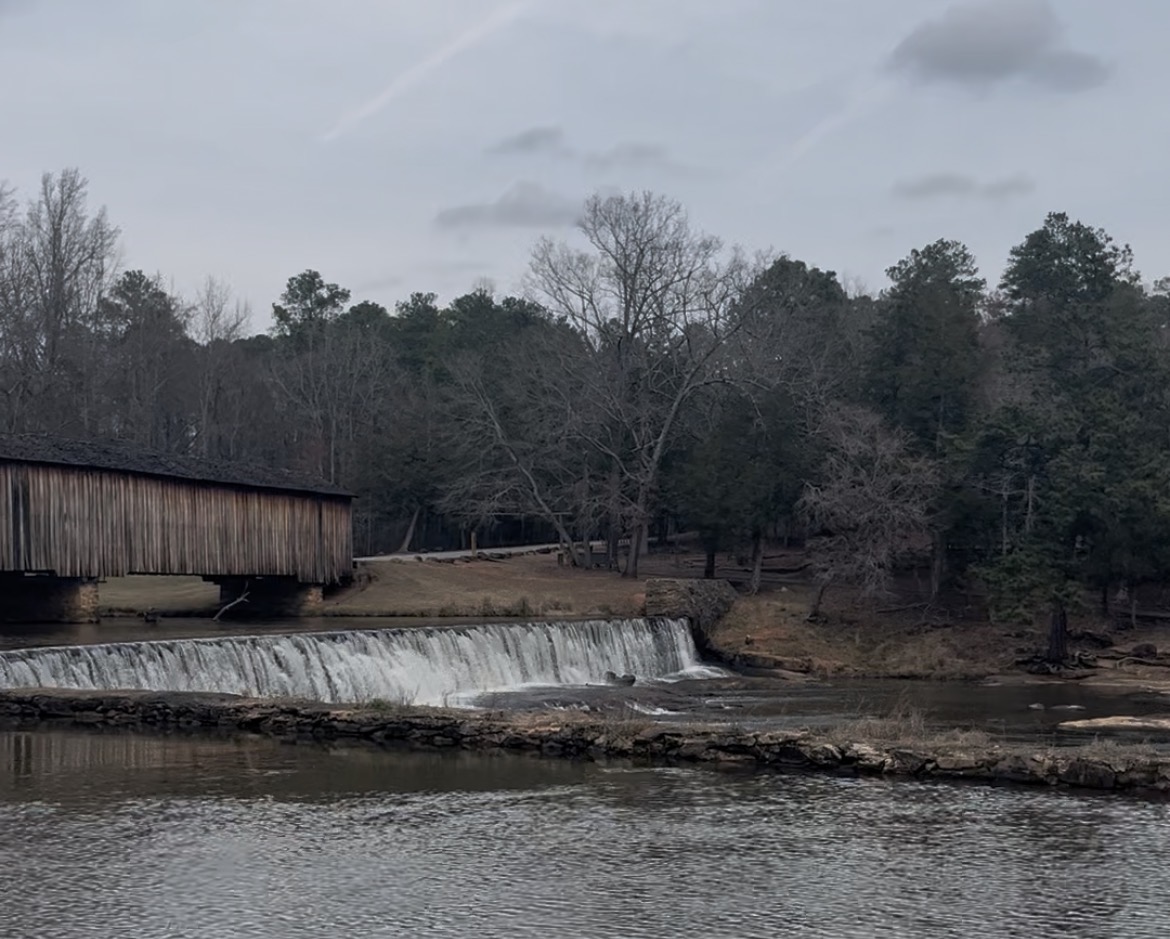
Ruth Ann Tesanovich, retired scientist and certified Adopt-a-Stream volunteer, wades through the stream behind her Madison County home with a lifetime’s experience in a lab. She tests for oxygen levels and combs through to identify critters that indicate stream health.
The task is more than scientific. Her family has almost 40 years’ worth of memories about spending time together in the South Fork Broad River. These memories, and hopes for the future, make river monitoring and advocacy so important to her.
Why It’s Newsworthy: Improper designated use assignments allow higher levels of bacteria in bodies of water such as the South Fork Broad River. Madison County residents often use this water for recreation.When Tesanovich learned about the upcoming designated use review, a triennial Environmental Protection Division process, for the South Fork Broad River, she took action with her colleagues. Before this review, the river was designated to be used for fishing. However, it is common for vendors to rent kayaks so families can take advantage of its recreation opportunities. Bodies of water designated for fishing have less rigorous health requirements than those designated for recreation, where people of all ages will swim and likely ingest the water.
“I’ve been going there for 40 years,” Tesanovich said. “My kids went there. There are babies in the water. They are certainly going to ingest water. So I just thought that river, at least in that stretch, should be designated recreation to identify what it is really being used for.”
Tesanovich already knows about the power of community organizing, which began with the Madison County Clean Power Coalition. They successfully lobbied a state House bill banning power plants from burning creosote-soaked railroad ties that were polluting their homes.
This brought these Madison County residents into the world of grassroots environmental activism. When that work was done, they decided to move forward with other environmental issues, forming the Madison-Oglethorpe Stream Team.
The Power of Data
Point source pollution, such as runoff from a power plant, is easier to trace. However, it’s not the greatest threat to our waterways. Nonpoint source pollution, which comes from everyday activities and can be much more difficult to trace, is a larger issue in rural communities.
“Excess fertilizers end up somewhere in a lake or in an estuary where the salt water meets the fresh water, and that can lead to algal blooms …,” said Jaivime Evaristo, hydrologist at UGA’s Warnell School of Forestry and Natural Resources.
It drives growth downstream, the kinds of growth that you don’t like.”
Harmful algal blooms can create bacteria that can contaminate the drinking water supply for entire communities, according to the U.S. Environmental Protection Agency.
This is why regular data collection and proper use designation is a crucial part of water health, to monitor pollutants such as fertilizer that contaminate water. However, with more that 70,000 miles of rivers and streams in Georgia, the EPD can’t monitor it all.
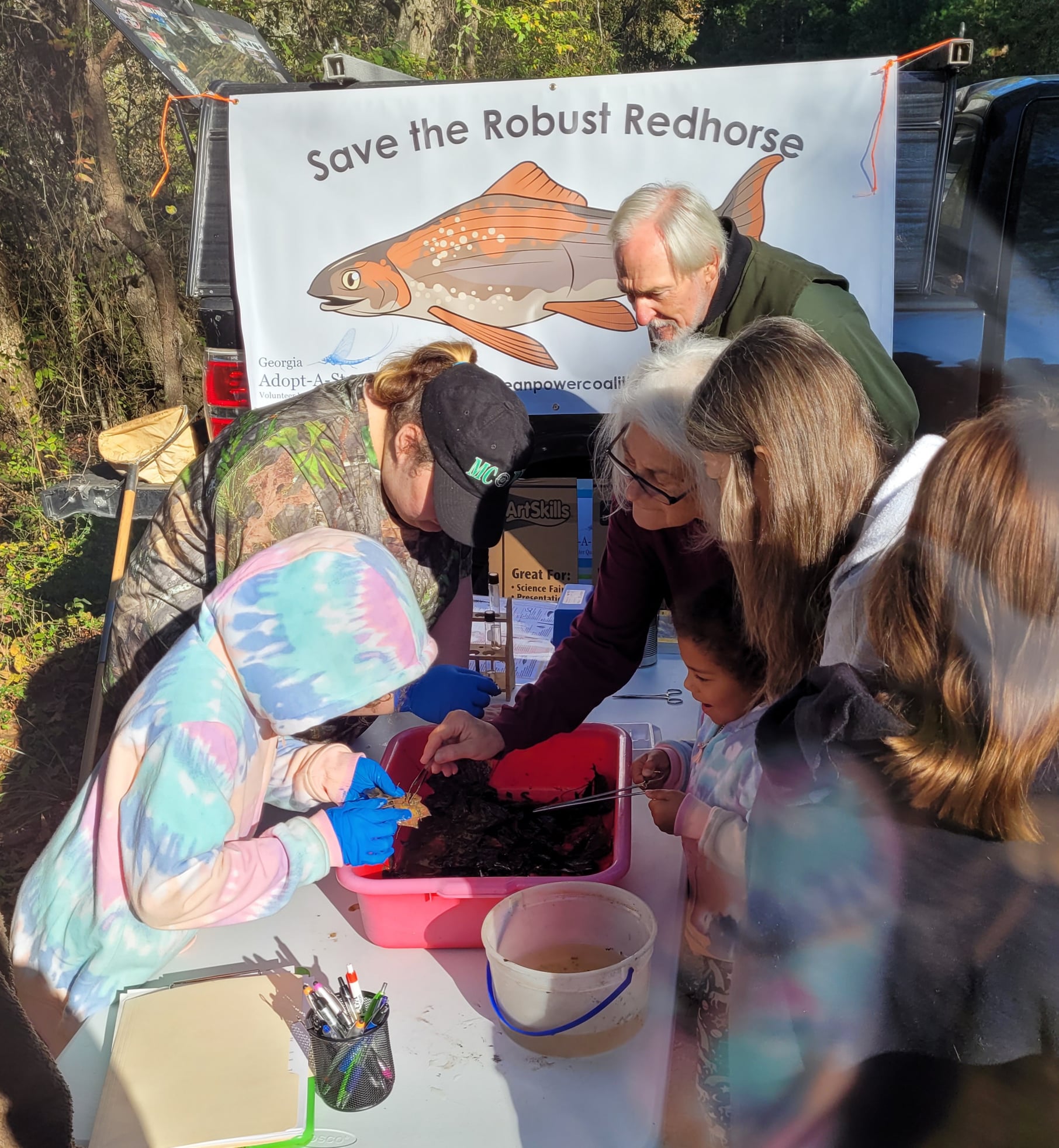
That’s where Tesanovich’s team comes in. Each taking a different waterway, the volunteers monitor dissolved oxygen, pH, E. coli bacteria, the health of microorganisms, and more metrics, to be submitted to the EPD.
Taking part in the EPD’s Triennial Review for designated use is an intensive process. Tesanovich led the charge: connecting with organizations and activists, collecting water data, pitching to stakeholders, and collecting letters of support.
Though it’s a lengthy process, the river already met recreation requirements, and this move would be proactive to protect it from future pollutants. However, the 2022 review and change is still awaiting final approval in 2026. Change can seem to come slowly at times, but dedicated groups like in Madison County sure can speed up the process.
“A small group of dedicated people can change the world,” Tesanovich said. “It’s the only thing that has. We just started out as a little group, and we made a huge impact … the water quality standards are higher now, and that’s going to be forever.”
Flowing Forward
At times, the issue facing waterways is not so much the physical threats as the affected community’s lack of knowledge about those threats. Many don’t know that they can subscribe to EPD notifications, where they can learn about permits submitted by different entities that may pollute their local watershed.
Though citizens like Tesanovich have made great change for waterways in Northeast Georgia, the best environmental protections are proactive. Even the work of a group of informed individuals has limitations.
Evaristo cited the increased prevalence of data centers as a threat to future water access, Tesanovich cited sludge dumping. These threats won’t be prevalent for every waterway, and not every person is qualified to deal with each threat, which is why people from across the board need to be engaged with what’s going on.
“What’s usually difficult to appreciate in environmental issues are the impacts,” Evaristo said. “There’s a concept … called creeping environmental problems. It’s like a ticking time bomb … once that problem has crept up and manifested itself in a manner that’s difficult to manage, then you look back and you say, ‘Why didn’t we see that?’ Well, other people have seen that. They probably just didn’t look enough, or didn’t listen enough.”
In Madison County, they hope to catch the creeping problems before it floats to the surface.
Marley Hinrichs is a junior majoring in journalism with a minor in sociology.



Show Comments (0)