From Soil to System: How Marigold Collective is Redefining Local Food Access

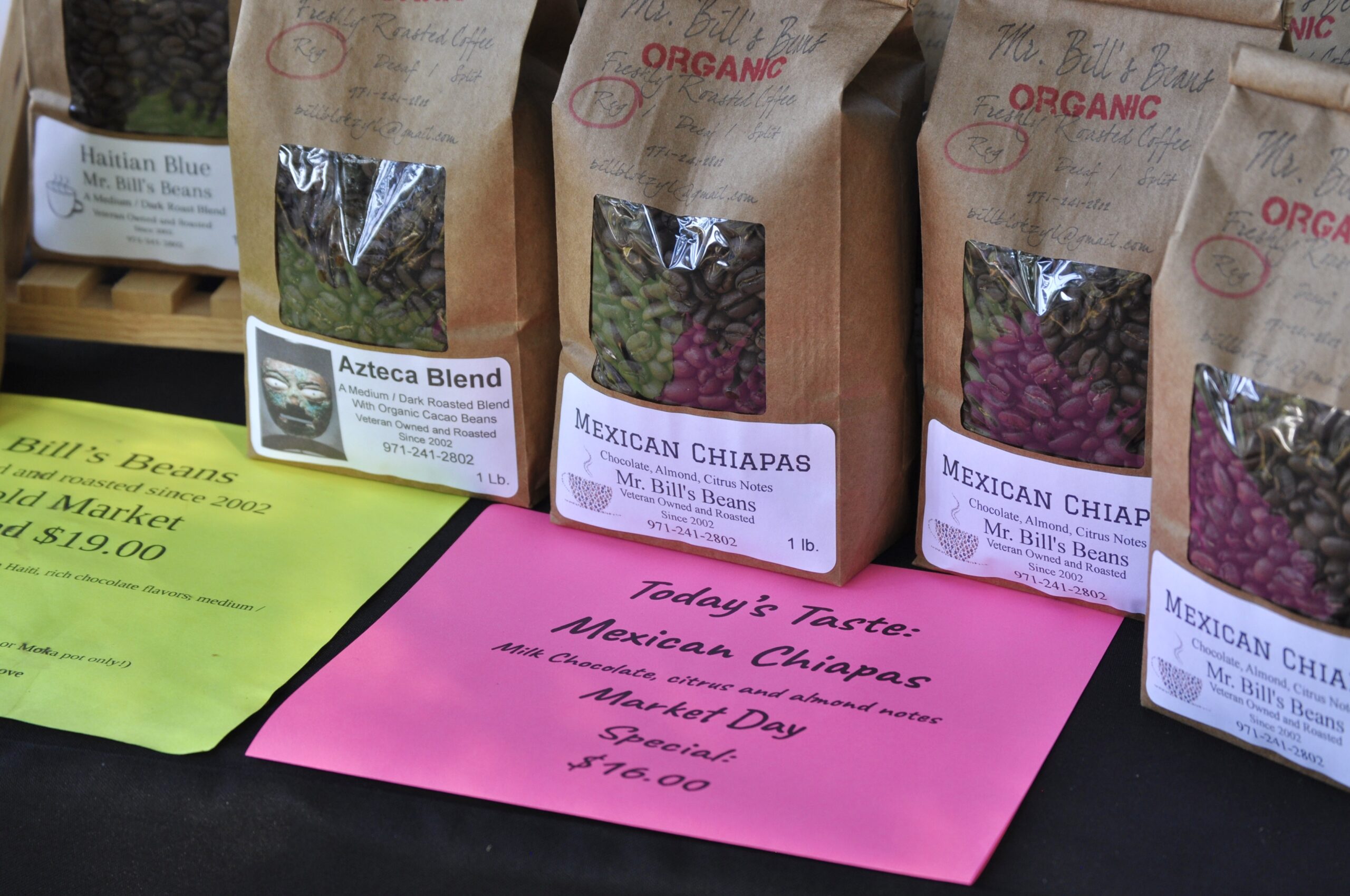
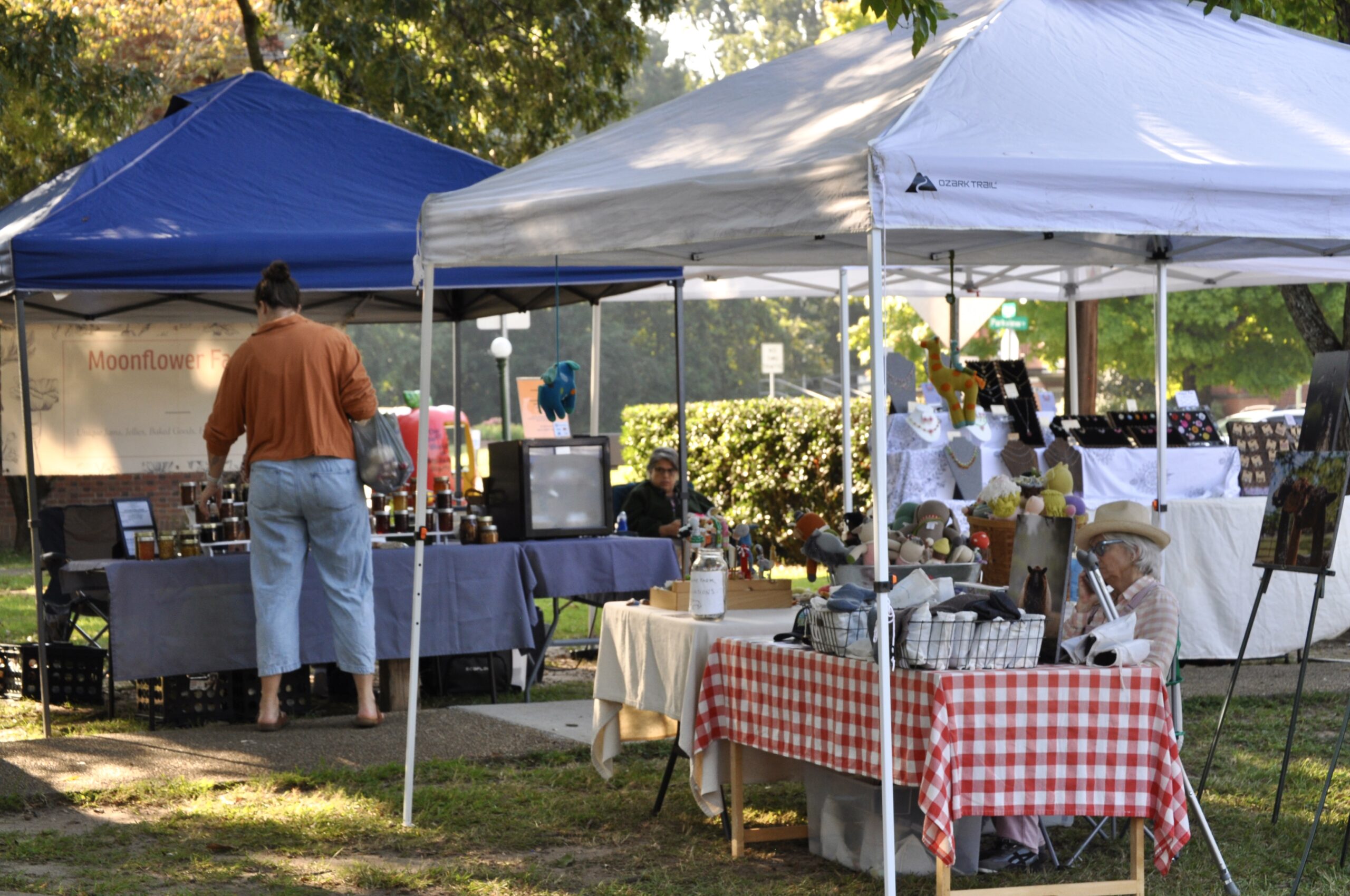
Each Saturday, Winterville’s Pittard Park becomes a living, breathing testament of community resilience and sustainability. Local vendors line the walkways, tables overflowing with bright leafy greens and fresh homemade bread, while live music and the scent of roasted coffee set the mood.
Responding to Community Need
Athens-Clarke County qualifies as a food desert by USDA classifications. Fulfilling the low-income dispersal criteria, over 20% of Athens citizens live below the poverty line — and in Winterville, a city dually governed Athens-Clarke County, access to healthy and fresh food is further limited. Without a direct bus route connecting community members to a grocery store, there’s another layer of inaccessibility that must be accounted for.
However, making sure a community is fed is not an easy feat.
“In a utopian society, there would be enough food for everyone and everyone’s basic needs would be met, but that’s not the world that we live in,” Sarah Hovater, director of the Marigold Collective said. “I think for things to be really equitable, we have to all work together to try and make that a reality.”
Over her last five years in Athens, Hovater has done exactly that.
What initially started as a storefront to sell veggies from Hovater’s backyard garden has transformed into a community effort to create a self-sustaining food system. The Marigold Collective was established in 2020 amidst the pandemic, as a response to community need.
“In order to make a significant change, it’s really just the person next to you. It’s caring for the people who are right next to you, and then encouraging them to care for the people next to them, until it spreads to the community,” Hovater said.

The Market in Action
The Saturday Market is open to the public from 9 a.m. to 1 p.m., weather permitting. The vendors consist of local farmers in the Winterville area, many of whom are just starting their agricultural journey.
Hovater designed the market using a community-rooted model, inviting local farmers who may also be new to the practice. Through this effort, Hovater aims at providing alternative income to the vendors, without requiring the added expense of holding licenses or maintaining a consistent stock of produce.
“We’re just really trying to figure out how we can feed our community with what we can produce in the community, and realistically it’s quite a lot of food,” Hovater said.
Placing a major focus on sustainable sourcing, Hovater is committed to staying in Georgia to ensure that food first local options, or locally sources foods, are available to everyone, eliminating reliance on outside entities.
For customers, the market is now government assistance cards like EBT cards and OTC Network Benefit cards.
Sustainability in Practice
Aside from the Saturday Market, the Marigold Collective has an additional storefront open Mondays from 10 a.m. to 7 p.m. There, customers can find a wide variety of pantry staples, all of which are sourced locally in Northeast Georgia.
Hovater and the Collective purchase leftover produce from the local farmers weekly, and then redistribute those goods to people who can’t afford to shop at the store themselves.
“It ends up just really being a full circle way for the community to take care, to produce what it needs, but then also to share what it needs with everyone in the community,” Hovater said.
Proof of Effectiveness
Courtney Omega Doss, founder of the Colored Only Cafe, is living proof of community resilience. Doss and the Colored Only Cafe crew can be found at almost every Saturday Market hosted by the Marigold Collective, offering her famous homestyle cooking and grocery delivery services. Everyday, alongside her husband, she works to minimize local food insecurity and give her all to people who may not be able to support themselves.
Doss herself knows it all too well.
Living in Miami and struggling to make ends meet, Doss started a lemonade booth at a local market, where she was funded by a church close by. They provided her with jars and necessary supplies to start her business. With their help, she was able to turn her story around and become the provider, helping people not only because she can, but because she wants to.
“The markets literally saved my life,” Doss said.
Now she delivers free fresh healthy meals around Athens, in hopes to inspire others to give back as well.
Limitations
While the Marigold Collective works hard to feed the community, their efforts in total are not enough to eliminate food insecurity in Athens-Clarke County.
“The issue of food insecurity in Athens is really complex. Food insecurity is a symptom of broader financial strain, the cost of housing, the cost of food, challenges with transportation, a whole suite of issues,” Jennifer Thompson, senior research scientist at the University of Georgia said. “These kinds of programs, in some ways, are stopgap solutions to try to help people gain access to more fresh fruits and vegetables, when all of the broader conditions of society are not allowing for that.”
In the future, Hovater hopes to make the Marigold Market even more accessible, ensuring the best hours of operation, connecting bike paths and even creating a grocery delivery service. However, because much of the revenue is put back into feeding the community, funds are limited to make these extra resources possible. It truly is up to the community to make this happen.
“It kind of comes back to that notion of it takes a village, right? We really do need a lot of organizations playing their own,” Thompson said. “Instruments in a kind of symphony to make a lot of these programs work.”
Alena Salazar is a senior majoring in journalism at the University of Georgia, with a minor in Spanish and a Certificate in News Literacy.