Addressing Healthcare Shortages in Georgia Begins with Education

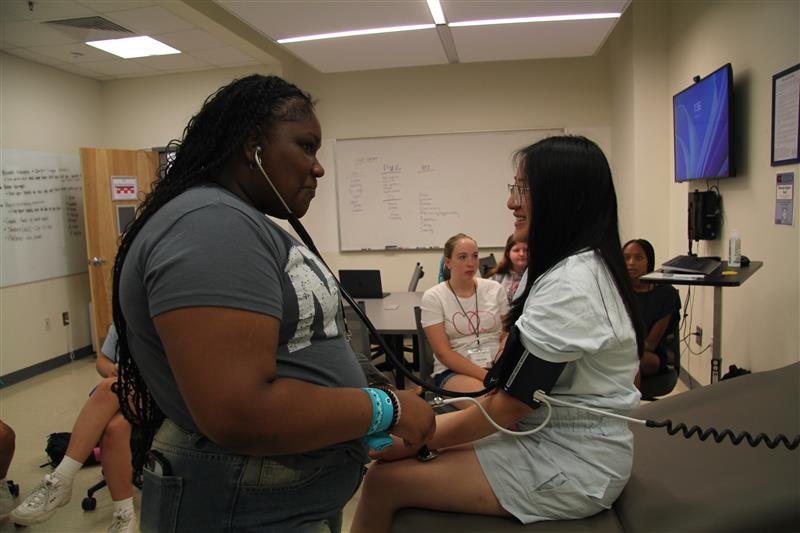
Georgia is facing the effects of a nationwide trend of physician shortages, with rural areas being hit harder than metro regions. The University of Georgia and its students are investing in programs like Mini Medical School and the Lake Country Rural Health Initiative that are aiming to create long-term solutions, with a focus on education.
“That’s what we’re here for. You know, we’re going to educate students from all over the state, and these students will practice in the state,” said Jason Payton, the community outreach specialist at the University of Georgia’s School of Medicine.
The state ranks 40th nationally in total active physician care and 44th in active general surgeons according to an independent study conducted by the Tripp Umbach consulting firm for the University of Georgia’s School of Medicine. Sixty-three counties do not have a pediatric physician, 77 have no emergency medicine physician, 82 do not have obstetrician-gynecologists, and 95 do not have psychiatrists, the Georgia Board of Healthcare Workforce reported in 2024.
Payton said these numbers will increase over time if left unaddressed.
“Those numbers are part of the motivation and justification for the existence of the School of Medicine, which is designed, among other things, to address these shortages,” he said.
Alexis Barker, executive director of the Lake Country Rural Health Initiative, echoed the same sentiment as Payton: the need for increased medical education. She also recognized that rural areas are especially prone to being underserved and undereducated.
“I’m from a rural area, so I know firsthand the kind of disparities that come along with rural health and where help is needed,” Barker said. “If you’re not from a rural area, you’re probably not familiar with it.”
“The overarching theme is there’s a lack of health education in rural communities,” Barker said. “A lot of preventable diseases are happening just because there’s not that education, and because there’s not education, there’s a lack of funding.”
The Lake Country Rural Health Initiative has a strong UGA presence, where students have been able to host fundraisers, screening clinics and raise awareness for underserved communities. Students like Barker hold both executive and volunteer roles, and apply their passion and knowledge of medicine to help Georgian communities.
As for Payton, he began his role at the School of Medicine in May. There, he has a focus on introducing K-12 students to the world of medicine. In the summers, the Mini Medical School program invites young students from around Georgia and the nation to learn about opportunities in the medical field, and inspires them to consider a career in medicine.
Payton said these camp sessions are a critical intervention tool to attract future healthcare professionals, especially from rural and underserved regions in the state.
“It gives students an incredibly broad view at a very early age of what they could do in healthcare, and it leverages our unique resources to inspire them to get really excited about those potential careers,” he said.
Not only are these programs inspirational, but data from surveys taken over the course of the camps prove that they are successful.
“By the end of camp, we had over 95% of our participants interested in healthcare, which is a significant jump, so that number really captures students who are being inspired on our campus,” Payton said. “There’s an opportunity for a cascading effect, where we can inspire youth all across the state to come participate in this amazing program.”
The School of Medicine will not open its doors to medical students for another year, so it will take some time before new physicians will enter these communities. The Lake Country Rural Health Initiative is still a young program, and funding can be hard when education and awareness is low.
Predictions of looming physician shortages still linger. By 2036, it is estimated that there will be a national deficit of anywhere from 13,500 to 86,000 physicians across specialties. With Georgia already falling below national averages, it is important for the university and its students to continue to inspire local communities and future generations, something that Payton emphasized.
“Taking care of Georgia is kind of front and center in terms of our mission, making sure that we have a happy, healthy Georgia now and in the future,” he said.
Zoe Streeter is a senior journalism student at the University of Georgia.



One Comment