The Friday before Memorial Day Weekend, I got stuck in the queue for Universal Studios Florida’s Harry Potter and the Escape to Gringotts. My party and I arrived at the attraction when the Universal Studio App promised a square 35-minute wait.
At first we glided through Gringotts Bank, watching guests coo at attractions’ attention to detail. Upon entering the preshow (featuring Griphook the Goblin and Bill Weasley) a clear voice rang through the queue intercom, announcing a ride delay. We stood idly for almost 30 minutes, grateful that we stopped in an air-conditioned room. A team worker flitted in and out, repeatedly offering assistance and an optional exit from the line.
I visited seven theme parks at Walt Disney World and Universal Orlando, including Epic Universe on its first anniversary. Across eight park days in May 2026, I logged the time I stepped into each attraction and entertainment line, and when I got onto the ride. In total, I researched 16 rides to examine why waits can get so tedious, and if a certain park offered shorter waits.
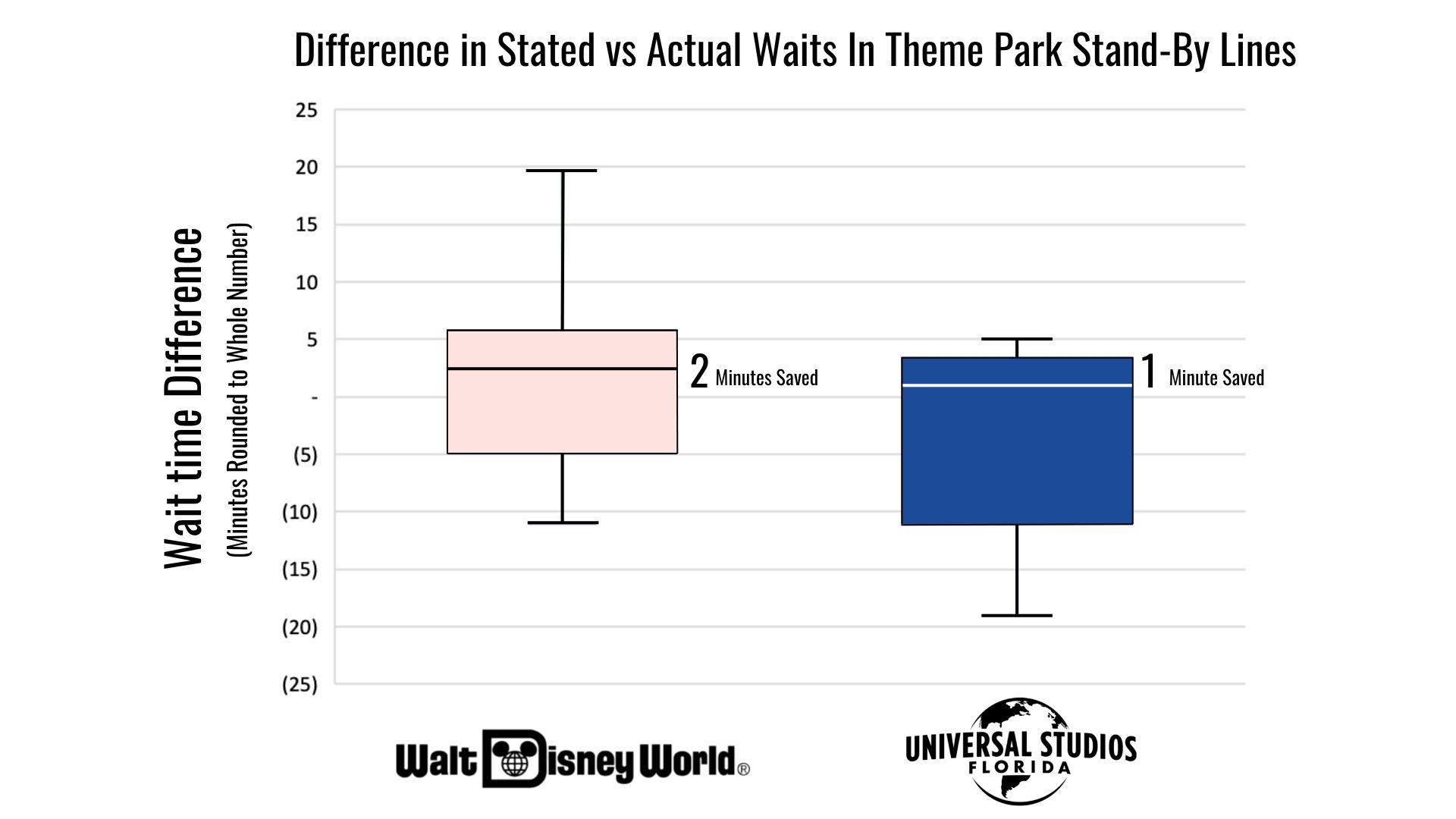
The results show that guests typically board rides faster than the queues promise (when outlying events or breakdowns do not occur). Visitors usually board the ride one minute faster in Disney parks than at Universal parks.
The time visitors wait is nearly the same as listed on the standby queue. But “usually” is the key word. Unique situations arise at theme parks operating at such a high caliber. The long waits were often generated by guest-related reasons or by technical difficulties.
Components of Attraction Lines
Here are some key details to understand about lines in Universal and Disney parks. Visitors will typically find three entrances at attractions.
-
\t
- The line skip lane (called Universal Express Pass in Universal and Lightning Lane in Disney) takes guests nearly directly to the front of the line with little to no wait.
- The single rider entrance helps riders avoid a majority of the line by filling an empty seat in the vehicle.
- The standby line is the most common option where you wait with your party to board the attraction.
\t
\t
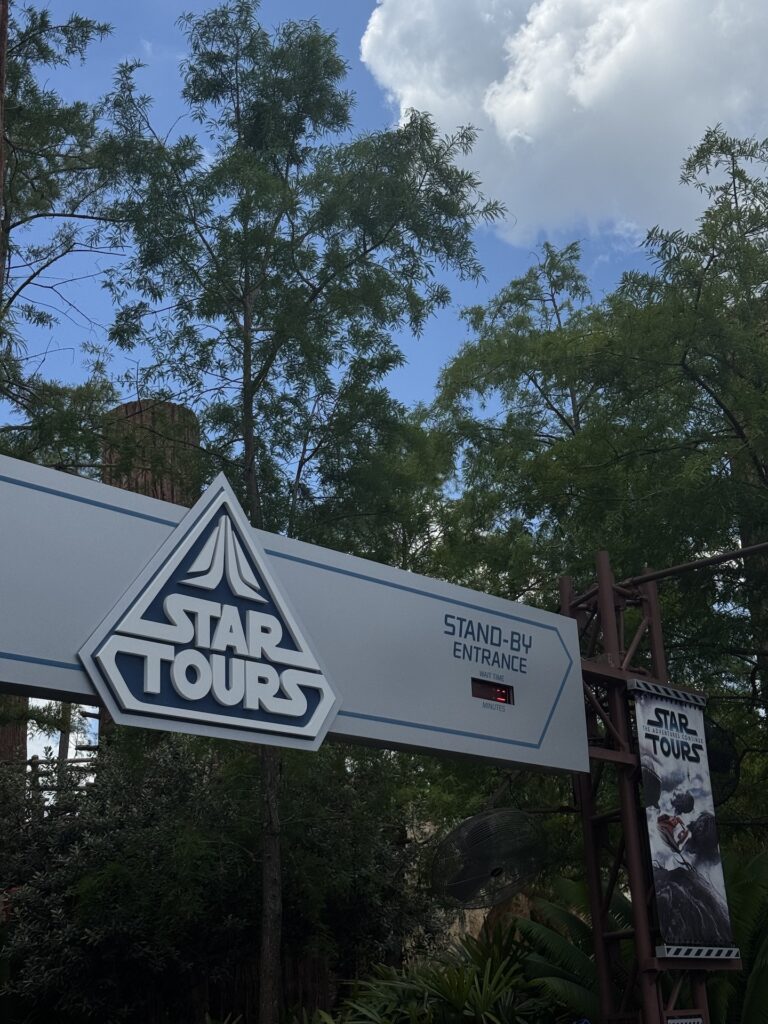
The My Disney Experience app and Universal Orlando Resort app allow visitors to check and plan ahead what attractions they would like to visit. The wait time is posted digitally in front of every attraction. Without fail, the parks list the time in intervals of 5 minutes. This might be less imposing compared to a wait time listed in hours.
At Disney World, I usually waited less than the stated time for gentle boat rides such as It’s a Small World (located in Magic Kingdom’s Fantasyland) or Na’vi River Journey (located in Animal Kingdom Theme Park’s Pandora — The World of Avatar).
However, newer thrill rides had me waiting longer than the stated times. In Tomorrowland, I waited 1 hour instead of 55 minutes for Tron Lightcycle/Run.
While at Epic Universe, I experienced a ride breakdown for Super Nintendo World’s Mine-Cart Madness. The pause added about 20 minutes to the original wait of 95 minutes.
I found that rides geared toward young children tended to take longer than usual, with Fantasyland’s Dumbo the Flying Elephant serving as a perfect example. The attraction has a themed playroom for children to enjoy while waiting. However, I noticed families struggling to reunite once it was their time to ride. The app stated the ride wait was 15 minutes, but my party ended up waiting 26 minutes.
Reasons for Long Waits
The culprit behind long waits was more often than not guest-related reasons. In nearly every ride at Epic Universe, an intercom voice would gently chide guests, reminding them to not leave gaps in the lines. Some gaps are innocent, caused by guests who stop and absorb the deeply immersing worlds around them in line. Other times, situational awareness can cause pauses when visitors cut lines or do not follow ride instructions.
Parks are constantly evolving, giving visitors new details to discover in the visits. Unsurprisingly, guests will get distracted in line waits with these tantalizing visual and sensory details.
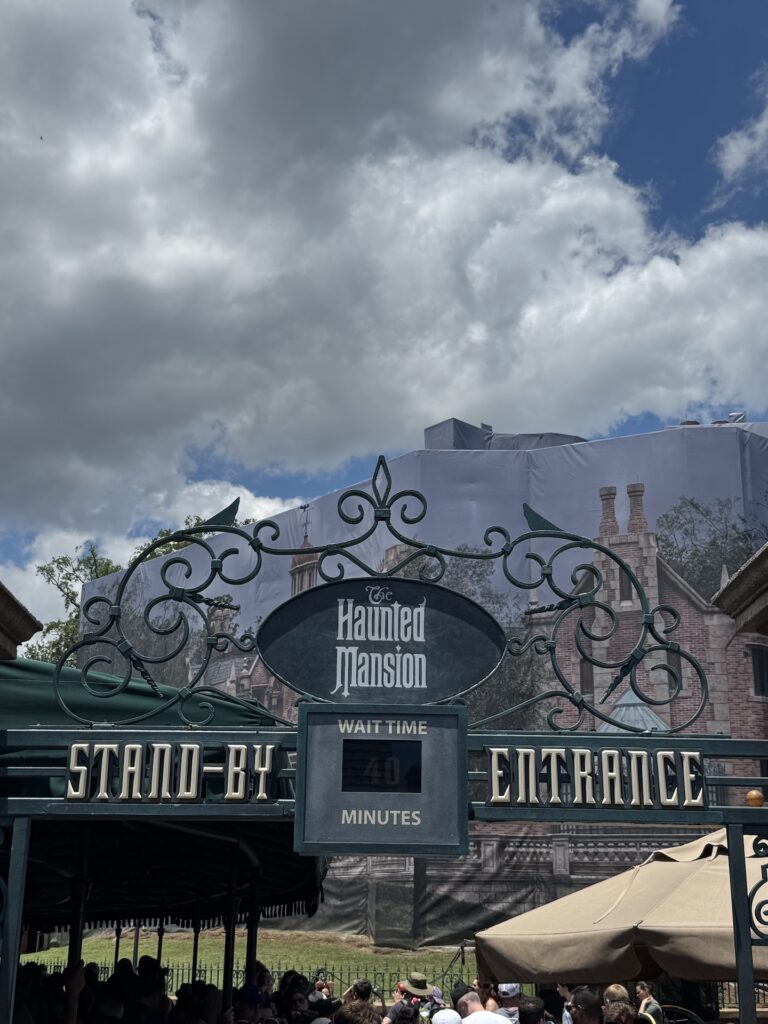
Parks cannot disregard guests who require transition time from their mobility aids. Omnimover rides like Magic Kingdom’s Haunted Mansion or Tomorrowland’s PeopleMover stop (causing an additional wait for those still in line) while guests with mobility aids safely board and disembark.
Ride wait times update constantly, even when guests are already in line. When entering Epic Universe’s Mario Kart: Bowser’s Challenge, the wait was listed at 25 minutes. Our group unfortunately entered at a transition time, and the line ticked upward of 40 minutes while in queue.
Major theme parks appear to do their best to maintain accurate wait times, but daily operations battle unavoidable factors from rainstorms to technical malfunctions.
Combine all these matters with human behavior, and guests receive unexpectedly long waits that occur on the daily. In our current socioeconomic climate, people are understandably hesitant to spend their funds on high-priced tickets that do not include parking, food or accommodations. Tack on waiting tediously for lines (without the additional purchase of line-skip options), and the magical appeal of a park day could fade away.
When Harry Potter and the Escape to Gringotts finally started accepting riders again, the relieved park guests around me cheered. We all tottered through the rest of the queue, disoriented, but determined to enjoy the rest of our day at Universal Studios Florida.
Paola Magallanes is an advertising major. She produced this story during a Maymester Introduction to Travel Journalism course focused on theme park writing in Orlando, Florida.