

When winter storms threaten Athens, accurate forecasting can be crucial to the safety of thousands. Georgia’s varied landscape stretches the limits of broad, statewide forecasting, often prioritizing metro areas like Atlanta over smaller cities.
At the University of Georgia, students in the Weather Dawgs are closing that gap by using a high-resolution forecasting model built in-house to focus on Athens and Northeast Georgia.
“It’s a discussion between, well, we have this range of temperatures that are coming out of the models. What do we think is our best guess?” Scout Carlson said.
An atmospheric science student who coordinates the University of Georgia’s Weather Research Forecasting Club, Carlson designed the group’s localized forecasting model.
“One could argue a forecast is just a really educated guess,” Carlson said.
Before discussions begin, each student submits a form predicting the highs, lows and precipitation chances. Those numbers are compared against multiple forecasting models, most important the group’s own high-resolution system, before the group settles on a final forecast for Athens.
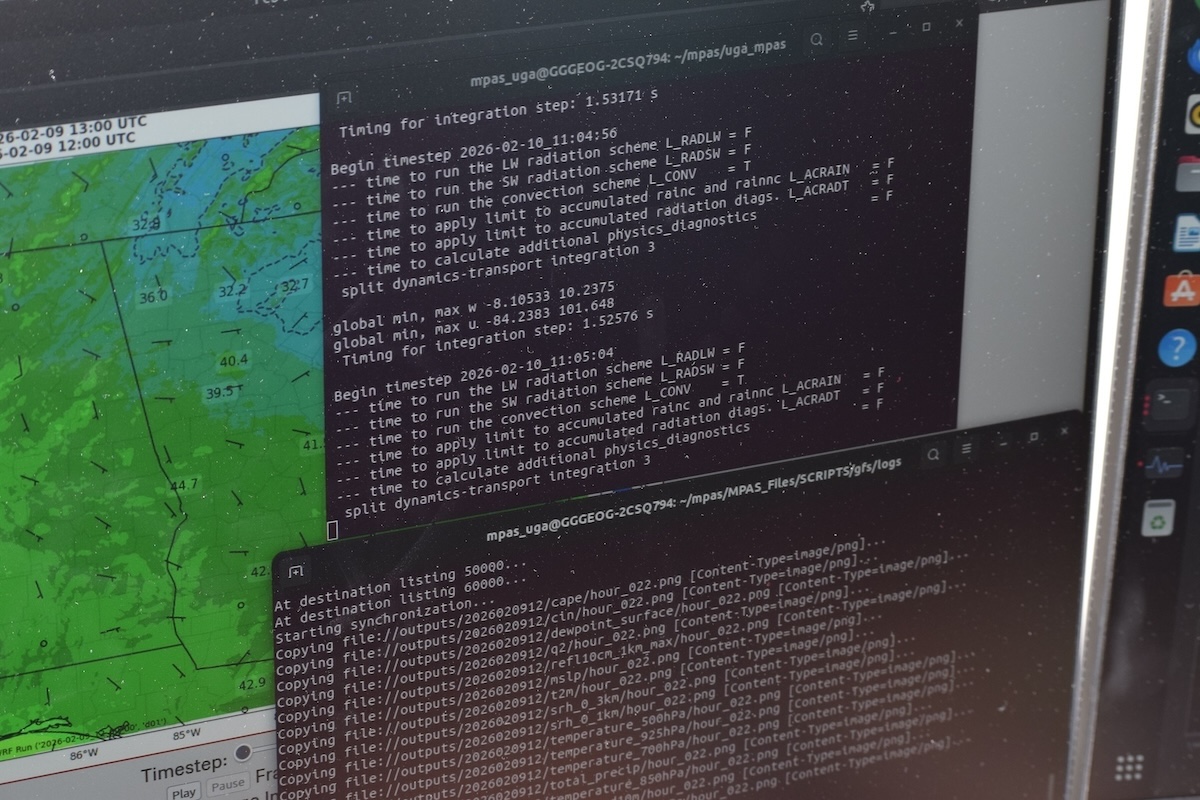
Most public forecasts rely on the output from large-scale numerical models such as the Weather Research and Forecasting model, which was developed by the National Center for Atmospheric Research. Carlson adapted and developed his model to focus specifically on Athens and Northeast Georgia. Because it covers a smaller geographic area, the localized model operates at a higher resolution, capturing smaller-scale atmospheric details that broader national models may overlook.
“We simulate at a finer scale than basically double that of the best next model,” Carlson said. “In terms of resolution, this is the best model out there.”
Running the model takes more than just a click. Carlson installed, compiled and automated the system, writing Python code that transforms massive raw data files into readable weather maps.“It’s basically just really advanced data analysis of raw model output,” Carlson said.
Why Athens Needs Its Own Weather Focus
National Weather Service offices are responsible for issuing forecasts and storm warnings for large portions of a state and, in some cases, counties in neighboring states. This often results in the prioritization of populated metropolitan areas.
The University of Georgia and the Georgia Institute of Technology have collaborated to improve local, small scale forecasting by installing new weather radar in Northeast Georgia, strengthening local data collection.
John Knox, associate director of UGA’s Atmospheric Sciences Program and faculty advisor to Weather Dawgs, said Athens’ geography makes localized forecasting especially important.
“The official weather service forecasts we get are from Peachtree City, which is southwest of Atlanta,” Knox said. “Understandably, their focus is on the metro Atlanta area.”
Knox said radar beams rise as they travel through the atmosphere. Before the UGA-Georgia Tech radar installation in Gainesville, the closest was at the Atlanta forecast office in Peachtree City. By the time the beams reached Athens, some 80 nautical miles away, they were already thousands of feet above the surface, limiting the depiction of precipitation type and intensity at ground level.
“Having people that are in Athens focused on Athens weather, not Atlanta weather, I think we help,” Knox said.
Even with this localized model, forecasting remains imperfect. Advances in research continue to strengthen regional capabilities, and the radar that was installed has been described as a “game changer” for improving storm monitoring in North Georgia.
Forecasting in Real Time and in the Studio
For Selena Centine, who recently led a Weather Dawgs discussion, forecasting is made up of two parts: science and debate. Students gather and are presented cloud cover and temperature trends before finalizing their predictions for the forecast of the day.
“We also do something called vibecasting,” Centine said. “If we’re trying to argue between one degree or another, just shout out a number, and it’s vibecasting.”
When snow and ice threatened Athens this winter, these forecasting meetings stretched long past schedule as students worked through tons of data and shifting timelines.
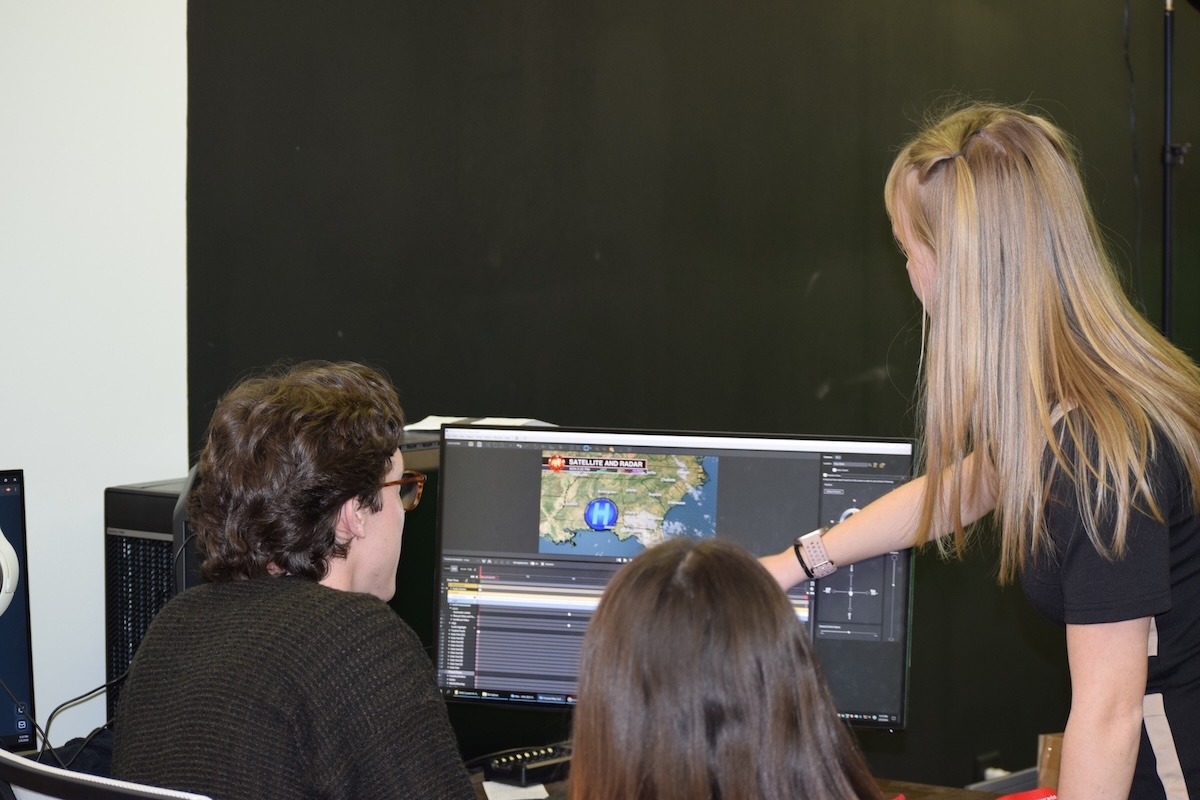
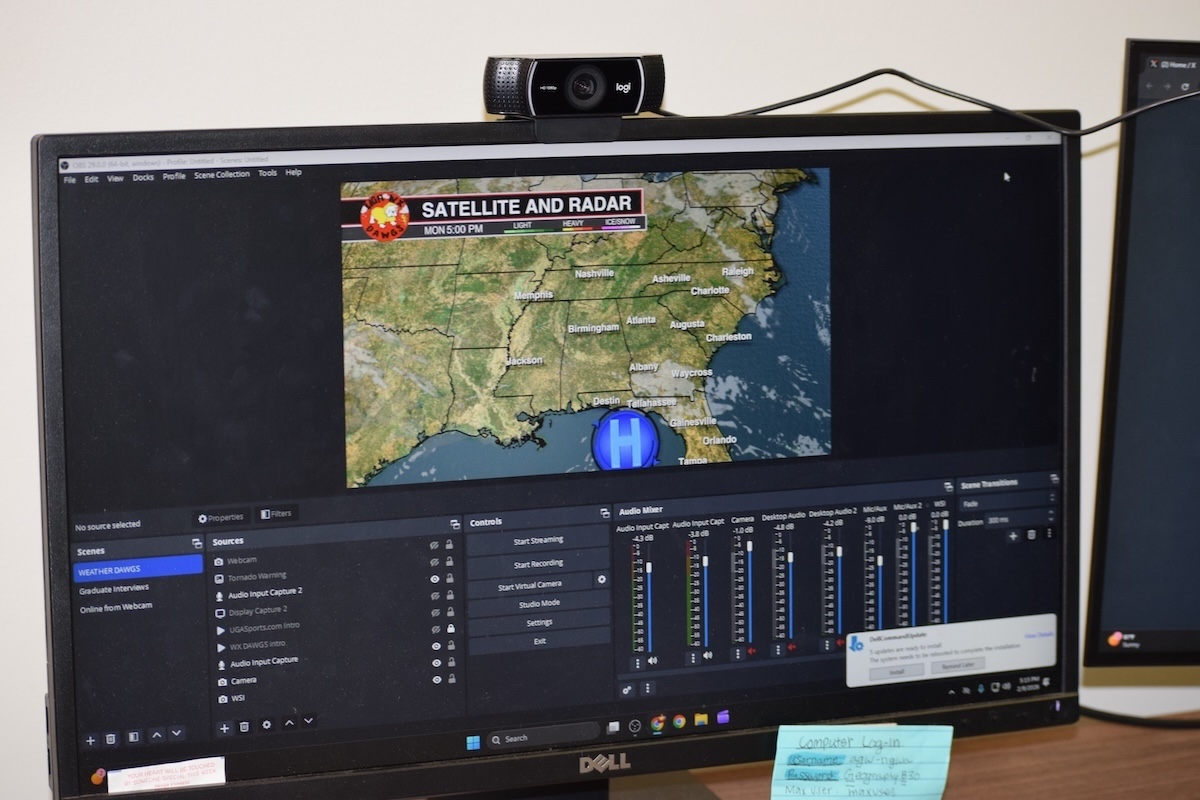
Once the forecast is set, the team pivots to production. One student writes a blog post, while three will head to the studio to record the video forecast, using green screens, radar images and animated graphics to bring the data to life. Within a few hours the final product is posted online.
Beyond the studio lights and model runs, the goal is simple and effective: give Athens a forecast built for Athens.
Brielle Logan is a second-year journalism and women studies double-major.



Show Comments (0)