

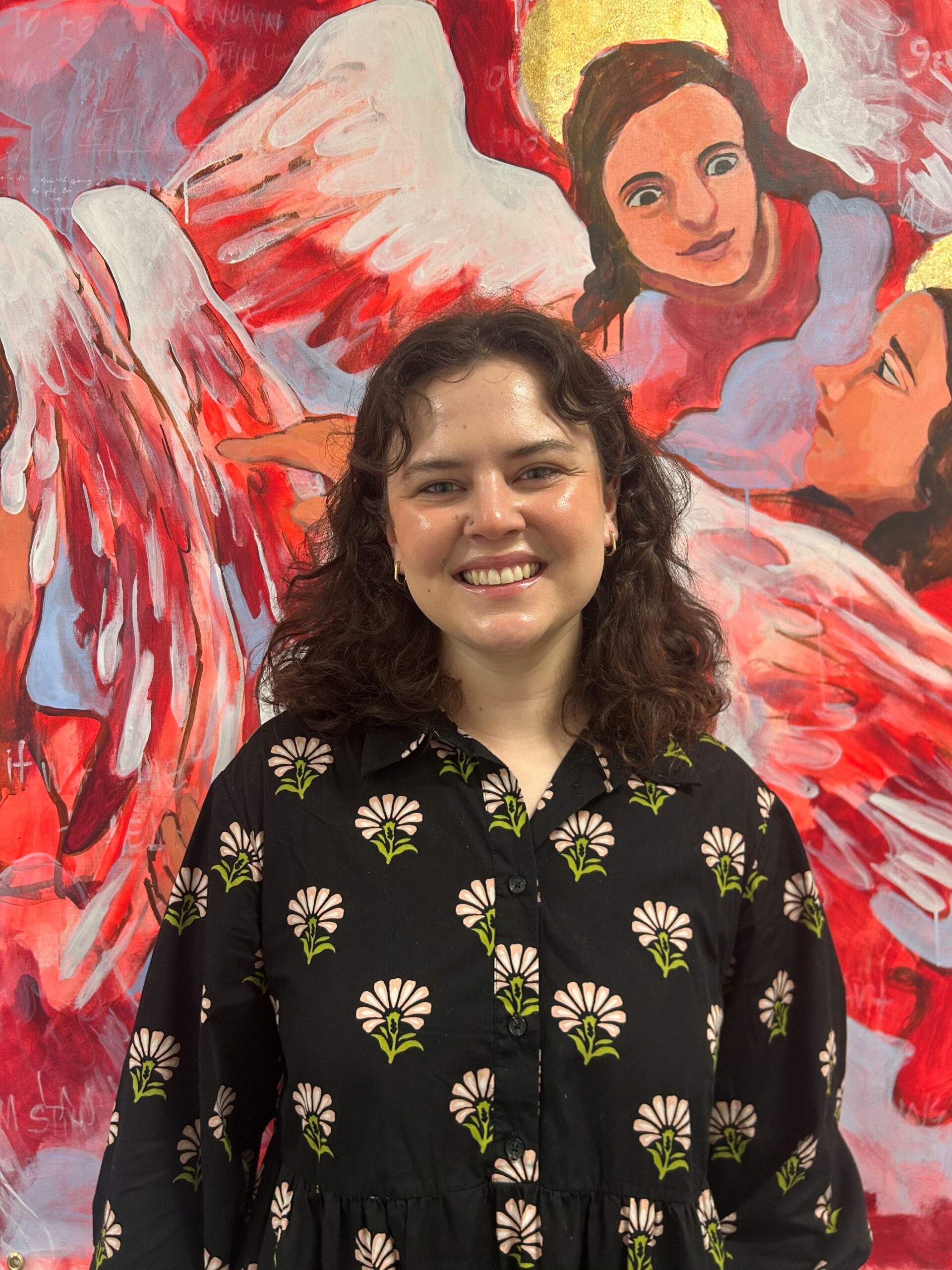
Meg Rooney is a first-year doctoral student at the University of Georgia in the Department of Religion, focusing on feminist Baptist theology. She is the graduate assistant for UGA’s Spiritual Well-Being initiative, which is new to campus, having launched August 2025.
She earned a degree in rhetoric and writing from James Madison University and a master’s of divinity from Emory University. Rooney will finish the year as the program’s graduate assistant and plans to enter into teaching roles next year.
Q: What is spiritual well-being?
A: Spiritual well-being aims to enhance students’ overall well-being by looking into questions about spirituality and religion, having more conversations between different faiths, having more conversations about spiritual practices. It might look like yoga. It might look like we had an event on fasting on Wednesday. It might look like we’re doing a spiritual well-being trip to Savannah during spring break. It’s really just to have those conversations about meaning, purpose and connection, whether it’s on that trip or the events that we put on here, helping students feel heard and seen and know that they have a reason to be here. Just trying to create a sense of belonging over spirituality, whether you’re spiritual, religious or not. Finding connection with people, with yourself, with the world around you and with other people.
Q: What do you hope that students gain from this program?
A: I really hope they feel like they can ask questions, and feel like they can ask them in a place that is welcoming, safe and receptive. These questions are questions that people are asking all the time, and I don’t think we’re talking about it. Spirituality does impact students’ overall well-being. When you feel in tune with yourself and the world around you, I think it can really allow students to feel connected to their peers, to UGA more, the Athens community more. I think the more connected, the better people will feel, especially in a digitally obsessed world. I’m really hoping people are able to feel presence, not just a higher power but a presence of the world around them.
Q: How has your faith and spirituality evolved?
A: I’m a Baptist through and through. I grew up Baptist in a very ecumenical church. [I] didn’t really participate in Baptist churches during college because there wasn’t really one that I felt comfortable going to. The more I understood Baptist theology, the more I felt really solidified in my Baptist identity. I’m proud to be a Baptist. I’m pretty open and spiritual with other religions, and I think those conversations are really important.
Q: What does spirituality mean to you?
A: I think feeling connected to your neighbor, feeling connected to the earth and feeling connected to a sense of either higher power or a higher calling or purpose. That can be expressed in so many different ways. It can be expressed in religious settings. It could be expressed in nonreligious settings.
Comments trimmed for length and clarity.
Jessie Issacs is a journalism major in the Grady College of Journalism and Mass Communication. This story was produced in the Religion Reporting course.






Show Comments (0)