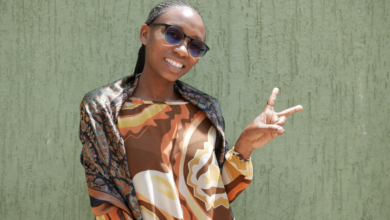
The hem of my black skirt dances with the dust floating up from beneath me. I plant my blue boots in what resembles the red Georgia clay on which I grew up.
I close my eyes. I breathe in the warm, dry air, hold it and let go. Never before has my soul ached in a place with which I have no connection, one I have only heard about in the past few hours.
I open my eyes. I see a tall, white fence protecting what was once a church. A sign arches above the entrance: Nyamata Genocide Memorial.
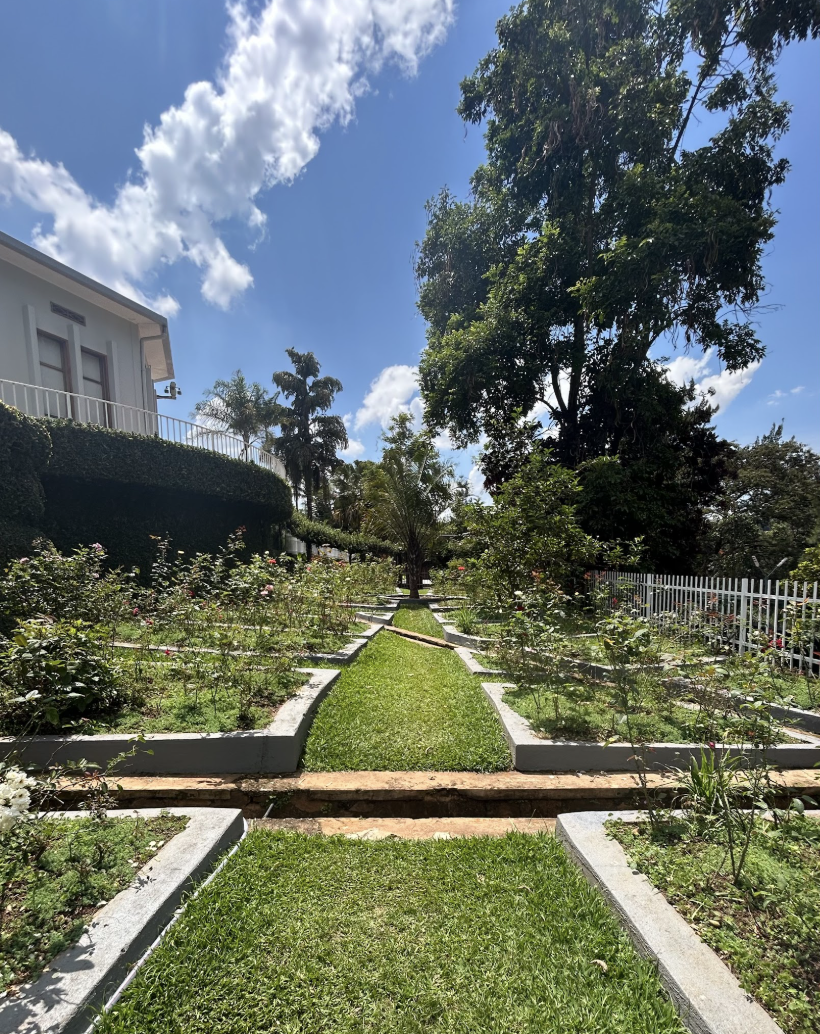
Bushes line the route to the French doors at the front of the church — the bottom of the white metal bars battered from grenades lobbed inside.
I walk in through the opening and pause. A lump forms in my throat, but there’s no time for tears to form.
Before me are rows and rows of blood-stained clothes recovered from the dead, the victims of the 1994 genocide against the Tutsi. Pink, blue and yellow-striped shorts draped over a pew. Another with a waistband no wider than the length of a pencil. The clothes climb up from the pews, reaching out, pleading for help.
The sun filters inside through bullet holes in the roof, illuminating the evidence of the horror that took place here.
The large room is claustrophobic and eerily still — I can feel the thousands of lives that were ended before the altar; they are here with me.
Small craters scattered around the sanctuary’s cement floor reveal its ivory color that was once used as a foundation of worship, and is now hidden behind the reality of years of dirt intertwined with blood — a new compound created from the mass executions during the 1994 genocide against the Tutsi.
Extremist Hutu leaders organized the mass murder of Tutsis. Between April and July 1994, the Hutu militias, army and ordinary citizens killed nearly 1 million Tutsis and moderate Hutus.
They did not spare children but targeted them.
Nyamata Church shares a border with École Les Colombes, a primary school. The rhythm of the drums and the voices of the joyful classes echo through the memorial while I peer at the small tombs in the basement. The irony does not escape me.
I am transported back to the silent Children’s Room inside the Kigali Genocide Memorial, where large portraits of innocent faces line the walls. I watched a woman wearing a black genocide remembrance shirt touch those faces, ones I can never forget. I stood back and observed, not knowing how to respond.
Below each image, a piece of paper listed details that brought the child to life. Their favorite games, favorite person, favorite toy.
“Favorite food: Mother’s milk,” one of the signs read.
My heart shattered a little more with every word that followed. This was a child who knew no more than the milk of their mother.
Young people under the age of 24 represent 53.4% of the victims of the genocide in Rwanda, according to an online exhibition by JusticeInfo, an independent news website covering justice initiatives in countries dealing with serious violence.
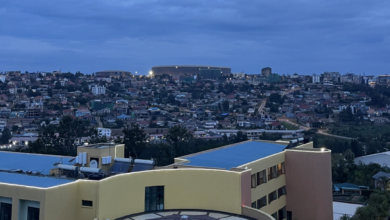
That shocking reality lives in my head as I navigate Rwanda’s cities and villages, especially when young people smile and wave. They play in the street, they run and laugh. They say hi. They give me flowers.
“Today, young people are participating easily,” said Claude Mugabe of Aegis Trust, describing how Rwandan children live together, and not separated by identity cards and propaganda. “There is hope.”
Mugabe was just 8 in 1994. As a Tutsi, he lives every day with the genocide. His children ask about their grandfather, who was killed in 1994.
We need to equip this generation of today,” he said. “We need to show them the truth.”
I was inspired by the Rwandans I met. Inspired by how they forge on with grace and determination despite the trauma they carry. Visiting Rwanda also forced me to face my own privilege. I went to primary and secondary schools in idyllic American suburbia, near churches and greenery, not genocide memorials.
At the Kigali Genocide Memorial, I learned the Kinyarwandan word ubumuntu. It means, but is not fully encapsulated by, the English word humanity. Ubumuntu has taken residence in my head. It will return home with me to a nation that could use more of it.
Katherine Lee was a student in the Travel Journalism in Rwanda program in summer 2026.