Diversity in Focus: Many Stories, One Athens

Northeast Georgia has evolved into a vibrant hub for diverse culture, where local markets, grassroots activism and small businesses form the heartbeat of the community. In Athens, this social and cultural impact is on full display. This portfolio brings together a series of individual stories across our diversity beat that highlight unrepresented voices and offer a deeper understanding of how diversity is challenged and sustained in Athens.
From exploring higher education programs for intellectually disabled young adults to examining how historically Black small businesses are working to stay afloat amidst the high rise developments and luxury style properties that are reshaping downtown Athens, our reporting focuses on representation across the community.
Life on the Corner: 66-Year Legacy of Homer Wilson
By Isabella Pang
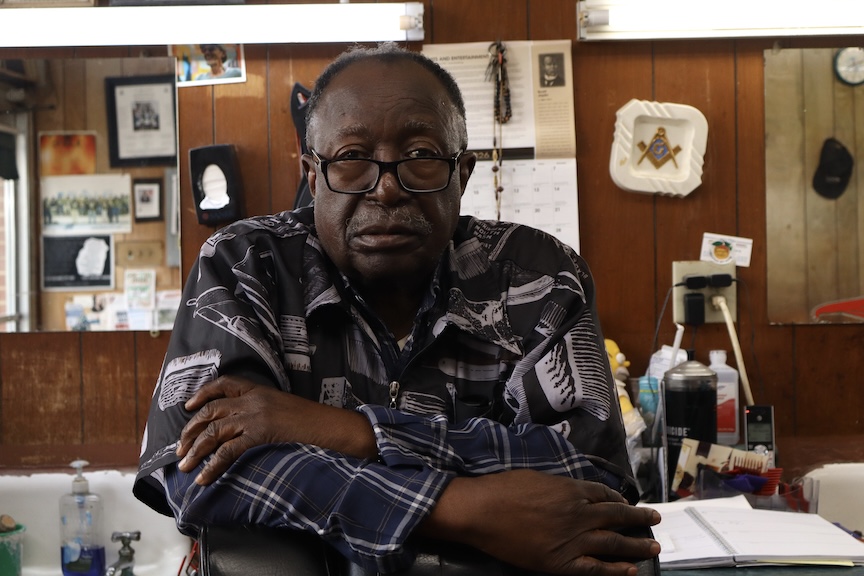
If Homer Wilson could step back in time for just one hour, he wouldn’t head for a landmark. He would walk straight to the door of the old Miss Wade’s Cafe (Manhattan Bar) for a sausage sandwich with extra gravy.
To Wilson, the memory of that sandwich is the flavor of a lost era; a time when Hot Corner wasn’t a historic district on a map, but a self-contained world of 66 Black-owned businesses where “no matter what you needed, you could get it.”
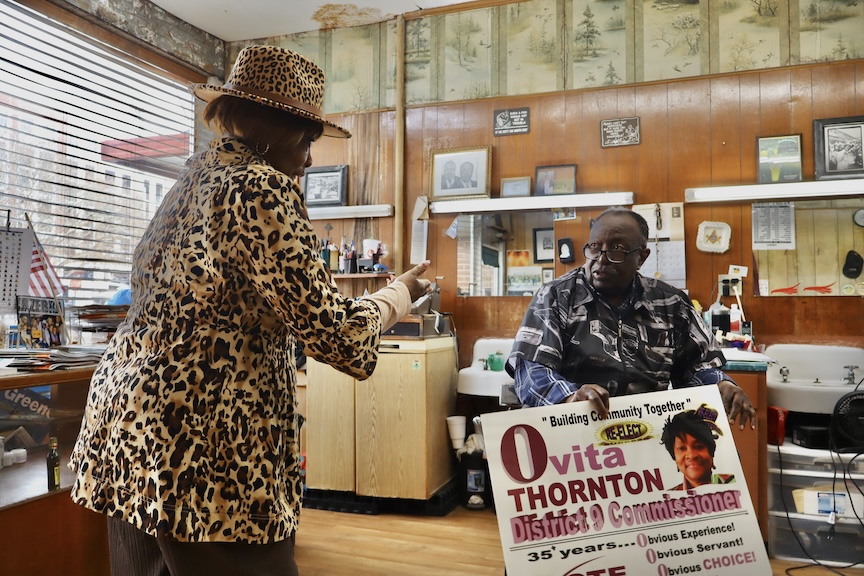
Today, as luxury developments and high property taxes reshape downtown Athens, Wilson’s Styling Shop stands as one of the last remaining anchors of that original hub.
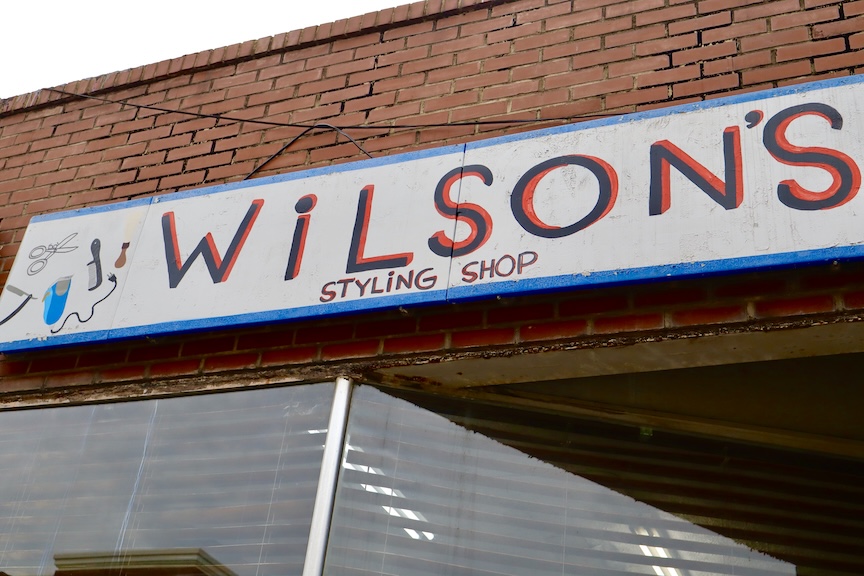
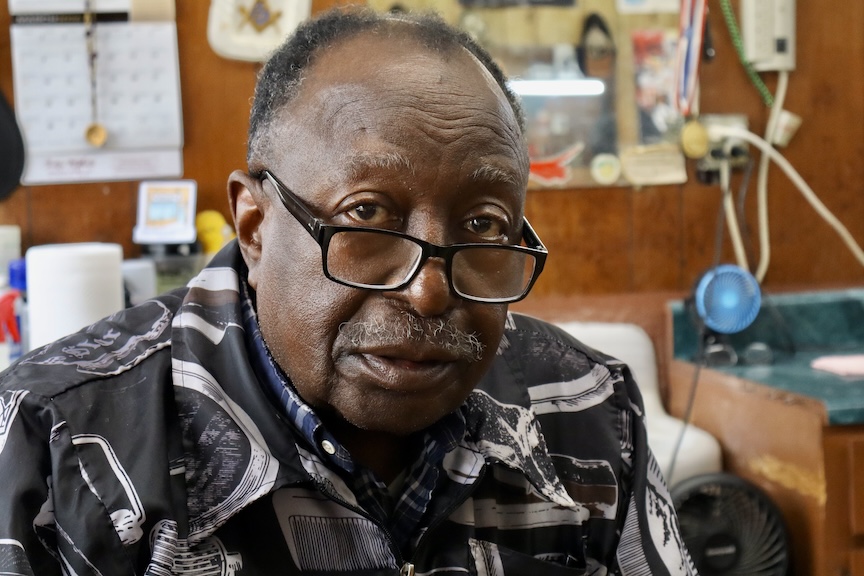
Wilson’s path to the chair wasn’t a straight line. He started cutting hair in 1960 as a ninth-grader. Yet, the barber chair wasn’t always his destination. As a student at Fort Valley State College, he dreamed of a career in forestry. However, strict regulations eventually brought him back to the shop his father M.C. Wilson established.
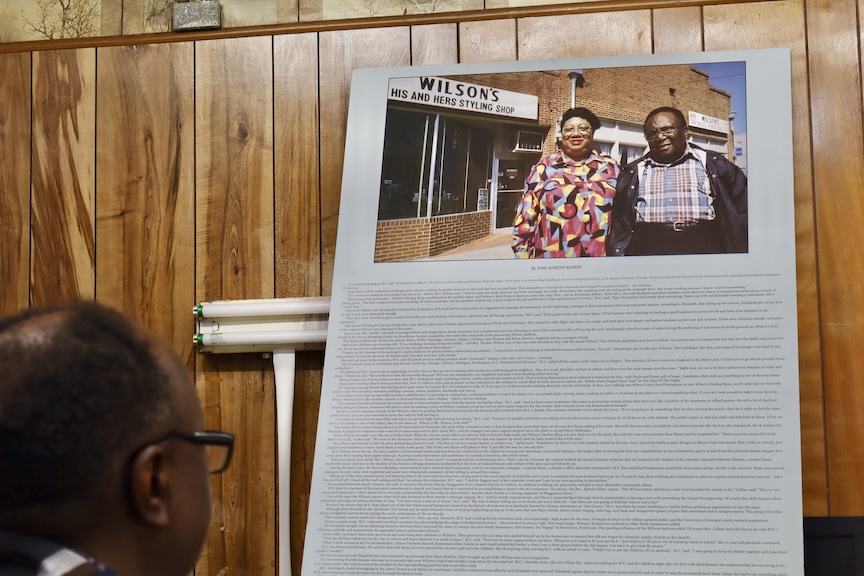
One of 14 children, Wilson learned the trade as a discipline, training under his father and older barbers to master a mixture of styles. Today, he remains an “old school” practitioner, still utilizing traditional tools like the razor and leather straps.
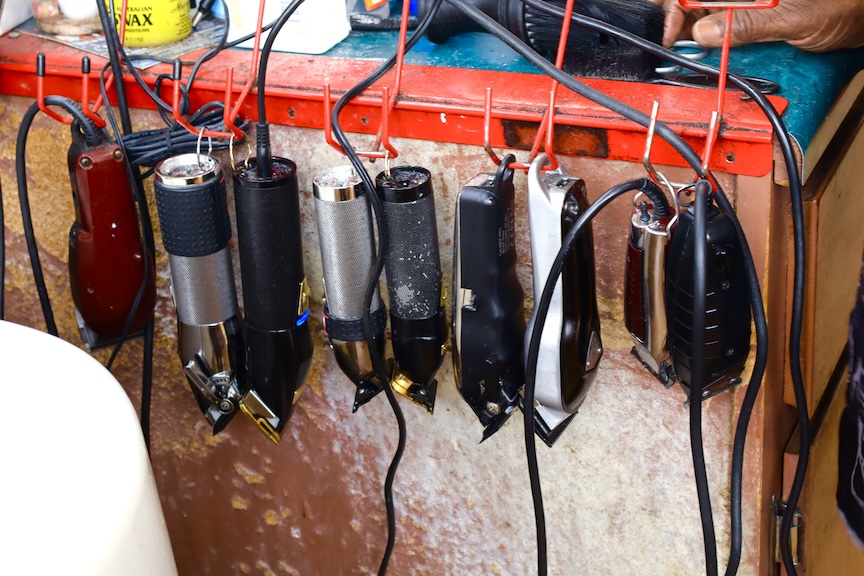
“This shop has all been kind of like a training area,” Wilson said, noting that most shops in Athens are “a branch from this shop.” This commitment to mentorship is a cornerstone of his 66 years on the corner. While many neighboring Black-owned businesses were forced to relocate or close as property values skyrocketed, Wilson’s stayed. He hasn’t just preserved a business; he has protected a third space for the community.
People come here and pour themselves out. This is where people come to get revived. They got somebody to tell their story,” he said.
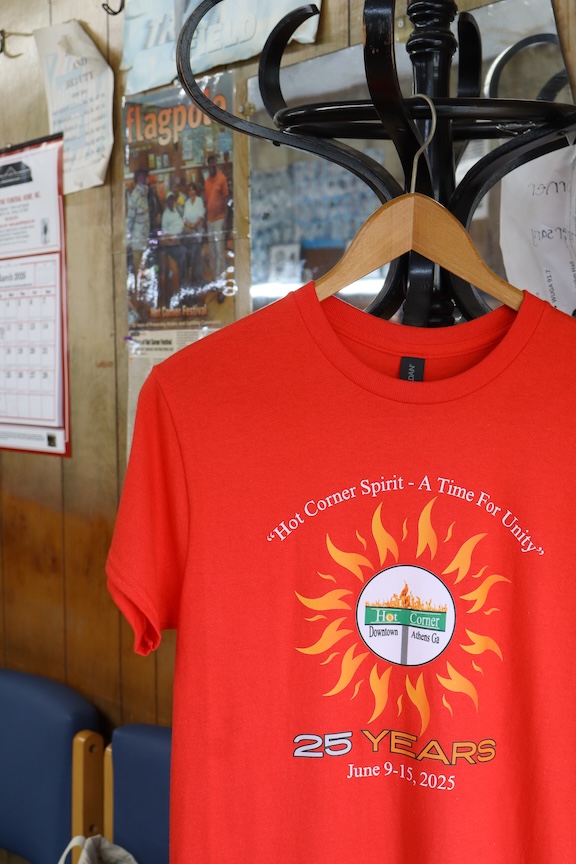
Recognizing that the history of the corner was fading as quickly as the old storefronts, Wilson took his leadership beyond the store. In 1999, he founded the Hot Corner Association, an organization dedicated to preserving the heritage of the Black business district. What began as a small acknowledgment of the past blossomed into the annual Hot Corner Festival.
The physical toll of the “hustle and bustle” is evident in his hands, which he admits “can’t take it” like they used to, leading him to focus solely on precision cuts rather than chemical work. When the clippers are silent, Wilson is often at the piano, a lifelong musician who now plays exclusively for his church.
‘We Are Still Here’: Ivan Mendoza Calls For Pride and Unity
By Courtney Craft

Ivan Mendoza is a proud child of immigrants, and his background has shaped everything from his leadership on campus to his advocacy in the community. Unlike most, he has turned his identity into a platform to advocate for unity.
Mendoza is a second-year advertising student at the University of Georgia and holds multiple leadership roles in multicultural organizations on campus. He said many organizations are hesitant to host cultural events out of fear they may be deemed too political.
“They’re hosting arts and crafts events, or they’re hosting something more neutral that more people could cater to and that they don’t get in trouble for,” Mendoza said.
Mendoza said this self-censorship is the wrong response. Instead, he hosts events for students to proudly display their identities and creates spaces that celebrate culture rather than suppress it.
“I think it’s very beautiful when all of us can come together and be unashamed of where we come from. Visibility matters, diversity matters, representation matters. A lot of people forget that,” Mendoza said.

The Young Democratic Socialists of America held a walkout and rally last month prompted by the Department of Homeland Security’s plans to convert a Social Circle warehouse into a detention center for Immigration and Customs Enforcement. Mendoza, who spoke at the event, said that unity is the most valuable tool immigrant communities have and that staying connected during times of uncertainty is crucial.
“I think it’s very important to remind Puerto Ricans and to remind Latinos to wave your flags and to not be ashamed of where you come from, to never forget where you are, and as I always say in Spanish, ‘seguimos aquí,’ which means we are still here,” Mendoza said.
These moments of activism are personal to him. They serve as a way to honor his parents while uplifting others who may be unable to speak out for themselves.
I’m a walking reflection of my parents. I’m a walking reflection of my immigrant community. And I think it’s very important to vocalize my truth for those who cannot right now,” Mendoza said.
Fooks Foods sources ingredients for Athens residents to cook diverse meals
By Adaleigh Weber
Athens residents and visitors alike who enjoy trying new foods have a variety of multicultural restaurants to choose from at locations throughout the Classic City. However, despite this wide selection of dining locations, residents who want to venture into the cooking scene on their own may lack the base ingredients and spices for new recipes, due to the limited local options available for shopping at a large multicultural grocery store.
The nearest large-scale international or multicultural grocery stores to Athens are roughly 40 minutes to an hour away, at stores such as Buford Highway Farmers Market in Doraville and HM Asian Market in Alpharetta.
Although larger locations are far from Athens, for those who do not wish to make the drive, some smaller, local groceries in Athens offer a selection of cultural ingredients, including Achachi International Market, Orient Mart and Fooks Foods.
Karen Fooks, owner of Fooks Foods, moved to Athens over 30 years ago, and founded Fooks Foods when she was 40 years old. Twenty-three years later, it continues to provide options for a variety of Asian ingredients for people who love cooking cultural foods.
“I came in with the idea of just setting up a pantry for people to come in and get their basic products to make a meal,” Fooks said.
Although there are other local Asian grocery stores in Athens, Fooks believes what sets her apart from them is the unique produce she sells, from fresh lime leaves to Indian okra.
“I felt and I knew that was important for an Asian person or anyone else to have.” Fooks said. “I used to even go into Buford Highway and buy Chinese broccoli and freeze it, you know, so I could have it at home.”
Fooks has worked in the food industry throughout her life, from making sushi with her grandmother to sell at local markets to working in the food services department in Athens, creating stir fry menus at O-House. She also worked in several restaurants across the world with her family, and took note of the foods that different cultures like to include in their dishes.
Food is important to a culture. I think it’s part of what defines a culture. And in a time where we tend to want to compress everyone into the same mold, I think it’s important to keep your separate identities and food does that,” Fooks said.
Fooks lines her shelves with items she believes are “the base” of certain cuisines. Other items, such as snacks, are determined by customer requests, by giving her the wrappers of certain snacks or showing her pictures of them.
“There’s certain base ingredients for almost every cuisine around the world,” Fooks said. “For East Asians, it might be green onions and ginger and garlic. For South Asians, it’s ginger, garlic, chilies and tomato.”
Ingredients are sourced from larger store locations across Georgia such as around Duluth and Atlanta.
While Fooks Foods has been around for decades, it has become a memorable location for shop employee Kitwanna Vincent, who has been around since her childhood. Her grandmother worked there for 15 years, and would sometimes bring Vincent to work with her while she was taking care of her.
“My grandma worked a lot of jobs at one time. She had multiple jobs and this one just kind of stuck,” Vincent said. “She’s Filipino, came from the Philippines and I guess it was [just that] it felt part of home for her.”
In the future, Fooks wishes to retire and pass the business on to someone who shares her interest in multicultural meals.
“My secret mission here really is to keep people cooking,” Fooks said.
1 in 12 Young Adults in Georgia Lives With a Disability
By Courtney Craft
View this post on Instagram
Katherine Hoots is one of more than 205,000 young adults across Georgia living with a disability.
Programs like Destination Dawgs at the University of Georgia provide pathways to higher education for students with disabilities. Hoots said the program has given her the college experience she always wanted.
Sophia Bobo, Courtney Craft, Isabella Pang and Adaleigh Weber are journalism majors reporting on diversity, immigration and women in Northeast Georgia.