Denied Jackson County Rock Quarry Underscores Growth Vs. Groundwater Concerns

The fight over a proposed rock quarry in Jackson County has grown from a local zoning dispute into a broader debate over groundwater protection and drinking water, something far more personal to residents in affected communities.
In May 2025, a Jackson County Superior Court judge upheld the county’s denial of a rezoning request tied to a proposed 900-acre rock quarry, reinforcing the Board of Commissioners decision in November 2024 to reject Vulcan Construction Materials’ applications for special use permits covering nine parcels in East Jackson.
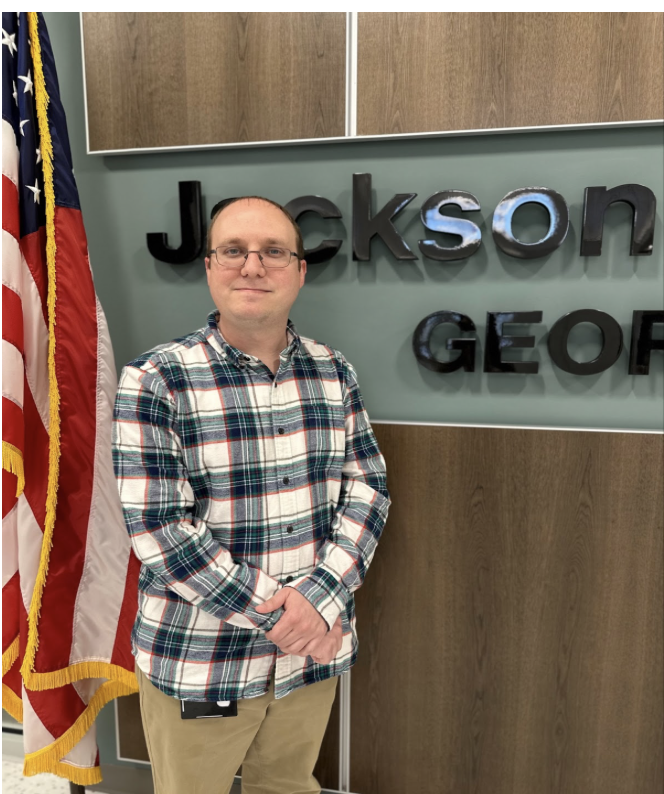
“The strongest concern was the groundwater recharge area,” said Steven Howard, Jackson County’s Enterprise Systems and Development Planner. “When you’re dealing with something that affects a watershed and groundwater recharge, you have to look at the long-term implications for the community.”
Groundwater recharge areas are places where rainfall naturally soaks into the ground and replenishes underground aquifers, the same aquifers that supply drinking water wells and help sustain local water systems. Unlike rivers or lakes, aquifers exist entirely underground. But for many families in Jackson County and neighboring Athens-Clarke County, they are the source of the water that comes out of kitchen taps every day.
Howard said recharge zones are critical because once groundwater systems are damaged or contaminated, recovery can be slow, expensive or, in some cases, impossible.
This isn’t just about one property,” Howard said. “It’s about protecting a resource that people depend on every single day.”
The application materials from Vulcan totaled roughly 9,000 pages across nine revised applications and included environmental impact analyses, air-quality modeling, traffic studies and reports addressing blasting and noise. Planning staff circulated the documents to internal departments and outside agencies, including the road department, water authority and school system. Officials also coordinated with the Georgia Department of Transportation because of proposed infrastructure connections.

The Planning staff ultimately recommended denial of all nine applications, citing inconsistencies with the county’s Comprehensive Plan and concerns about environmental vulnerability. In the recommendation, the Planning Department drafted more than 20 potential conditions that would have applied if the project were approved, including operational controls, monitoring requirements and permit compliance measures.
Opposition extended beyond nearby residents who raised concerns about truck traffic, blasting and buffer zones. Athens-Clarke County officials submitted a letter opposing the quarry, citing regional water concerns.
Howard said public opposition largely echoed what planning staff had already identified in its analysis.
“Everything in our report and what the opposition spoke about was definitely reiterated,” he said. “It wasn’t anything new that was offered.”
Still, he said public testimony played an important role.
The nice thing about opposition is that it provides you a different personal perspective from people and their lives,” Howard said.
The main source of dispute is whether the property qualifies as a “Significant Recharge Area” under Georgia environmental standards.
In a Nov. 12, 2024 letter to county commissioners, attorneys for Vulcan, an affiliate of Vulcan Lands, Inc., argued the county relied too heavily on Hydrologic Atlas 18, which describes parts of the Piedmont region as “probable areas of thick soils” that “may be significant recharge areas.” The company contends that Georgia’s regulatory definition for significant recharge areas in the Piedmont and Blue Ridge requires thicker soils associated with a density of geologic contacts and slopes below 8 percent, conditions Vulcan says are not present at the site.
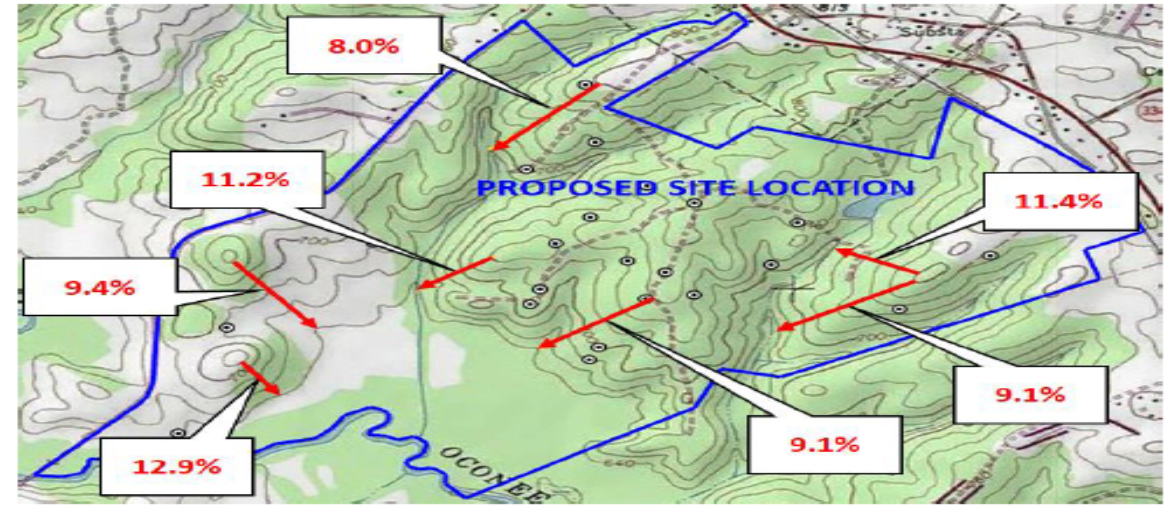
Vulcan’s hired hydrologist James J. Connors wrote in a supplemental expert opinion that the data he reviewed “do not support the existence of a ‘Significant Recharge Area’ at the proposed quarry site.” Connors also concluded it was “extremely unlikely” that quarry operations would cause major groundwater contamination, significantly reduce recharge, draw down groundwater levels or pollute nearby streams through stormwater runoff.
The company also submitted a review by Harold Reheis, a former director of the Georgia Environmental Protection Division, who argued concerns were not supported by sufficient site-specific information. Reheis cited core-drilling data indicating the bedrock is not highly fractured and said groundwater contamination was “highly unlikely.” He emphasized that mining operations must comply with state and federal permits, including stormwater pollution prevention plans.
Vulcan said it revised its site plan after planning commission feedback, including adding a berm between the proposed mining area and nearby flood plains and streams. The company also offered voluntary commitments, including maintaining roughly 200 acres as a conservation and recreation area, installing air and vibration monitoring and investigating private well complaints within 1,000 feet of the quarry boundary.
The Northeast Georgia Regional Commission reviewed the proposal as a Development of Regional Impact, describing an approximately 900-acre quarry projected to produce 800,000 tons of rock annually. The commission said its review addressed potential legal impacts and gathered comments from affected parties, but noted its findings are advisory and do not direct the host county’s final decision.
For the residents, however, who packed public meetings and voiced concerns, the issue was not abstract policy. It was about protecting the groundwater systems that supply their homes, and deciding what kind of development belongs in their backyard.
Howard said cases like the quarry proposal illustrate the challenge of balancing economic development with environmental responsibility.
“These are not easy calls,” Howard said. “You’re balancing economic opportunity with environmental protection, and you have to make a recommendation based on the best information available and what the community has said it wants for its future.”
Steven Durocher is a senior majoring in journalism at the University of Georgia.